

The Grinning Golly: When Comfort Becomes Terror
Episode 4: Jackson gets a new lead and an unforeseen consequence.

This is a long episode, and it will be shortened by some email servers. If you aren’t reading in the Substack app, please open this in your browser to see the whole episode.
Previously on The Grinning Golly:
Jackson’s investigation led to activist Sadie Broussard for Dolly Mercier’s murder, only to learn he was wrong. When he confronted her, Sadie broke down and revealed Dolly had treated her protest injury, challenged her approach to politics, and ultimately given her the jade heart necklace as a symbol of choosing humanity over ideology—backed by a rock-solid alibi. Jackson cleared her in his article and turned her into a public redemption story, which ignited online backlash against them both and ended the episode with his own life being doxxed, as photos and records about his ex-wife and daughter hit social media.
The Bayou Chronicle
Thursday, 7:30 a.m.
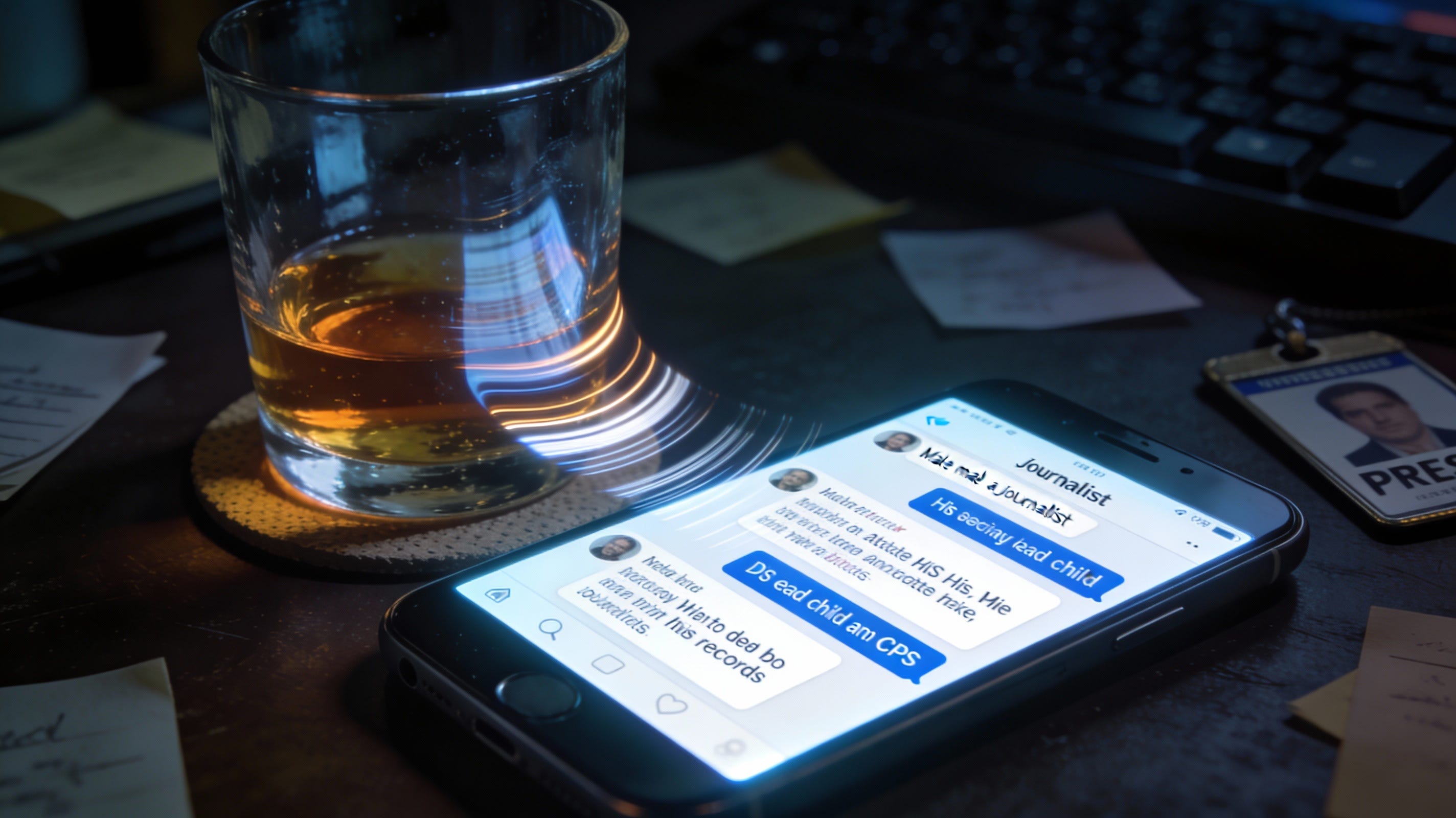
Someone had aggregated my life and splashed it all over social media. Not my public persona—my actual life. They had screenshots from court filings about me and my ex-wife’s custody fight with CPS. They had records about Claire, my four-year-old daughter.
I felt like vomiting.
There were posts from accounts with names like @RealJustice2024 and @TruthHawk99, with massive retweets, saying things like:
“This guy uses his dead daughter as a prop to attack activists. Meanwhile, CPS took his other kid away.”
“Classic DEI hire. Destroys his own family then wants to lecture New Orleans about morality.”
“He let his daughter die. Where was his activism then?”
Some were either lying, or had the wrong information. Ellie and I only had one child.
The posts had screenshots. Old court motions with my name and my ex-wife’s name. A photo of Claire—where the hell had they gotten that?—with a caption that said “Jackson Harlow destroyed this family.”
There was a fabricated DM, allegedly from a grief support group, with text saying “I used my daughter’s death for my career advancement.” It didn’t matter that I’d never written that. The format, the screenshot, made it look real enough — at least to those who already wanted to believe it in the first place.
I stood up without thinking. The bullpen got quieter. More eyes on me.
I walked straight to Mavis’s office and entered without waiting for permission.
She was on the phone. She took one look at my face and told whoever was on the line she’d call them back.
“Show me,” she said.
I pulled up the thread on my phone and handed it to her. She scrolled, her jaw tightening with each post.
“This is different,” she said quietly. “This isn’t just trolls. Someone did research. Real research.”
“This is inside my life, Mavis. Court filings. Photos. Details that weren’t easy to find online. It’s below the belt.”
The hole in the pit of my stomach turned into another ball of rage. I never tried to hide my family’s past. Anyone could have found these documents — most were available to the public. But who would be so invested in digging this up?
“Okay. Okay. We’re going to figure this out.” She handed my phone back. “Get Charlie in here. Tell him we need a full forensic sweep. Tell him someone’s in your accounts, or they’ve compromised public records somehow. Go.”
I went.
The Bayou Chronicle
Thursday, 8:00 a.m.
Charlie arrived in Mavis’s office fifteen minutes later, pulling up a chair next to me. He had his laptop with him, and his brow was furrowed, and his mouth was twisted into a frown—the look of a tech wizard getting ready to work his magic.
“Jackson, I’m really sorry about this,” he said. “These people are relentless.”
“Thanks, Charlie.”
He set up his laptop and started opening terminals, running commands I didn’t understand. He pulled up my email, my social media, my authentication logs. His fingers flew over the keyboard like a swarm of angry bees.
“Okay,” he said, his fingers moving fast across the keyboard. “Let me check for account compromises. Third-party app logins. See if anyone’s set up forwarding rules, phishing redirects, anything like that.”
Mavis watched from her desk. I stood next to Charlie and pretended I understood his technical mumbo jumbo.
After a few minutes, he looked up. “Okay, here’s what I’m seeing. The IPs accessing your stuff look external. Probably VPNs or proxy servers. The public records angle is interesting because—” He hesitated for just a beat too long. “—it looks like someone automated scraping of court records databases and public filing systems. That’s tedious work, but not impossible if you know what you’re doing.”
“So it’s not my accounts?” I asked.
“Not that I can find. Looks like outside harassment combined with sophisticated public records mining. The photo that scared you—that probably came from social media or a cached version of an old blog. These people are thorough, but I don’t see evidence of a breach on your end.”
He said it smoothly, professionally. But when he mentioned the photo, he looked away. Just for a second. And his next technical term—something about “SSL certificates”—he stumbled over it slightly, then corrected himself with extra emphasis, like he was proving his own expertise to himself.
“So we’re secure?” Mavis asked.
“As far as I can tell, yes,” Charlie said. “The attacks are external. Probably coordinated but external.”
“What about going forward?” I asked.
“Change your passwords. Two-factor authentication on everything. And honestly?” Charlie closed his laptop. “This is the price of being a public figure now. The truth is, they can always find something if they dig deep enough. All we can do is make it harder.”
“Yeah, and being involved in a high-profile racially charged murder case doesn’t exactly help,” Mavis observed.
He stood up, gathering his things. “I’ll keep monitoring. Let me know if anything else looks suspicious.”
After he left, Mavis looked at me.
I stood up to leave.
“Hold up, Jackson.”
I sat back down. I already knew what was coming.
“I’m fine, Mavis.”
“Bullshit.”
“Ok, I’m not fine. But I’ll be ok. It’s not like I was hiding this stuff anyway.”
“Yes, but I’m pretty sure this isn’t how you would have wanted it to get out. Somebody’s really got it in for you.”
“Well, they can get in line. I heard from the killer again, by the way.”
Her eyes narrowed.
“Jackson—”
“Nothing happened. I riled him up a little bit, trying to see if I could shake loose some information.”
“Anything come of it?”
“Not much,” he said. “But he’s definitely a white guy. He’s either politically motivated, or wants me to believe he’s politically motivated.”
“Alright. Well keep me posted. And be careful.”
I went back to my desk.
Just when I thought things were settling back into a routine, someone dredged up the worst parts of my past and splashed them all over social media. I’m a private person. I don’t share easily.
But it was even worse than that. I’d been carrying this pain for a decade, and I thought I had moved past it. But the churning in my stomach told me I hadn’t. And now, I have someone using my ex-wife and child against me. Why? I didn’t understand.
The Bayou Chronicle
Thursday, 10:02 a.m.
I tried to focus on background research into Harrison Floyd. I pulled up everything I could find on him—mugshots from 2015 (disturbing the peace at a heritage rally), a DUI in 2019, social media posts going back five years, a few photos of him yelling at protesters in front of Memory House.
Every time I tried to focus, my mind lurched back to the past. The CPS officers walking my four-year-old daughter out the door, tears streaming down her face. Armed police officers escorting us from the hospital. Ellie falling apart in my arms.
Not now, Jackson. I had work to do.
I kept refreshing X. Kept seeing new posts, new angles on my family tragedy. Someone had made a collage of photos—Claire, Ellie, me at the park—with a caption that said “This is what a crisis profiteer looks like.”
My phone buzzed. Text from Jason Whitaker, one of the guys at the Chronicle:
“Bro, ignore the noise. You’re good people.”
“Thanks,” I typed before hitting send.
He meant well. But it felt like confirmation that everyone had seen it. Everyone was looking at me with pity or judgment or both.
I started typing a response. Not to the tweets—to write something. A column. A rebuttal. Something that explained the truth.
I deleted it. All of it.
I pulled up my old photos instead. Found a folder labeled “Claire” on my phone. There were maybe fifty photos. One showed her at three years old, smiling at the camera. Another with her holding a stuffed animal in a hospital bed, still smiling because kids are resilient like that until they’re not.
My eyes started burning.
I closed the folder.
Around 5 p.m., I texted my dad: “Can I come out this weekend? Need to get away.”
His response came back in seconds: “Of course.”
I put my head down and went back to work, trying to lose myself in the investigation. Floyd. The pistol. Estelle’s warning to be careful.
But in the back of my head, one thought kept cycling: My daughter’s been dead for years. My ex-wife too. And these people still find ways to use her. I realized my fists were clenched. My head was on fire.
I packed my laptop and left the office early.
The Harlow Residence
Thursday, 9 p.m.
That night, around 9 p.m., I was home scouring through activist forums, and Discord logs a source had given me access to when I worked a previous story.
It was the usual chatter. My article about Sadie was causing waves, as expected. Some people calling her a sellout. Others defending her. A lot of “we can disagree on tactics but she’s still family” talk.
Then I saw a post from a user named FreedomFighter77:
“Sadie’s got questions. That’s fine. We all question things. But let’s see where her head really is before we write her off. She’s still one of us until she proves otherwise.”
I pulled up the user profile.
It was Kyle Weston.
“Let’s see where her head really is,” he’d written.
That gave me an idea. I picked up my phone and dialed Kyle’s number.
“Hello,” he answered.
“Kyle, this is Jackson Harlow.”
“Oh hey, Mr. Harlow. How are you?”
“I’m good. I have a favor to ask.”
“Sure.”
“You saw my article earlier about Sadie?”
There was a pause.
“Y-yes I did. Why do you ask?”
“I’m concerned about Sadie. I’ve seen some of the chatter on social media. A lot of people are mad at her.”
“Yeah, I saw that too. I’ve been trying to calm things down a bit. Things are already tense enough.”
“I wanted to see if you could keep an eye on her, just in case something happens.”
“Are you concerned that someone might get violent?”
“I don’t think it’ll come to that. But you can never be too sure.”
“Yeah, I don’t think there will be an issue. Most of these people are all talk. I wouldn’t worry about it too much—but I’ll check in with her tomorrow.”
“Thanks. I appreciate it.”
“No problem. By the way, I really liked the article — even if I don’t agree with Sadie’s decision.”
“Thanks again. I’ll talk to you later.”
The Harlow Residence
Friday, 6:47 a.m.
My phone buzzed at 6:47 a.m. A text from Sadie: “It’s live. Let me know what you think.”
I was still in bed. The text message had a link. I clicked. Her blog materialized on my phone. I squinted against the screen’s brightness. It was too early.
The post was titled: “Why I Left the Rage Behind.”
My eyes were attached to the screen, taking in every word. Sadie had poured her soul into this—her doubts, her growth, her fear, and her courage.
Sadie wrote about how she met Dolly and the details of their conversation. She talked about how she once believed screaming at people was the way to change minds.
Even more, she discussed how she planned to move forward as an activist and a human being.
I set my phone down and sat in silence for a moment. It was beautiful. It was brave. It was going to cause absolute hell.
I texted her back: “This is beautiful, Sadie. Dolly would be proud.”
Her response came quickly: “I hope so. Guess we’ll see what happens now.”
I knew what was going to happen. The activist community was already getting the nails and the cross ready. Conservative media was going to try to make her a symbol. Everyone was going to have an agenda.
They were going to use her.
But for a moment, I let myself believe that maybe she was right. Maybe there was hope.
My phone rang around 10 a.m. I was at my desk in my home office, already scrolling through the reactions to Sadie’s blog. The responses were mixed, but the angry ones were louder, as usual.
It was Estelle.
“Hey,” I answered.
“Hey. I wanted to call and check on you.” Her voice was soft, concerned. “I saw the stuff online. About your family.”
I almost made a joke and redirected. But something in her tone stopped me.
“Yeah, well,” I said. “I’ve had better weeks.”
“I’m sure you have.” She paused. “Jackson, that was awful. I can’t imagine what that felt like.”
I rubbed my face. “It was public. That’s the worst part. It’s out there, and now everyone knows, and they’re all going to have opinions about it.”
“People are assholes,” Estelle said.
“That they are.”
“Look, I wanted to invite you over tomorrow night. Thursday. I’m going to cook something. Real food. Can we just... not talk about murder or blogs or any of this shit?”
I heard myself say yes before I could think about it. We both needed some normalcy.
“Good. Six o’clock.”
After I hung up, I sat there for a moment, thinking about what it meant that Estelle had called. That she cared enough to check in. That the world still had some decent people in it.
It felt good.
Then I went back to scrolling through the reactions to Sadie’s blog, looking for anything that could be useful.
Harrison Floyd’s House
Friday, 12 p.m.
I drove out to Harrison Floyd’s place. The address I found through a public records search led to a modest house about thirty minutes outside the city, in an area that still felt rural, still felt like the old South.
A faded, tattered Confederate flag hung on a pole out front. A bumper sticker on an old truck: “Heritage Not Hate.”
It didn’t faze me. Being raised out in the country, I was used to it.
I knocked on the door.
Floyd answered after the second knock. He was a man in his mid-fifties, weathered, with the kind of posture that comes from a lifetime of being beaten down. His face looked like hardened leather that had sat out in the elements since the 1970s.
His eyes were a hard blue, but there was something else there too—something between caution and defeat.
“Harrison Floyd?” I asked.
“Who’s asking?”
“Jackson Harlow. I’m a reporter with The Bayou Chronicle. I’m looking into Dolly Mercier’s murder. Your name came up.”
He studied me for a moment. I watched his jaw tighten slightly when I mentioned Dolly’s name. But he stepped aside.
“Come in.”
The house was what I expected: a living room with a hunting rifle mounted above the fireplace, framed photographs of family members in military uniforms, a bookshelf with titles about “the real history of the South” and conspiracy theories. A comfortable chair with an indentation worn into it from years of sitting.
We sat. I pulled out my phone. The scent of cigar smoke and misery seemed to emanate from the walls.
“I understand you had a dispute with Ms. Mercier about a pistol,” I said, keeping my voice neutral.
Floyd’s face flushed immediately. His left eye twitched slightly, and his hand went to the back of his neck..
“It wasn’t a dispute. It was theft.” His voice had an edge to it. “That pistol belonged to my great-great-grandfather. He carried it through the war. It’s my family’s. Dolly had no right to it.”
“Can you tell me how she came to have it?”
“She outbid me on it at an auction at Colin Reddick’s place. But that don’t mean shit. She knew it was mine. I told her it was. I even offered to buy it back from her at fair price. More than fair price. But she refused.”
“Why do you think she refused?”
Floyd stood up and walked to a shelf. He pulled down an old photograph—grainy, but clearly showing a Confederate soldier holding a pistol.
“This is my great-great-grandfather, Samuel Floyd. He carried this gun. It’s part of my family’s legacy. When Dolly refused to give it back, she was refusing to let me keep my family’s history alive. She was so stubborn.”
I looked at the photograph. The man looked hard, unforgiving. I didn’t say that out loud.
“How can you be sure it’s the same gun? I would imagine there would be plenty more like it.”
“I can tell just by looking at it. But even if I couldn’t, Reddick said the provenance showed that the pistol was in possession of the Floyd family.”
Knowing what I did about Reddick’s business practices, I filed that tidbit away for future reference.
“You said Dolly knew it was yours. How did that conversation go?”
Floyd’s jaw clenched. “She said she had ‘papers.’ Said some estate had it registered. I told her that papers don’t matter when it’s your blood, your family’s blood. She didn’t care. She just wanted to make a profit off my heritage.”
“So you were angry with her.”
“Damn right I was angry. But I didn’t kill her.” He looked at me with an intensity that might have been sincere. “I was at a Heritage Meeting the night she died. I can give you names of people who saw me there.”
I was almost afraid to ask, but I summoned my courage anyway. “What’s a ‘Heritage Meeting?’”
“It’s where a bunch of us get together in the back room of Larry’s Bar and Grill and talk about the old days and history, that kind of thing,” Floyd said.
I was sure most of these conversations were about how political correctness ruined America, and how they longed for the old days when certain classes of people knew their place. But I didn’t want to delve that deeply into it with him.
“Don’t give me that look,” Floyd said. I guess my poker face wasn’t working as well as usual. “This ain’t about being racist. We don’t have a problem with the blacks. We just want stay in touch with our history, our culture.”
“Your heritage?”
He nodded, “yeah, that’s it.”
I decided it was a good time to change the subject before getting pulled down the lost cause rabbit hole. “I heard you and Dolly had some disagreements about more than just the pistol,” I said carefully.
Floyd sat back down and sighed. His expression shifted—less raw anger, more of a weary frustration.
“She went soft. When the protests started, she just... folded. Started talking to those people like they were her equals. Like their concerns mattered as much as ours.”
“What do you think of her civil rights activism?” I asked. “The marching with King?”
He waved a hand dismissively. “That was different. That was a long time ago. She was young, idealistic. But when it came to her own people—her own heritage—she wouldn’t stand firm. She was embarrassing us. Letting them call her a racist and then trying to reason with them. You can’t reason with those people.”
There was something in his tone that reminded me of Kyle. The same certainty. The same sense that there were people worth listening to, and people you could never reach.
In many ways, they were the same.
“It sounds like you were pretty angry with her,” I said.
Floyd’s eyes hardened again. “I was angry. But I didn’t kill her. I’m angry at a lot of people. That don’t mean I go around murdering them.”
“Why do you think someone did? Why do you think Dolly was killed?”
He leaned back in his chair. “Because this country’s gone to shit. Because people like her—people who try to walk the line between worlds—they become targets. From both sides,” he said. “The left wants to call her a racist. The right wants her to be a martyr for the cause. And she just... she tried to be a person. I didn’t agree with her choices, but I do respect that.”
There was something almost vulnerable in that admission. Almost human. He looked over at the pictures of his family — almost as if he wanted to leap into the frame and leave this new world behind.
“If you remember anything—anything about who might have wanted to hurt her—you’ll let me know?” I asked.
“Yeah. I’ll let you know.” He paused. “You find out who did this, you tell me. Dolly and I had our differences, but she didn’t deserve that.”
As I left, I made a mental note: verify Floyd’s “Heritage Meeting” alibi, but don’t rule him out. Alibis could be faked. Resentment ran deep. And he gave a more sanitized version of his confrontation with Dolly, compared to what Estelle had told me.
The Harlow Residence
Friday, 6 p.m.
The city was cooling down as the sun inched toward the horizon. I made myself some catfish and cauliflower and sat at my kitchen table, my laptop in front of me.
I pulled up the reactions to Sadie Broussard’s blog post. They were pouring in now.
“This made me cry. It’s like Sadie went into my head and wrote everything I’ve been feeling.”
“If more people could see past their tribal identities, maybe we could actually move forward as a country.”
Predictably, others were vicious.
“The system has corrupted another good activist.”
“I bet she was a plant the whole time. This is why we can’t trust anyone.”
I scrolled through a few more, then closed the laptop.
I checked my social media accounts. The attacks on my personal life had slowed but not stopped. A few new posts, a few new angles.
Someone had started a thread about DEI hiring practices in news media, using me as the epitome of “unqualified reporters.”
Of course, they used a picture of me to drive the point home.
I didn’t engage.
Around 8 p.m., I texted my dad: “Still good for Saturday?”
His response came quickly: “Wouldn’t miss it. Grammy’s making gumbo.”
I smiled. That was exactly what I needed to hear. “As long as she’s making it, and not you,” I wrote back.
I finished my food, checked my email, and tried to lose myself in the case files. Floyd’s alibi needed verification. The activist forums needed monitoring. The killer was still out there, somewhere, watching.
But tonight, I let myself think about gumbo and family and the sound of gunshots at the range. Tonight, I let myself think about anything except murder.
The Bayou Chronicle
Saturday, 9:00 a.m.
My phone buzzed around 9 a.m. I was at the office, working on background research. It was a text from Sadie: “Jackson, call me ASAP.”
My heart tensed. I called her immediately.
“Hey,” she said. “Jackson! You’re not going to believe this.”
She sounded giddy, and the relief washed over me like a warm shower.
“Okay, so the blog post. A lot of people are responding. Like, actually responding in meaningful ways.”
“I saw it blowing up on X,” I said.
“A community group contacted me. They are doing these dialogue events. They want me to speak at one on Sunday. Like, actually speak. On a panel with people from different backgrounds talking about bridge-building.”
“Sadie, that’s amazing.”
“Wait, there’s more. A local TV station wants to interview me. They’re calling it ‘The Fresh Face of Activism’ or some shit. I know that’s horrible marketing, but—”
“But you’re using your platform to actually change something,” I said.
“Yeah. And Jackson...” She paused. “I keep waiting for the other shoe to drop. I keep thinking something awful is going to happen. But maybe Dolly was right. Maybe the consequences I imagined were worse than reality.”
I felt a chill run down my spine. “Just be careful, okay? Not everyone is going to be happy about this. There are people who are going to see your blog post as a betrayal.”
“I know. But I can’t stop now. If I do, they win. And I’ve still got my pepper spray.”
After we hung up, I sat for a moment, thinking about what it meant that Sadie had disrupted the local political scene. She was becoming a public voice for the thing Dolly had believed in. She was, in a way, finishing Dolly’s work.
It was beautiful and terrifying in equal measure.
I tried to continue working, but my ex-wife and daughter kept flashing through my mind. The police officers. The court proceedings. The social workers. Their graves. I needed a break.
I walked into Mavis’s office. She was probably on her second or third coffee, reading something on her computer.
“I need a few days,” I said. “Going to see my dad this weekend.”
She didn’t hesitate. She just closed her laptop and looked at me.
“Good. You need it. The case will be here when you get back.”
“You sure? With everything going on—”
“Jackson, you’ve been running on fumes since Dolly died. You’ve been attacked online, you’ve got two suspects to investigate, you’re chasing a killer who’s been calling you. You need to step back. Go see your family. Eat some gumbo. Come back with your head on straight. And tell your dad I said hello.”
I nodded, grateful. “Thanks, boss lady.”
“Go. Get out of here. And Jackson?” She looked up from her desk. “You’re a damn good reporter. Don’t let the bastards convince you otherwise.”
Around 1 p.m., I called the VFW post that Floyd had mentioned. They had records of their Thursday meetings. I asked to speak to someone who could confirm Floyd’s presence.
A man named Jerry answered. He’d been at the meeting. He remembered Floyd being there.
“He was there the whole time?” I asked.
“From about 6:30 to almost 11. We had a longer meeting that night—there was some discussion about upcoming events, fundraising, that kind of thing. Floyd was there for most of it.”
That lined up with the timing of Dolly’s murder, which had happened around 8 p.m.
“He didn’t leave at any point?”
“Not that I saw. But, I wasn’t watching him the whole time. He could have stepped out for awhile and I might not have noticed.”
That was possible. Dolly’s murder hadn’t taken long. Ten minutes, maybe. If Floyd had slipped out, committed the murder, and slipped back in, it was theoretically possible.
But it seemed unlikely. And his resentment, while real, didn’t quite feel like murder-level resentment. It felt personal, territorial—about a pistol and ideology. Not murderous.
Still, I couldn’t cross him off the list just yet.
I called Fontenot.
“Yeah, we checked that alibi too,” he said. “VFW corroborates most of it. But like Jerry said—could’ve slipped out, could’ve been back in twenty minutes. We can’t completely clear him. But there’s no evidence placing him at the scene. No witnesses saw him near Memory House. His car’s a ‘98 Ford—distinctive. Nobody saw it.”
“So he’s still a person of interest, but not the primary suspect.”
“Something like that. You got anything else?”
“Not yet.”
After I hung up, I made a note: Floyd—alibi shaky but plausible. But no hard evidence. Will keep digging.
Estelle Mason’s Residence
Saturday, 6:00 p.m.
Estelle answered the door in jeans and a simple blue blouse. Her hair cascaded down to her shoulders. She looked different outside of the context of the murder—softer somehow, more present.
“Hey,” she said, smiling. “Come in.”
It was nice to see her smile. It was also nice to smell the shrimp and sausage.
The apartment was small but warm. She had music playing—sounded like Charles Mingus. We were going to get along just fine.
“I made jambalaya,” she said, leading me to a small dining table. “Hope that’s okay.”
“That’s not okay. That’s perfect.”
We ate and talked about things that had nothing to do with murder. Estelle told me about how she’d ended up working for Dolly—a summer job that had turned into a career. About how Dolly had been more than her boss; she’d been a mentor, someone who believed in her.
“She told me I was smart enough to do anything I wanted to do. Most people don’t tell you that,” Estelle said. “They assume you want to stay where you are.”
I told her a little about myself—my halfway completed journalism degree, my first job at a smaller paper, how I’d worked my way up to the Chronicle. I didn’t talk about Claire or Ellie. That felt too raw, too close.
But Estelle seemed to sense there was more.
“You’ve been through a lot,” she said. “The attacks online, the case, all of it.”
“Yeah. It’s been a lot.”
“You don’t have to talk about it if you don’t want to.”
I didn’t want to. But I did it anyway.
“My ex-wife and I, we were happy,” I said anyway.
“I thought for sure Ellie was my soulmate. She was so right for me. I was just starting out in my career and she was by my side. My biggest cheerleader.”
Estelle smiled.
“About two years after we got married, we had Claire—the most beautiful baby girl in the world. My little peach. Her smile could turn the worst day into the best you’ve ever had.”
“I bet.”
“When she was four years old, Ellie found a bruise on her right thigh. It didn’t seem like a big deal. But it wouldn’t go away, so we got worried. We took her to the pediatrician.”
I took a sip of wine, almost to steady myself for the next part of the story.
“The pediatrician couldn’t figure out what was wrong, so she referred us to the children’s hospital. Long story short, the doctors there found that she had broken her leg. Not only that, she had several fractured ribs in various stages of healing.”
“Oh my God.” Estelle’s eyes widened.
“Yeah. Ellie was so upset. She asked the doctors what could have caused it. They said they weren’t sure yet. They had us wait in the room with Claire for a few hours before a lady from social services came in. She had two police officers with her.”
Another sip of wine.
“The lady said the doctors had found that Claire was being abused and that they suspected we did it. They said they were taking Claire and putting her in foster care.”
“What? What evidence did they have?”
“Just the injuries. That’s all they needed. They didn’t even bother to speak with us, to get our point of view. They didn’t care.”
“This is insane, Jackson.”
“We were allowed to visit twice per week. Supervised visits. The court rejected our appeal. Get this, we had other doctors look at Claire’s records. They found that she had Ehlers-Danlos syndrome, which makes bones brittle — especially in young children.”
“So, how did the judge respond?”
“She didn’t. She wouldn’t even allow us to present this evidence. Even when we later found out Ellie had the same condition. It’s typically passed down from parents.”
“With all that, they still wouldn’t reunite you?”
“No. They completely ignored it. Even one of the social workers on our case knew we didn’t hurt our child. It didn’t matter.”
Estelle’s jaw dropped. She shook her head.
“This is unbelievable,” she said.
“We kept fighting. Claire was with foster care. But later she had to go to the hospital again. More broken bones. We pointed out that this proves it wasn’t abuse because we hadn’t been with her unsupervised.”
“But it didn’t matter, did it?”
“Now you’re getting it,” I said, trying to lighten the mood.
“Claire never made it out of the hospital. A few days later, she died. I’m still not clear on the cause of death.”
Estelle gasped. “Oh my God, Jackson. I’m so sorry. This is horrible!”
“Yeah. It didn’t take long for Ellie and I to drift apart after that. I read that this happens with couples who lose a child — especially one so young. The divorce was quiet and amicable. We still kept in touch.”
“It must have been devastating for you both.”
“It was. Ellie couldn’t handle it. She started binge drinking. She would call me while drunk every other day. She blamed herself.”
“I can imagine.”
“About a year after Claire died, Ellie was in her apartment. She took almost half a bottle of painkillers. I guess she couldn’t handle the pain anymore. She was found dead the next day.”
I could tell Estelle didn’t know what to say. “This is so tragic. I can’t believe you have been carrying this for so long, Jackson. And to see people using this against you when they don’t even know the whole story.”
“That’s what you get when you cross politics with social media, I guess.”
“For what it’s worth,” she said, reaching across the table and touching my hand, “I think you’re a good man. I think you care about getting the truth, about helping people. I think the assholes online are—assholes.”
It was a simple gesture, but it meant something.
“I appreciate it.”
“I think this calls for dessert. You wanna watch something on TV? I have all the cool streaming services,” she said in a sing-songy tone.
I was grateful for the off-ramp from the depressing conversation we were having.
“How about some anime?”
“Why, Jackson Harlow,” she said, affecting a southern belle accent. “I didn’t know you were a nerd.”
“I’m full of surprises, Estelle Mason.”
We sat on the couch and watched a few episodes of Blue Eye Samurai. I joked about how woke we were for liking a show about a badass female samurai who pretends to be a badass male samurai.
“Power to the people,” she shouted, raising her fist.
We sat in silence for a moment, staring at the Netflix home screen.
“You know, I was married once,” she said, her voice breaking through the quiet..
“Yeah?”
“Met him in college. He seemed so perfect. But once we tied the knot, it’s like he became someone else.”
“More like, he dropped the mask?”
“Yes. Exactly. One moment he was telling me how much he loved me, how much I understood him. How much he wanted to start a life with me.”
“Then, Mr. Hyde came out?”
She nodded. “Yes. It was like night and day. He wasn’t able to accomplish his goals at work — his career was stagnant. He blamed me. Said I wasn’t supportive enough.”
“As if you were sabotaging him behind the scenes..”
She laughed. “Yeah, really. I guess my very existence was like a magic curse that doomed him to failure.”
“That’s how it goes.”
“He treated me like dirt, Jackson. He wasn’t physical — at first. But he would fly into a rage for no reason.”
“And then he would apologize?”
“No, actually. He never showed any remorse — even fake remorse. That’s just how he was. It was always my fault.”
“Wow.”
She crossed her legs and moved one of her locks out of her face.
“One night, it took another turn. He had drained two bottles of gin. I remember his eyes — they looked like hellfire.”
She shuddered. I took her hand.
“You don’t have to continue if you don’t want to.”
“It’s okay. It would be cruel to keep you in suspense,” she said with a forced smirk.
She continued, “He was upset that he had been passed over for a promotion at his law firm—again. He’d worked his ass off for that position. I told him how unfair I thought it was. Then, he snapped.”
She took another sip of wine.
“He said I was being condescending—fake. He started yelling at me. I don’t remember everything he said, but basically, he felt I didn’t respect him as a man no matter how hard he worked. He hit me. Then he hit me again. He started choking me on the living room floor.”
Her hands went to her neck, as if feeling his hands. I shoved the rage building inside of me back down. Now was not the time to let my anger show.
“I thought I was going to die, Jackson. But his hands slipped and I kicked him hard in the crotch.”
“Ouch,” I said.
“Yeah. Ouch. While he was squirming around on the floor, I grabbed my car keys and ran out of the house as fast as I could. I never returned to that house.”
“Where is he now?”
“Last I heard, he moved to Lafayette and has a private practice. I don’t really keep up with him.”
“Damn. That’s horrible, Estelle. How did you get by?”
“Dolly let me stay with her for awhile, so I could get back on my feet. She set me up with a support group. She was like a mother to me.”
Tears welled up in her eyes.
“I know we weren’t supposed to talk about this stuff. I’m sorry.”
“Don’t be. It’s fine. As long as you promise never to kick me in the crotch.”
She laughed. “I’ll try not to.”
As I was leaving, she hugged me—a real hug, not a polite one. Her hair smelled like jasmine.
“Be safe this weekend,” she said.
“I will.”
Harlow Residence
Saturday, 2:00 p.m.
I was packing my bag when my phone buzzed. A news alert: “Local Activist Speaks Out About Bridge-Building in Polarized America.”
I clicked on it. There was a link to a video. I hit play.
Sadie was sitting in a studio, composed and articulate. She was wearing a dark dress, and she looked older somehow—more confident, more aware of her own power.
She looked good.
The interviewer was asking her about her journey from activism to what she was calling “productive dialogue.”
“I realized,” Sadie was saying, “that anger was my only language. And I was very fluent in it. But anger doesn’t build anything. It tears down. I think we need people who can build. You learn so much more when you sit down and talk to someone instead of bashing them on social media or yelling in their faces.”
“Aren’t you worried about backlash from your former community?” the interviewer asked.
“I was,” Sadie said. “I was terrified. But someone told me something that changed my perspective. She said, ‘We suffer more often in imagination than in reality.’ And she was right. The consequences I feared never came. Instead, I found freedom.”
I watched her talk. I watched her shine. I was proud of her..
When the interview ended, I texted her: “Saw the interview. You did great. Really great.”
Her response: “Thanks. Heading to the community event tomorrow. Getting ready to change some minds.”
I smiled, packed my last shirt, and headed for the door.
Marcus Harlow’s Residence
Sunday, 8:00 a.m.
I woke up in my childhood bedroom—a room that had been a guest room for years but still smelled like my past. Grammy was already in the kitchen when I came downstairs.
She was standing at the stove in her robe, and the kitchen smelled like butter and flour and love.
“There you are,” she said, pulling me into a hug. She was tiny—barely five feet—and she fit under my chin like she was made for that exact spot. “You look like hell.”
“I’ve been under some stress. But that gumbo last night helped,” I said.
“Good, good.. Sit down. I made you biscuits.”
We had breakfast—biscuits and gravy, bacon, eggs, and coffee that was strong enough to strip paint. Dad came down halfway through, grabbed a plate, and sat across from me. He was in his early sixties now, but he moved like a man half his age.
“How’s the case?” he asked.
“Complicated. Two suspects, neither of them feel right, but I can’t rule either of them out.”
“So just another day in the life of Jackson Harlow, then,” Dad said. He’d been military. Special forces. He didn’t like to talk about it much. “The truth is usually not as clear-cut as people want it to be.”
We talked about other things. The weather. Grammy’s garden, which was doing well despite the heat. A movie Dad had seen. Nothing that required too much thought.
After breakfast, Dad and I got ready to go to the range.
We walked out to the south part of the property where my dad had built his very own gun range. The sun beat down upon us — but wasn’t too oppressive. Just enough to remind us it was there. It was a clear day — the kind where the sky goes on forever.
We set up at one of the stations—Dad had two pistols and a rifle. I had my Smith & Wesson.
We didn’t talk much as we set up. We just worked. Put on our hearing protection. Set up the targets. Got into position.
The first shots were just muscle memory—breathe, line up the sights, pull the trigger. But after a while, something shifted. The sound of the shots, the recoil, the focus—it all became meditative. There was nothing in my head but the target, the gun, the breath.
We shot for about an hour. Didn’t score ourselves. Didn’t compare who was better. Because dad would have won anyway.
When we were done, we sat on a bench in the shade and drank water.
“You want to talk about it?” Dad asked.
I looked at him. My father. A man who’d seen real violence, real loss. A man who’d made peace with his phantoms—mostly.
“Someone’s using my family against me,” I said. “Using my Ellie and Claire to attack me online. To try to discredit me. And I don’t know why, and I don’t know who, and I’m trying not to let it throw me off.”
Dad was quiet for a long moment. Then he said, “You know something I learned in the military? You can’t control what other people do. You can only control how you respond to it.”
“That’s not very helpful.”
“Sure, if you’re hard-headed.” He looked out at the targets in the distance. “You didn’t pull the trigger on those people’s guns, Jackson. You didn’t make them use your grief as a weapon. That’s on them, not you.”
“Except I feel like it’s my fault. Like if I’d been more careful—”
“Then they would have found something else to use against you.” Dad turned to look at me. “There’s always ammunition if you’re looking for it. Always something they can weaponize. Remember, these people want to hurt you, not find the truth. The only thing you can do is decide that what they’re saying doesn’t get to define you.”
I wanted to believe that. I wanted to believe I could just decide that and it would be true.
“It’s hard,” I said.
“So what?”
We sat for a while longer, not talking. Just being present. That was enough.
I knew he was right. But sometimes I needed to hear it.
Harlow Family Cemetery
Sunday, 1:22 p.m.
I drove to the cemetery in the late afternoon. It was one of New Orleans’ famous old graveyards, with the above-ground tombs that looked like little houses for the dead.
My family’s plot was in a quiet corner, under the shade of an old oak tree. There were two graves: Claire’s and next to it, Ellie’s.
I stood there for what seemed like an eternity, just looking at the names and dates. All that life, compressed into a few lines of text.
I didn’t say anything out loud. Instead, I stood there and let myself feel everything I’d been holding back all week. The grief, the anger, the sense of helplessness, and loss.
After a while, I reached down and touched Claire’s headstone. It was warm from the sun.
“I’m sorry I couldn’t save you,” I whispered.
I knew that guilt wasn’t rational. I knew I couldn’t have saved her. But I felt it anyway. I must have stood there for twenty minutes. A soft breeze went smoothly over my skin.
When I finally walked away, I felt lighter. Not healed—you don’t heal from losing a child. But like I’d set down one of the boulders I’d been carrying.
Marcus Harlow’s Residence
Sunday, 6 p.m.
Grammy made spaghetti that night. Nice and simple.
We sat at the dinner table, and for a few hours, we were just family. We told stories. Grammy reminded me of things I’d done as a kid that I’d forgotten. Dad laughed at jokes he’d heard a thousand times.
It was normal. It was good. It was everything I needed and nothing I could have asked for.
When dinner was done, I helped Grammy clean up. Dad sat on the couch and turned on the news, but he wasn’t really paying attention.
Around 10 p.m., I said goodnight and went up to my room. I lay in bed and thought about going back to the city. Thought about the case. About the killer, out there somewhere.
But I didn’t let myself think too hard. I let myself sleep.
Marcus Harlow’s Residence
Monday, 9 a.m.
I woke up around 9 a.m. to a text from Sadie: “The event went amazing. Jackson, you’re not going to believe it. People were crying. Someone told me I changed their mind about cutting off their sister.”
I smiled and texted back: “I’m not surprised. You’re doing something real.”
Another text came through: “This is what Dolly wanted. I can feel it. I really think this is making a difference.”
Me: “I’m sure she does. I’m coming back Monday. Let’s celebrate. Drink for Dolly?”
Sadie: “Several drinks for Dolly. See you Monday.”
I put my phone down and went downstairs for breakfast. My body felt normal again. The fog had dissipated. I almost didn’t need any coffee, but that didn’t stop me from grabbing a cup.
Dad and I sat on the porch after breakfast, watching the day get hot.
“Thanks, pops,” I said.
“For what?”
“For being here. For letting me be here.”
“That’s what family is,” Dad said. “You come home, and we hold you up while you figure things out. Then you go back to your life, and you carry that with you.”
“Be careful out there,” he said. “With whatever you’re investigating.”
“I will.”
“And Jackson? Don’t let the bastards win. You’re doing good work. We’re all prouda you boy.”
I got in my car around noon and drove back to the city. The roads were clear, and the drive was peaceful. By the time I hit the city limits, the sun was starting to set again.
The Bayou Chronicle
Monday, 11:00 a.m.
The newsroom was the usual chaos of Monday morning—people catching up on the weekend news, coffee being consumed in large quantities, phones ringing, keystrokes clattering.
Mavis saw me and waved me into her office.
“How was it? How are Marcus and Celia?” she asked.
Mavis had known my family for decades.
“They’re good. I needed break.”
“I’m glad you got to spend some time with them. Anything on the case?”
“Nothing yet. Floyd’s alibi is shaky but plausible. I’m still working on him. The activist angle is still open—there could be plenty of other suspects there. And there’s also the Colin Reddick angle we haven’t fully explored yet.”
“Well, you’ve got plenty to keep you busy. Get to it.”
I went back to my desk and settled in. Charlie was at his station, and he gave me a nod when he saw me but didn’t say anything.
Around 11 a.m., I texted Sadie: “You free tonight? I want to celebrate what you did with that community event.”
Her response: “Cousin Boudreaux’s? 6 p.m.?”
Me: “Perfect. See you then.”
Cousin Boudreaux’s Restaurant
Monday, 6 p.m.
I left work around 5 p.m. I had a few hours before meeting Sadie. I went home, showered, and put on a nice shirt.
I was looking forward to this. Sadie had done something brave. She’d stepped into the light and declared herself a bridge-builder in a world that wanted her to be a soldier. There was no way we weren’t going to celebrate.
I drove to Cousin Boudreaux’s, arriving about five minutes early. I grabbed a table by the window and ordered a drink.
The crowd was lively tonight. A band was playing some Dixieland jazz on the stage. The scent of fried catfish made its way into my nostrils, beckoning me to order.
I was waiting for Sadie, thinking about everything that had happened in the past two weeks. A murder. A city in chaos. A young woman brave enough to choose peace over rage.
Sadie texted: “Running a few minutes late. Kyle called. He’s having some activist crisis. Let me listen to him for a sec and I’ll be there.”
Me: “Take your time.”
I hoped Kyle was okay. He had taken quite a few arrows for not joining the mob in canceling Sadie.
And I waited.
Sadie arrived about 20 minutes later and slid into the seat across from me, slightly flushed. The band was still going, trumpet blaring, guitar strumming, bass slapping, drums banging.
“Sorry I’m late. Kyle was spiraling a little,” she said, signaling the server for a drink. “Nothing serious. Just anxiety about being seen as complicit for not attacking me in public.”
I smiled. “How’d you handle it?”
“I told him the truth. That I don’t need him to defend me from people—I need him to think for himself.” She sat back, and I could see the weight of the past few days on her shoulders, even as she tried to shake it off. “Did that make me sound like an asshole?”
“Not at all. It made you sound honest.”
“Thanks. Kyle can be a little high-strung sometimes. But he always gets it together in the end.”
Sadie ordered a drink—something strong—and we sat for a moment, listening to the music. The energy between us had shifted since that day in her apartment. Less investigator and subject. More like two friends who’d walked through something together.
I laughed.
“What’s so funny?” she asked.
“It was only about a week ago when you were cussing me out. Now, we’re sitting here listening to music like we’ve been friends forever.”
“She chuckled. “Yeah, that is pretty funny.”
“You know what else is wild?” Sadie said, leaning forward. “A week ago, I was terrified of everyone finding out I’d talked to Dolly. Now I’m the one telling other people to have the conversations they’re afraid of.”
“That’s called growth.”
“Or delusion.” But she was smiling. “Dolly would probably say something philosophical right now about how we become what we practice.”
“She probably would.”
We ordered food—nothing complicated, just sustenance—and talked about the events coming up. The panel. The interviews. The work ahead. It felt good to talk about something that wasn’t about the case..
When the food arrived, Sadie took a bite and closed her eyes for a second.
“What?” I asked.
“Just... grateful,” she said simply. “For this. For you listening. For Dolly believing I was worth saving.”
I didn’t know what to say to that, so I raised my glass. “To Dolly.”
“To Dolly,” she echoed.
We drank.
The Harlow Residence
Tuesday, 8:11 a.m.
Tuesday morning started normal enough. I woke up, showered, made coffee. Dinner with Sadie had been fun—she was radiant, talking about all the interviews she had lined up, all the places where she’d been invited to speak.
And her social media following had almost tripled. She was on her way to injecting some common sense and good will in a sewer of vitriol. It wasn’t going to be easy on her.
But that didn’t seem to faze Sadie Broussard.
“It’s like Dolly opened a door and I walked through it,” she’d said over drinks. “And now I can see a whole world on the other side that I didn’t know existed.”
We’d talked about the future. Made plans to stay in touch, to be friends..
It had felt right.
But it was time to focus. The killer was still out there. I was thinking about a follow-up with Colin Reddick, and maybe one more check-in with Floyd. I was thinking about the case as something I could still solve, still control.
I went to the office. Mavis gave me a case update. Fontenot texted me to let me know there were no new leads. The investigation was in a holding pattern.
Around 4 p.m., I texted Sadie: “Want to grab dinner Wednesday? I want to do a proper follow-up interview about the impact of your blog.”
I was thinking like a journalist now. Professional. Focused.
She responded: “Can’t Wednesday. Community thing. How about Thursday?”
Me: “Thursday works. Your place?”
Sadie: “Perfect. I’ll text you details.”
Tuesday, 6:00 p.m.
I was at my desk, reviewing Floyd’s background one more time, when I noticed something on an activist forum.
A new post from AntiFascist77:
“Sometimes you can reach people. Sometimes you can’t. Sometimes people choose comfort over principle. Sometimes that choice has consequences. The powerful never listen until their comfort turns to terror.”
It was posted at 5:43 p.m.
The timestamp matched almost exactly with Sadie’s blog having crossed 50,000 shares. With her TV interview being re-shared across multiple networks.
I read the post three times.
The powerful never listen until their comfort turns to terror.
That was the phrase from the Dolly murder. The phrase the killer had used on the phone calls.
And it was posted about Sadie, right after her public ascent.
I called Fontenot.
“Hey Jackson,” he answered, already sounding tired.
“Someone just posted something I need you to see. On an activist forum. It’s the killer, I’m sure of it.”
“What did he post?”
I read it to him.
There was a long pause.
“It’s concerning,” Fontenot said. “But it’s not a direct threat. And we still don’t have anything concrete linking this person to the murders.”
“He’s watching Sadie,” I said. “He’s watching her and he’s activated. That post—that’s him signaling something.”
“Or it’s just activist bullshit. Posts like that probably go up twenty times a day in those forums.”
“Not with that specific phrase. Not about Sadie.”
“Okay. I’ll look into it. But Jackson, I need evidence, not intuition. I’d bet a bunch of those activists use that type of phrase.”
I thought about calling Sadie. Warning her. Telling her to be careful.
But I didn’t want to alarm her without cause. She was on top of the world right now. She was doing something good. And Fontenot might have been right. That phrase could also be used by others in the activist community.
I decided to call her anyway. No answer. I left her a voice mail telling her to call me back.
I began my nightly doomscrolling routine. There was still some chatter about my family. That wasn’t going away anytime soon — but it was declining, which was a sign that America’s short attention span had struck again.
Dolly’s murder was still trending, with talking heads and other members of the chattering class asking the usual questions. Who killed Dolly? Why haven’t the police caught a suspect yet?
I saw a video clip of councilman Lemaine standing in front of city hall telling a reporter that he “had the utmost confidence in the New Orleans Police Department” and that “political violence is not welcome in this city and blah blah blah.”
My phone buzzed.
Unknown number. Unknown message.
I was about to go to bed when I saw it.
The photo loaded slowly. Too slowly. I watched it materialize pixel by pixel until the image appeared.
My heart leapt into my throat. A lump as big as a beach ball grew in my stomach.
A body. Lying on the ground, covered in blood, which had pooled around the head. Vacant eyes looking up at the camera but staring at nothing.
A message beneath: “This is what happens to posers.”
It was Sadie Broussard.
Read Episode 5 here.
Read Sadie’s Blog Post here.
Want to find out what happens next? Please subscribe for new episodes.