

The Grinning Golly: The Devil's Retainer
Episode 8: Jackson wins and loses.

This episode may be too long for email. Read the full episode here.
Previously on The Grinning Golly:
Jackson finally flushed out Kyle Weston, chasing him from Pierce Lemaine’s campaign office to a warehouse rooftop, where he talked the shaken young killer out of both suicide and further violence, only for Detective Julius Brennan to shoot Kyle during his surrender in what looks more like a silencing than a mistake.
Chaos erupted. Officers swarmed. Someone tackled me—I think they thought I was involved, thought I posed a threat. My face hit the roof hard. Hands cuffed my wrists behind my back.
“He already dropped his gun!” I shouted. “He was surrendering!”
But the officers weren’t listening. They were securing the scene. EMS was already on the way up. Kyle was bleeding out on the roof, with three bullet wounds to his torso.
Fontenot stood over Brennan. He’d seen it too: an unarmed suspect, hands raised, complying, shot without provocation.
“Brennan,” Fontenot said quietly.
Brennan’s face was pale. His hands shook. “He was reaching. He was—”
“He wasn’t reaching for anything,” Fontenot growled. “The gun was on the ground.”
Brennan was either too jumpy to wear a badge or he was lying.
EMS arrived. They worked on Kyle, stabilizing him, loading him onto a stretcher. He was unconscious. Bleeding. Critical.
They took him down the stairs and loaded him into an ambulance.
New Orleans Police Department
Friday, 6:24 p.m.
I sat in an interrogation room.
They’d taken my statement three times. Why was I on the roof? How did I know Kyle would be there? Why was I alone with him? What did he say to me?
I answered everything. Truthfully. Carefully. I was a journalist. I was following a lead. Kyle had fled to the warehouse after the confrontation at Lemaine’s office. I’d tracked him there. I’d called Fontenot. I’d been trying to talk him down when police arrived.
The detectives weren’t satisfied, but they knew I would lawyer up if they pushed further. Also, they had nothing to hold me on. Eventually, they let me go.
It was past midnight when Fontenot found me in the hallway.
“Kyle’s in surgery,” he said. “They don’t know if he’ll make it.”
I nodded.
“I saw what happened up there,” Fontenot said quietly. “Kyle was surrendering. Brennan shot him anyway.”
“I know,” I said.
“Brennan’s on administrative leave. Internal Affairs is investigating. But his story is that Kyle reached for something. That he perceived a threat.”
“That’s a lie,” I said.
“I know,” Fontenot said. “But proving it is going to be hard. It’s his word against ours. And he’s a twelve-year veteran with a clean record.”
I looked at Fontenot. “Why did he do it?”
“I don’t know,” Fontenot said. “But I’m going to find out.”
Charlie Liu’s Apartment
Sunday, 12 p.m.
I pulled into Charlie’s apartment complex. I had taken Saturday off. I needed some time to myself after catching Kyle, who was still in the hospital in critical condition. If there were no unexpected complications, he was expected to recover.
But I couldn’t visit him yet. So I did the next best thing and showed up at Charlie’s apartment. He had confessed, but there were still questions that needed answering.
And Charlie was the one to answer them — whether he wanted to or not.
I knocked.
After ten seconds, I knocked again.
Charlie opened the door and flinched when he saw me. I hadn’t let him know I was coming. His eyes widened, and he put his hands up, palms facing me, as if he expected me to give him the beating he deserved.
But I wasn’t here for that.
“Relax. I’m not going to hurt you. But you owe me after what you did. I need some information and you’re going to give it to me,” I said.
He didn’t say anything, but nodded and beckoned for me to come in. He opened his mouth to speak, but I didn’t let him.
“I want everything,” I said. “Passwords. Access logs. The encrypted messages. All of it. Now.”
He didn’t say a word. He walked to his desk, collapsed into his chair, and fired up his laptop. He walked me through the whole operation again. The CMS backdoor he’d installed. The keystroke logger. The fake analysis he’d run when Mavis brought him in to investigate the “data breach.”
He showed me the encrypted messages from TruthKeeper_74, the cryptocurrency payments he’d received, the burner accounts he’d created to amplify harassment campaigns against me.
It was methodical. Professional. Designed to be subtle enough that it would take someone looking hard to catch.
He’d been good at it.
“Do you have any way to trace this TruthKeeper_74?” I asked.
“I tried,” Charlie said. “After Sadie died, I tried to trace them back. The crypto payments came through shell companies. The IP addresses bounced through proxies. But there was one thing...”
He pulled up a chat log.
“Here,” he said, pointing. “This message came from a device that wasn’t using a proxy. Took me hours to find it, but if you run it through a geolocation service...”
I leaned in. The IP address came back to a location in New Orleans. A very specific location.
An office building on Poydras Street. “Look up the businesses that are in that building.”
Charlie did as I commanded.
I looked at him. “Did you know? Did you know who you were working for?”
“Not until now,” Charlie said. “I swear, I didn’t know until I started looking into it after Sadie died and realized what I’d done. And by then I was too scared to—”
He didn’t finish the sentence.
One of the businesses belonged to Theo Guidry, one of Lemaine’s staffers. The one who tried to stop me from speaking with the councilman after his press conference in front of Memory House.
I snorted. “You said you wanted to take down the system — but you didn’t even know you were working for the system. Some revolutionary.”
“Jackson, I know it doesn’t matter. But I really am sorry. I don’t know what I was thinking.”
“You’re right. It doesn’t matter. I could deal with the leaks. But what you did with my family was personal. You went way too far.”
Charlie rubbed the back of his neck and slumped in his chair.
“I know I did. I have no excuse. I fucked up. I let this guy manipulate me, and—”
“You hurt people. Not just me. Did you even think about the bigger picture?”
He looked up.
“Don’t you see what you did? You became exactly like every one of those influencers who profits from outrage. People harassed Sadie because of what you did. You have no idea what that’s like.”
He nodded, as if he were finally understanding the full scope of what he had done.
“You became just another person using your talents to push hatred. The exact type of person who I fight against. You know who actually benefits from this? The people you say you hate.”
“I’m sorry I—” Charlie stammered.
“Save it. I don’t want your apologies anymore. Stop being sorry. Start being better,” I snapped. “You’re lucky Mavis hasn’t gone to the police with this. If it were me, it might be different story. You might want to take this opportunity to do some soul searching.”
I stood up to leave and headed for the door.
“Jackson wait,” Charlie said.
I stopped, but didn’t turn around.
“I’m going to make this up to you. I promise. Whatever I have to do.”
“I don’t know if you can,” I said before opening the door and walking back to my car.
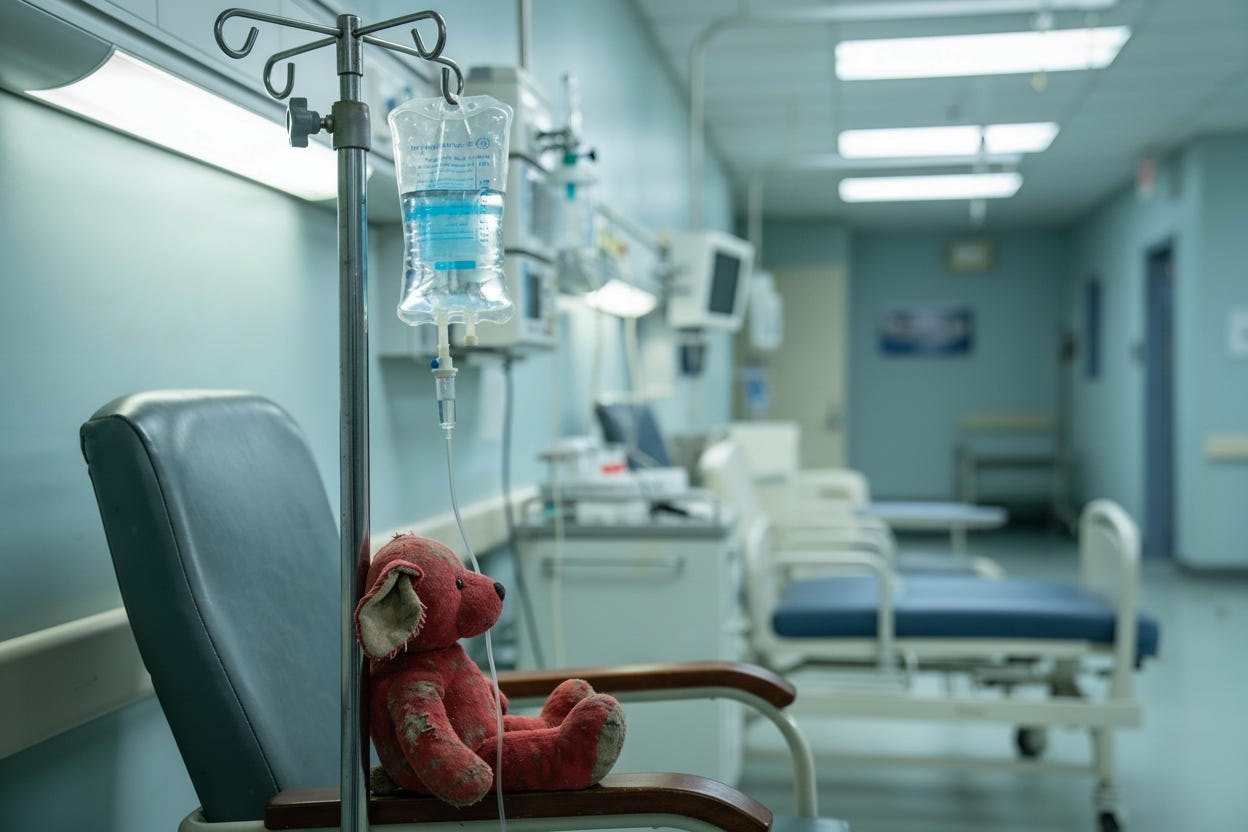
Hospital - Kyle’s room
Thursday, 4:00 p.m.
Kyle had survived the surgery. Barely.
It was almost a week later. He was in the ICU, handcuffed to the bed, with two uniformed officers posted outside his door. Fontenot arranged for me to see him. Officially, I was there as a witness providing additional information. Unofficially, Fontenot wanted me to hear what Kyle had to say.
I spent the past few days checking in on Estelle, working on my final report on the golliwog murders, and spending time with my dad and grandmother.
The case was finished. But there was something still nagging at the back of my mind. That’s why I needed to see Kyle.
He looked small in the hospital bed. Pale. Broken. Tubes and wires everywhere. But he wasn’t dead.
His eyes opened when I sat down.
“You’re alive,” I said.
“Barely,” Kyle whispered. His voice was weak. “That officer... he tried to kill me.”
“I know,” I said.
Kyle’s eyes filled with tears. “I don’t understand. I was surrendering. I had my hands up.”
“I know,” I said. “We’re going to figure out why he did that. But first, I need to understand something else. I need to understand how you got to this point.”
Kyle was quiet for a long moment.
“I know you’ve been betrayed,” I said. “But I’m a journalist, not a cop. And I’m going to tell this story with or without your help. You have a choice about how your story gets told.”
Kyle nodded slowly, as if the effort to move his head was like lifting a boulder.
“I’m trying to understand the truth,” I said. “The public deserves to know.”
Kyle looked at me. His expression shifted—something between hope and resignation.
“There isn’t much to tell, Jackson. I thought I was doing what needed to be done.”
“Humor me. Start from the beginning. I want to understand your political evolution.”
He nodded, but looked confused.
I pulled my chair closer to the bed. “How did you meet Lemaine?”
“About eight months ago,” Kyle said. “I was volunteering at a protest. Lemaine was there, speaking to the crowd. After the speech, he came up to me. He knew my name. He’d read something I wrote on social media about climate activism. He said I was special. That I understood things most people didn’t.”
“What did he say exactly?” I asked.
“He said, ‘Kyle, I’ve been watching the movement, and I see a lot of people talking. A lot of noise. But there are very few people who are actually willing to think critically. To go deeper. To ask hard questions about what real change requires.’ And then he asked if I wanted to intern for his campaign.”
I wrote it down. The language was careful. Flattering. Designed to appeal to a young idealist. Lemaine is the consummate politician.
“What happened next?” I asked.
“He became a mentor to me,” Kyle said. His voice was distant, like he was reliving it. “He’d call me into his office. We’d talk about politics, activism, the state of the country. He’d recommend books. He’d share articles. I felt like I was part of something bigger.”
“What kind of things?” I pressed.
Kyle hesitated. “He’d say things like, ‘The system is designed to make people feel powerless. The media, the institutions—they all work together to prevent real change.’ And, ‘Most activists get co-opted. They accept symbolism and the crumbs the system throws them and call it victory.’”
That’s the thing about politicians. They know all the right things to say. Lemaine was right, of course, but I wasn’t convinced he was going to do anything about it.
“Did he say what the alternative was?” I asked. “What real change looked like?”
Kyle’s jaw tightened. “He said real change required people willing to cross lines. To do things that made them uncomfortable. To understand that sometimes the system only responds to disruption, not debate.”
Something shifted in my chest, but I wasn’t quite sure why. I decided to follow this line of thought.
“Go on,” I said quietly.
“Then one day, he showed me an article,” Kyle continued. “It was about Dolly’s shop. About how she was selling golliwogs. He asked me what I thought about it. I gave the standard answer—that it was offensive, that it should be removed from the community, that she was perpetuating racism.”
“And he said?” I prompted.
“He said I was right. But then he asked me a question that stuck with me. He asked, ‘But what happens if you just talk about it? What happens if you just protest? Does Mercier change? Does the community move forward?’”
“What did you answer?”
“I said no,” Kyle said. “I said that sometimes people don’t change until they feel consequences. And Pierce nodded like I’d said something profound. Like I’d unlocked some secret truth.”
I wrote it down. There was something compelling about this. Was it more than just simple political conversation?
Lemaine was making Kyle feel like he was discovering it himself.
“How did you come across that fake story about Dolly and the Aryan Patriots?” I asked.
Kyle’s eyes widened slightly. “How did you know it was fake?”
“I’ve been investigating,” I said. “I know the evidence connecting Dolly to the Aryan Nation doesn’t exist. So it was fabricated. It was deliberate disinformation.”
Kyle was quiet for a long moment, processing this.
“About four weeks ago,” he said finally. “He called me into his office late one night. He said he’d been doing research. That he’d uncovered something disturbing. He showed me screenshots. Text messages between Dolly and Ryan Daltrey, the hate group leader. They were talking about coordinating a rally in Jackson Square. About using it as an opportunity to intimidate black people.”
“Did you verify any of this?” I asked.
“No,” Kyle said. “Why would I? I trusted him. He’s a city councilman. I thought he had access to information the public doesn’t.”
“What did he say when he showed you the evidence?”
Kyle closed his eyes. “He said, ‘Kyle, this is exactly what I was talking about. This is why our conversations matter. Most people would never see this. They’d never understand the real threat we’re facing. But you do. You understand what’s at stake.’”
I leaned back. Was I hearing what I thought I was hearing? Lemaine had isolated Kyle—made him feel like they shared a special understanding. Like they were in a conspiracy of enlightenment together.
“What did your parents think?”
Kyle scoffed. “Dad’s too busy making deals and mom’s too busy spending his money. They never paid much attention to me—especially when it came to politics. I was more of an ornament than a person to them,” he fumed.
“And then what?” I asked.
“Then he said something that I think about every day now,” Kyle said. His voice cracked. “He said, ‘The thing about people like Mercier is that they don’t believe words matter. They don’t believe protests matter. They only understand power. They only understand consequences.’”
“Did he say what kind of consequences?” I asked carefully.
Kyle didn’t answer immediately. He stared at the ceiling, at the fluorescent lights, at nothing.
“Kyle, did he tell you to kill Dolly?”
“No, he never said that. After he showed me how dangerous she was I made up my own mind.”
I looked at him. He could read my facial expression perfectly. He paused. Then, it hit him. His mouth dropped.
“Wait…no,” he said. “I mean—”
I waited.
His head fell back into his pillow. He stared at the ceiling. “Fuck. This can’t be happening.”
He paused for what felt like an hour.
“He didn’t say it directly,” Kyle said finally. “But the implication was clear. He was saying that Mercier wouldn’t stop selling those statues until she faced a consequence that frightened her. That made her understand the weight of what she was doing.”
“And you believed he meant—” I started.
“I believed he meant fear,” Kyle interrupted. “I thought maybe there would be more protests. More confrontation. More pressure. I didn’t think he meant...”
He trailed off. But I understood. He’d convinced himself it would stop short of murder. Until it didn’t.
“Kyle,” I said, “did Lemaine ever use specific language about taking action? About crossing lines?”
Kyle nodded slowly. “He had this phrase he’d use. He’d say, ‘The question isn’t whether we’re willing to fight. The question is whether we’re willing to be effective.’ And when I’d ask what he meant, he’d say things like, ‘Some battles are won in the court of public opinion. Some are won in the streets. And some... some are won by people willing to do what others won’t.’”
“Like John Brown?” I asked.
“Yes,” he said excitedly. “He talked about John Brown all the time.”
I felt my pulse quicken. That was it. That was the language of manipulation. Vague enough to deny later. Powerful enough to plant the seed.
“Let me ask you something,” I said. “After you killed Dolly, what was his reaction?”
Kyle’s eyes filled with tears. “I called him. The day after. I was terrified. I didn’t know what I’d done. I couldn’t believe it had happened. But I didn’t tell him. I was too afraid.”
“But he knew Dolly was dead, right?”
“He did. All he said was that her death was unfortunate. But for people like Dolly, the chickens come home to roost.”
I sat back. The picture was becoming clear. Lemaine had groomed Kyle, filled his head with ideology, shown him fake evidence, planted the seeds of violence—and then, when Kyle acted, Lemaine had validated it, indirectly. He’d reinforced the belief that Kyle had done something noble.
“Kyle,” I said quietly, “I need you to understand something. Lemaine didn’t accidentally radicalize you. This wasn’t happenstance. He was strategic. He was working toward a specific outcome.”
Kyle looked at me. “What are you talking about? You think he hated her enough to want her dead?”
I shook my head. “No, it’s more than that. I’m talking about the fact that Lemaine needed a distraction,” I said. “He had a scandal about to break. A reporter was about to expose that he’d been sleeping with a seventeen-year-old girl. The daughter of one of his staffers. She dropped the article two days after you killed Dolly.”
Kyle’s eyes widened. “Wait…what?”
“You didn’t know? You didn’t see it in the news?”
“I didn’t. Everything online was about what I did. I remember hearing some staffers talk about it, but I assumed it was a rumor.”
I said, “It wasn’t. He slept with a 17-year-old girl, got her pregnant, and forced her to get an abortion. It’s a scandal that would have ended his political career.”
Kyle’s head dropped into his hands. He looked like he was about to cry again. The man he’d idolized was a monster.
I continued, “And then suddenly, two murders happen. Murders that spark a citywide debate about political violence and activism and racism. Suddenly, Lemaine is the voice of reason. The healing leader. The one who can bring people together.”
“That’s...” Kyle started.
“That’s exactly what Lemaine needed,” I finished. “That’s why he groomed you. That’s why he showed you fake evidence. He may not have been planning to manipulate you into killing Dolly six months ago. But he knew an impressionable young man could be useful at some point. That’s why he kept reinforcing the idea that you were special and brave and doing what was necessary. He was programming you.”
Kyle’s hands shook. The machines around him beeped erratically, responding to his elevated heart rate.
“No,” he said. “No, he wouldn’t... he believed in the same things I believed in. He cared about social justice. He cared about—”
“He cared about power,” I said. My voice was hard. “Everything else was secondary. He used your idealism against you. He took your genuine passion for justice and twisted it into violence. And when you became a liability, when Sadie died and the whole thing started to fall apart—”
“Don’t say it.” Kyle stared at me.
“Kyle, why do you think that officer shot you?”
“I dunno why — I was surrendering.”
“Yes, you weren’t a threat. Your gun was on the ground. You complied. And he shot you three times anyway.”
“Think about it Kyle. Who benefits from you dying before your trial?”
“That’s...” Kyle’s voice broke. “That’s not possible. Pierce wouldn’t—”
Kyle closed his eyes again. A tear ran down his cheek.
“What do I do?” Kyle whispered.
“You tell the truth,” I said. “You tell Fontenot everything. Every conversation with Lemaine. Every article he showed you. Every phrase he used.”
“Will that help?” Kyle asked.
“It might,” I said. “It might not. It seems Lemaine did just enough to push you to murder while giving himself a level of deniability. But you have to try.”
Kyle was quiet for a long time. Then he nodded.
“Okay,” he said. “I’ll tell them everything.”
Lagniappe Coffee Shop
Friday, 12 p.m.
Fontenot called me around noon the next day.
“We need to talk about Brennan,” he said. No preamble. No small talk. Just business.
I met him at Lagniappe Coffee Shop three blocks from the police station. Neutral ground. The kind of place where cops and journalists could sit without drawing too much attention.
Fontenot looked tired. The kind of tired that comes from not sleeping because your brain won’t stop.
“Internal Affairs is investigating the shooting,” he said, sliding a folder across the table. “But they’re moving slow. Union pressure. Brennan’s got a clean record. Twelve years on the force, no complaints, commendations for bravery.”
“He shot an unarmed suspect,” I said.
“I know,” Fontenot said. “I was there. I saw it. But his story is that Kyle made a threatening move. That he perceived imminent danger. And unless we can prove otherwise, it’s his word against ours.”
“What do you need from me?” I asked.
“I need you to dig,” Fontenot said. “He won’t talk to us. Find out if Brennan had a reason to want Kyle dead. Find out if someone paid him. Find out if there’s a connection between Brennan and anyone involved in this case. Maybe you’ll have better luck.”
I opened the folder. Inside were basic details: Julius Brennan, 49, married, one daughter, home address in Metairie.
“I’ll start with his finances,” I said.
The Bayou Chronicle
Friday, 2:00 p.m.
I went back to the Chronicle and started pulling everything I could find on Julius Brennan.
Public records. Property records. Court filings. Credit reports. Social media. Everything.
What I found was a man drowning in debt.
Brennan had a second mortgage on his house. Credit card debt approaching $80,000. Multiple hospital bills in collections. And then, buried in the medical records—a name. Emma Brennan. Age seven. Diagnosis: acute lymphoblastic leukemia.
I called a contact at Tulane Medical Center. She owed me a favor from a story I’d killed two years ago when her department had a data breach.
“Emma Brennan,” I said. “Can you tell me anything about her treatment?”
There was a pause. “I can’t give you patient information, Jackson. You know that.”
“I’m not asking for medical details,” I said. “I’m asking about payment. Specifically, whether anyone made a large payment on her behalf in the last month.”
Another pause. Longer this time.
“There was a payment,” she said finally. “Two weeks ago. Anonymous donor. Quarter million dollars. Covered the entire experimental treatment protocol.”
My blood went cold.
“Do you have any idea where it came from?” I asked.
“Shell company,” she said. “Routed through three different accounts. Whoever paid didn’t want to be traced.”
I thanked her and hung up. Then I called Charlie Liu.
“I need your help,” I said.
Charlie Liu’s Apartment
Saturday, 3:45 p.m.
I was at Charlie’s apartment. His hands shook slightly. He was still trying to atone for his sabotage. And he was probably afraid I’d slug him. I was still angry. But I also knew he was the only one who could help me.
I showed him the shell company information.
“Can you trace it?” I asked.
Charlie pulled out his laptop and got to work. His fingers flew across the keyboard as he navigated through layers of cryptocurrency transactions, corporate registrations, IP addresses.
“It’s sophisticated,” he said. “Whoever set this up knew what they were doing. Multiple shell companies, routed through different exchanges, proxied through foreign servers.”
“But can you trace it?” I pressed.
“Maybe,” Charlie said. “If I can find a pattern. If they reused anything.”
He typed for another twenty minutes. Then he stopped.
“Here,” he said, pointing at the screen. “This is interesting.”
The shell company that paid for Emma Brennan’s treatment was registered through the same cryptocurrency exchange that had been used to pay Charlie for his sabotage work. The same one who paid him to post the most devastating chapter of my life online for all to see.
“That’s not proof of anything,” Charlie said. “Lots of people use these exchanges.”
“But look at this,” I said. I pulled up the messages Fontenot had recovered from Brennan’s burner phone. The encrypted conversations with “Resolver.”
Charlie’s eyes widened. “That’s the same handle. The same account. It’s using the same signature in the metadata. The way the messages are timestamped, the server routes—it’s the same person.”
My pulse quickened. “Can you trace the actual identity behind the account?”
Charlie shook his head. “Not definitively. But I can trace the location where the messages were sent from. Look at this—these timestamps coincide with office hours. And the server pings are coming from the same IP address.”
He pulled up a geolocation map.
“That IP,” he said, pointing, “is registered to a business address on Poydras Street.”
Our eyes met. That address again. The same person who paid Charlie to sabotage me was also paying Brennan’s daughter’s medical bills.
“I don’t know if that’s enough for a warrant,” Charlie said. “But it’s enough to know we’re looking in the right place.”
I called Fontenot immediately.
“I think I’ve found something,” I said. “Can you meet me at my place?”
Brennan Residence
Saturday, 6:09 p.m.
I found Brennan outside his house that evening. He was sitting on his porch, staring at nothing, smoking a cigarette. His wife and daughter were inside. I could see them through the window—his daughter watching TV, bald from chemotherapy, wrapped in a blanket.
I sat down next to him without asking.
“You don’t have to talk to me,” I said. “But I’m going to talk to you.”
Brennan took a drag from his cancer stick.
“Your daughter’s name is Emma,” I said. “She has leukemia. You couldn’t afford the treatment. And someone offered to pay for it if you did one thing.”
Brennan’s jaw tightened. His eyes narrowed.
“I’m not judging you,” I said. “I lost my four-year-old daughter about ten years ago. I know what it’s like to want to save your child. To be willing to do anything.”
Brennan exercised his right to remain silent.
“You had a choice,” I said. “You chose your daughter over Kyle Weston. I understand that. But Kyle was unarmed. He was surrendering. And you shot him anyway.”
Brennan’s hands shook. “He was a murderer,” he said as if he had rehearsed this. “I thought he was reaching for the gun.”
“He was in custody,” I said. “And someone told you to kill him before he could testify. Who?”
Brennan didn’t answer.
“Was it Guidry?” I asked. “Did Theo Guidry reach out to you?”
Brennan looked at me for the first time. His eyes were red.
“It doesn’t matter. I’m not going to give you anything you can use,” he said, dryly.
“How did he contact you?” I asked.
“I don’t know who it was,” he said. “Used a fake name. Everything came through him. The messages. The instructions. The money. The guy used an encrypted app. Said he was acting on behalf of someone who needed the situation resolved. Said if I made sure Kyle didn’t make it to trial, Emma would get her treatment.”
“Did he tell you anything about himself?” I pressed.
“No,” Brennan said.
“Did he ever say who he was working for?” I asked.
Brennan shook his head. “I’m not stupid. I knew what was happening. A murder happens, I’m ordered to eliminate the suspect, and suddenly my daughter’s treatment is paid for. I knew someone powerful was involved.”
I stood up. “I’m going to the police with this. And when I do, you have a choice: you can cooperate and maybe save yourself, or you can stay quiet and go down for murder.”
Brennan shook his head. “If the police ask me about this, I’ll pretend this conversation never happened. They won’t find anything. It’ll be your word against mine. Who do you think they will believe? A nosy reporter or a 12-year veteran?”
Brennan looked at his house. At his daughter.
“You don’t have to do this, Brennan. You’re going to let another criminal get away.”
“If I testify,” he said, “they’ll come after Emma. They’ll make sure the payments stop.”
“If you testify, the people who put you up to this will go to prison,” I said. “Once they’re locked up, they can’t touch anyone. But if you don’t testify, they walk free. And they’ll keep doing this to other people. To other cops. To other desperate people who need help.”
Brennan was quiet for a long time. He seemed to be on the verge of breaking.
“It can’t be easy to be in the debt of someone who would have you possibly throw away your career,” I prodded.
“Jackson. I appreciate you, but I can’t. You’re a father. You know exactly where I’m coming from.”
I did. But I didn’t like it.
I realized he wasn’t going to break. “You do realize that if I manage to put this all together some other way, it could make things worse for you, right?”
“I’ll have to take that chance.
I wanted to keep pressing. Ask him what his daughter would think of him almost killing an unarmed suspect. But there was no point.
I walked away, leaving Brennan sitting on his porch.
It was a little after six o’clock p.m. I was in my car on the way to the office. I called Fontenot.
“Jackson. What’d you find out?”
“Brennan all but confirmed it,” I said. “But he won’t tell you about it. He’s keeping his mouth shut.”
Fontenot’s expression hardened. “He probably already destroyed evidence of his communications with Guidry. If he doesn’t talk, we got nothing, Harlow.”
He was right.
The Bayou Chronicle
Monday, 10:00 a.m.
Mavis was waiting for me when I got back to the newsroom.
“Tell me everything,” she said, closing her office door.
I walked her through it: Brennan’s daughter’s medical bills. The anonymous payment. Charlie’s cryptocurrency trace. The matching handles between Guidry’s communications with Brennan and his communications with Charlie. The geolocation data pointing to Guidry’s office.
Mavis listened without interrupting. When I finished, she leaned back in her chair.
“This proves Guidry paid Brennan,” she said. “It proves Guidry ordered Kyle’s execution. But it doesn’t matter because we can’t make it stick.”
Mavis exhaled. She reached into her drawer and pulled out a bottle of bourbon.
She didn’t ask whether I wanted some. She poured two glasses and pushed mine over to me.
It was a bourbon kind of day.
“We know Lemaine had Guidry pay Charlie to infiltrate the Chronicle. He paid Brennan to kill Kyle. And they were careful enough to conceal themselves,” I said. “They’re gonna get away with it, Mavis.”
“Even worse, Lemaine’s gonna win that election. He’s ahead by 20 points in the polls and the election is tomorrow,” Mavis said.
She poured two more drinks.
“Even if we could prove it was Guidry,” Mavis said. “Lemaine can claim he had no idea what Guidry was up to. He can say Guidry acted independently. He can say Guidry was trying to protect Lemaine’s campaign by eliminating a dangerous suspect. And without direct evidence linking Lemaine to the order, there’s not a damn thing we can prove.”
I felt the weight of it settling on me. Lemaine had been too careful. He’d used Guidry as a buffer. He’d used intermediaries and encrypted messages and coded language. He’d built a wall between himself and the actual crime.
But at least the bourbon was good.
Lemaine’s Campaign Office
Tuesday, 9:00 p.m.
The Crescent City Ballroom was packed.
Supporters and donors crowded around the stage where Mayor-elect Pierce Lemaine stood, his wife beside him, waving to the crowd. The returns were in. He’d won in a landslide. Sixty-three percent of the vote. A mandate, his campaign and the media would call it.
I watched from the back of the room. Hundreds of people were there. Soaking in a victory that wasn’t theirs.
Lemaine gave his victory speech. All the right words. Healing. Unity. Moving forward together. He acknowledged the difficult times the city had faced—the murders, the violence, the division. He positioned himself as the bridge between warring factions. The voice of reason in a fractured community.
The mayor-elect called a moment of silence. For Dolly Mercier and Sadie Broussard. A ball of fire exploded in my chest.
“Tonight,” he said, his voice carrying through the ballroom, “New Orleans chose hope over fear. We chose to build, not to tear down. We chose a future where all of us—regardless of our politics, our beliefs, our backgrounds—can come together and create something meaningful.”
The crowd erupted in applause.
I waited until after his wife had embraced him, until after the first wave of congratulations had passed. Then I moved.
I caught his eye across the room and gave him a look that said: we’re gonna talk.
Lemaine’s expression shifted for just a moment—a flicker of something that might have been concern. Then he excused himself from a conversation with the outgoing mayor and made his way toward me.
“Jackson,” he said, extending his hand. “Great to see you. Covering the victory?”
“Something like that,” I said, a little more loudly than he would have liked. I didn’t shake his hand. “How does it feel to get away with murder, mayor-elect?”
He studied my face. I could see him calculating. Trying to figure out what I knew and how much danger I represented.
“We should find a place with a little more privacy,” he said smoothly. “Let’s head upstairs. We can talk there.”
The private room was on the second floor of the ballroom. Floor-to-ceiling windows overlooked the city. A desk. A leather couch. The trappings of power.
He closed the door behind us and turned to face me.
“What’s this about?” he asked.
“Theo Guidry. Kyle Weston. Dolly Mercier. Sadie Broussard. Estelle Mason,” I said, keeping my voice more calm and collected than I felt on the inside.
“What about them, Mr. Harlow?”
“You played Kyle. Turned him into a killer. He told me everything.”
“You print a word of that and your news outlet will be facing a lawsuit.” Lemaine had the uncanny ability to accompany a threat with a smile that made him look like he was doing you a favor.
“I won’t print it. But I know it. And I want you to know I know it.”
“You don’t know shit,” Lemaine sneered.
“I know you manipulated Kyle so well that he didn’t even realize what you’d done until he was in a hospital bed with three bullet holes in him. He’s expected to live, by the way. That crooked cop you and Guidry paid to kill him failed.”
If Lemaine was nervous, he didn’t show it. That damn smile remained plastered on his face.
He replied, “What does this have to do with me? Do you have any proof I had something to do with this?”
“It doesn’t matter, does it?”
“No, it doesn’t. You see Jackson,” he began, taking the fatherly tone he probably used with Kyle. “This city needs an overhaul. It needs me.”
He straightened his tie. “You see, I’ve given decades to this city. Blood, sweat, and tears. I love New Orleans and New Orleans loves me. I plan to save this city, and I won’t let anything, or anyone get in my way.”
“Why did you have Kyle kill Dolly?”
“There you go with the accusations—”
I cut him off. “Don’t bother,” I said. “You had two reasons. You slept with your staffer’s daughter. She was only seventeen. You probably groomed her, too.”
“Harlow, I’m warning you—”
“Shut the fuck up. I’m talking,” I snapped. “You knew you were about to be exposed. So you set things in motion to blunt the damage with a sensational distraction. Then, after Dolly was dead, you exploited her death to position yourself as a uniter, thereby boosting your polling numbers.”
“I AM a uniter, you—”
“You’re a piece of shit,” I said, talking over him. “You groomed Kyle. You radicalized him. You showed him fake evidence that Dolly was connected to hate groups. You filled his head with ideology until he believed that murder was justified. And then when he became a liability, when he was about to talk, you had him shot.”
“That’s a very compelling theory,” Lemaine said. He walked to the desk and sat down, relaxed and composed. “But it’s just a theory. And theories aren’t facts.”
“Kyle will testify,” I said. “He’ll tell us exactly what you said to him. Exactly how you manipulated him.”
“Kyle is a mentally unstable young man who committed terrible crimes,” Lemaine said. “His testimony will be scrutinized heavily by any defense attorney. And anything he says about me will be filtered through his own guilt and confusion. A halfway decent lawyer would rip him apart like a piece of tissue. And I have the best lawyers.”
Lemaine smiled, “This is, of course, if he lives to make these unfounded accusations.”
There it was. A flash of menace in that toothy smile. It appeared in half a second and dissipated half a second later. A slip of the mask. He hadn’t admitted anything. He was just speculating — at least that’s what he’d say if anyone asked.
My fingers balled up into a tight fist.
“Sadie Broussard is dead,” I said. “Dolores Mercier is dead. Because of you.”
“Because of Kyle Weston,” Lemaine corrected. “Kyle killed those women. Kyle made those choices. I can’t be held responsible if he took my words as justification for violence. I never told him to kill anyone.”
“You might as well have,” I said.
Lemaine leaned back in his chair. He looked at me with something like pity.
“Jackson, do you know what I’ve learned in thirty years in this game?” he asked. “I’ve learned that the world is divided into people who take action and people who talk about action. You’re a talker. You write articles. You expose corruption. You think that somehow, through words, you’re going to change things.”
“And you?” I asked.
“I take action,” Lemaine said. “I identify problems and I solve them. Sometimes those solutions are messy. We both want the same thing. We want better for our city. The difference is that I’m doing something about it while you type on a keyboard.”
“I’m a talker. You know who else said that to me?”
“Like I said, it’s not my fault he misinterpreted my words.”
“And two people are dead because of you.”
“Two dangerous people, Mr. Harlow,” Lemaine said. “Dolly Mercier was poisoning the community with her hatred. Sadie Broussard was a radical who glorified violence, then changed her mind and said we should unite with white supremacy.”
I stared at him. I’d known he was evil, but hearing him say it out loud—hearing him justify it so calmly—hit different.
“You think you’re the first person who’s figured out how the game works, Jackson?” Lemaine said. “I’ve been playing it for years, and I’ve been quite good at it. You? You’re still learning the rules.”
“See, that’s it right there,” I said. “That’s going to be your downfall. Eventually, you’re going to slip up because your arrogance has you thinking you can’t make mistakes.”
Lemaine smiled. It was a sad smile, like he was talking to a homeless child.
“No,” he said. “I didn’t get to where I am by making mistakes. Also you don’t have anything. I’ve done nothing wrong. Kyle Weston will say whatever he says.”
He stood up and walked to the window again.
“I’m the mayor of New Orleans,” he continued, buttoning his jacket. “I just won a landslide election. I have the support of this city. And I have the best lawyers money can buy. You have a laptop.” He scoffed. “So go ahead, Harlow. Write your articles. Make your accusations. But you and I both know how this ends.”
He was obviously drunk with power. It didn’t even occur to him that he might lose. This is how I would beat him—eventually.
“How does it end?” I asked.
“With me in office,” Lemaine said. “Serving my city. Building my legacy. And with you, still writing stories that nobody cares about.”
I wanted to argue. But it was pointless.
“Now, get out,” Lemaine said. He didn’t look at me. He just stared out at the city, like Nebuchadnezzar admiring his kingdom.
I didn’t move. I’d leave when I was ready.
“I’ll be watching you. Everything you do, everything you say. I have my reputation for a reason.”
He turned around, his eyes smoldering.
“You will make a mistake,” I continued. “It might be tomorrow. It might be three years from now. But it’ll happen. And when it does, mine will be the last face you see before you get what’s coming to you.”
“Is that a threat?”
“Let’s call it advance notice, as a courtesy.”
I turned around, opened the door, and strolled out of the room.
Outside the Ballroom (10:15 PM)
I stood on the street outside the Crescent City Ballroom, watching the celebration continue through the windows. Lemaine stood in the center of the room, accepting congratulations, smiling for photographers.
My phone buzzed. A text from Mavis: “How’d it go?”
I typed back: “He’s going to get away with it. But not forever.”
The response came quickly: “I’d tell you not to go to war with the new mayor. But I know you wouldn’t listen.”
As I walked to my car, I thought about something Lemaine had said: the world is divided into people who take action and people who talk about action.
He thought I was just a talker. But he had no idea who I am. He would find out soon enough.
EPILOGUE: AFTERMATH
Somewhere in the Marigny, 7:47 PM
Two weeks after confronting Lemaine, I was sitting at the bar nursing a whiskey and scrolling through social media. The news feed was the usual soup of political rage and memes.
The president had done something half the country hates and the other half loves. Congress’ approval ratings are in the toilet. The usual stuff.
A did story catch my eye.
BREAKING: Steakhouse Owner Found Dead in Kitchen—Police Seeking Suspects
The article was from WVUE, updated two hours ago. The victim: Thomas Garon, 52, owner of The Cypress Room on Magazine Street. Found in his restaurant’s kitchen. Pronounced dead at the scene. It was a follow-up on the report I’d read while I was working on the Mercier case.
I clicked deeper.
“Garon was discovered by staff arriving for the evening shift. Initial autopsy reports suggest multiple stab wounds. Police are currently investigating.”
The article mentioned the victim was stabbed 37 times. It sounded like overkill to me.
I filed it away. New Orleans is a violent city, and this wasn’t my case anyway.
My phone buzzed. Estelle: “I’m here.”
I looked up from my drink. She was standing in the doorway of Snug Harbor, backlit by the neon glow of the venue’s sign. She moved slowly—the neurologist had cleared her, but her body was still remembering the trauma. Still healing.
I stood up and waved at her, catching her attention. She smiled when she saw me.
I gave her a bear hug, and for the first time in weeks, the weight on my chest lifted just enough for me to breathe.
We sat at a table in the back, away from the crowd. A jazz quartet was setting up on stage.
“You look good,” I said.
“I feel like I’ve been hit by a truck, but thank you,” she replied, signaling the bartender for a drink. “How are you?”
I shrugged. “Waiting. Watching.”
She knew what I meant. Lemaine.
“He’s not going to slip up, Jackson.”
“Of course he will,” I said. “They always slip up, eventually. That’s why I have a job.”
Estelle studied me for a moment, then changed the subject.
“I have something to tell you.”
“What?”
“Dolly’s will was read yesterday,” she said carefully. “I’m... I own Memory House now.”
I blinked. “You’re serious?”
“Completely serious. Marie—Dolly’s sister—she didn’t want it. She told Dolly to leave it to someone who actually cares about history. About people. Dolly put me in the will.”
I didn’t know what to say. Estelle, who’d survived a killer’s hands. Estelle, who’d been beaten and left for dead. Now owned the place where Dolly had died.
There was poetry in that. Dark poetry, but poetry nonetheless.
“That’s incredible, Estelle.”
“It’s terrifying,” she said. But she was smiling. “But yeah. I’m going to run it. I’m going to make it something Dolly would be proud of.”
The jazz quartet started playing—something smooth and mournful. We sat in silence for a moment, listening.
“How’s your investigation going?” she asked. “Besides Lemaine?”
“There’s a steakhouse owner. Dead. Thirty-seven stab wounds. Police have nothing.”
“That’s... a lot of rage.”
“Yeah.”
“You thinking about taking it on?”
I shook my head. “Nah. Murder and New Orleans go together like sand and beaches. Probably some nutjob.”
She nodded as if she understood.
As the night wound down and the jazz got slower, I told Estelle about the confrontation in Lemaine’s office—the things he’d said, the way he’d dismissed the idea that he could ever slip.
“Do you believe him?” she asked.
“No,” I said. “He believes himself. That’s different. That’s worse.”
“How are you going to get him?”
“The same way I always do,” I said. “The truth. Document it. Expose it. Let the chips fall.”
“He’s the mayor of New Orleans.”
“Not forever.”
She raised her glass. “To the long game, then.”
I raised mine. “To the long game.”
We clinked, and for a moment, the weight lifted again. Just a moment. But it was enough.
Estelle: “Did you hear Kyle took a plea deal?”
Jackson: “Yeah. Life without parole. At least the jury won’t have to decide.”
Estelle: “You think he would’ve talked if he’d gone to trial?”
Jackson: “No. He would’ve lawyered up and said nothing. Lemaine made sure of that.”
I ordered another drink. Kamikaze on the rocks. Estelle still hadn’t finished hers.
“Speaking of lawyering up, Detective Brennan’s still on the force, can you believe that?”
“Internal Affairs cleared him?”
“Officially, there’s ‘insufficient evidence’ of misconduct. Unofficially, he’s got union backing and a captain who doesn’t want the headache. His daughter’s doing well though. That part’s good.”
“Blood money doesn’t cure leukemia, Jackson.”
“No. But it bought her a life. That’s what he’ll tell himself when he can’t sleep. But at least Colin Reddick isn’t getting a reprieve.”
Estelle raised an eyebrow. “Finally. How many people did he swindle?”
“Dozens. Once I wrote about the fraud, it opened the floodgates. Other victims came forward. NOPD’s building a case. I don’t see how his business — or his reputation — survives this.”
“Think he’ll do time?”
“If there’s any justice, yeah. But he’s got money for lawyers. So...I guess we’ll see.”
“Whatever happened with that heritage guy? Floyd?”
“Turns out he was protecting someone. Some guy from his heritage group. They’re... close, if you know what I mean. Which is why he wouldn’t give up the alibi.”
Estelle nodded. “Yeah, I don’t think that would go over well with the group he runs with.”
Jackson: “Not even a little bit. I’m thinking he might be reconsidering some of his views.”
“What about the guy at the Chronicle who doxxed you? Anything happen to him?
“Charlie. Mavis didn’t press charges, but she couldn’t keep him on staff. Too much damage.”
“Is he okay?”
I took a sip and shrugged.
“I haven’t talked to him. I’m still... working through that one.”
“You should. He was manipulated too.”
“He was. But that doesn’t justify it. He went way too far. I don’t think I can forgive that.”
Estelle fixed her hair and finished her drink.
“But, on a happier note, tell me what you plan to do now that you’re the owner of an antique shop,” I said.
“I’ve been thinking about what to do with the shop. Some people want me to turn it into a civil rights museum. Others want me to keep it as-is.”
Jackson: “What do you want?”
“I want to keep selling antiques. But do it better. Have real conversations about history instead of just moving merchandise,” she said. “Be like Dolly was—tell the story, not just the artifact. Maybe I’ll finally use my history degree.”
“She’d like that.”
“I know she would.”
We sat in silence for a few minutes, listening to the band. The trumpet blared mournfully, making me think of Sadie.
“Sadie’s family is still a wreck. I haven’t had any time to process what happened to her,” I said.
“I know,” Estelle said, moisture forming in her eyes. “I can’t stop thinking about what she would have went on to do if she hadn’t—” her voice trailed off.
“Did you know her blog hit a million shares?”
“Even after?”
“ Yes. Even after. Sometimes that’s when people finally listen. Her words are doing more now than she ever could have done in person.”
I paused as Estelle ordered another drink.
“You think there might be change?” she asked. “Like, where people will finally start talking with each other instead of all this nastiness?”
“I don’t know. I wish I did. I really hope so. I’ve gotten so many emails and DMs telling me how much Sadie’s courage meant to them,” I said. “She might not have changed the country, but there’s no telling how many people she has touched.”
“That’s sad and beautiful at the same time.”
“Yeah. That’s life in New Orleans.”