

The Grinning Golly: Baiting the Beast
Episode 6: Harlow sets a trap.

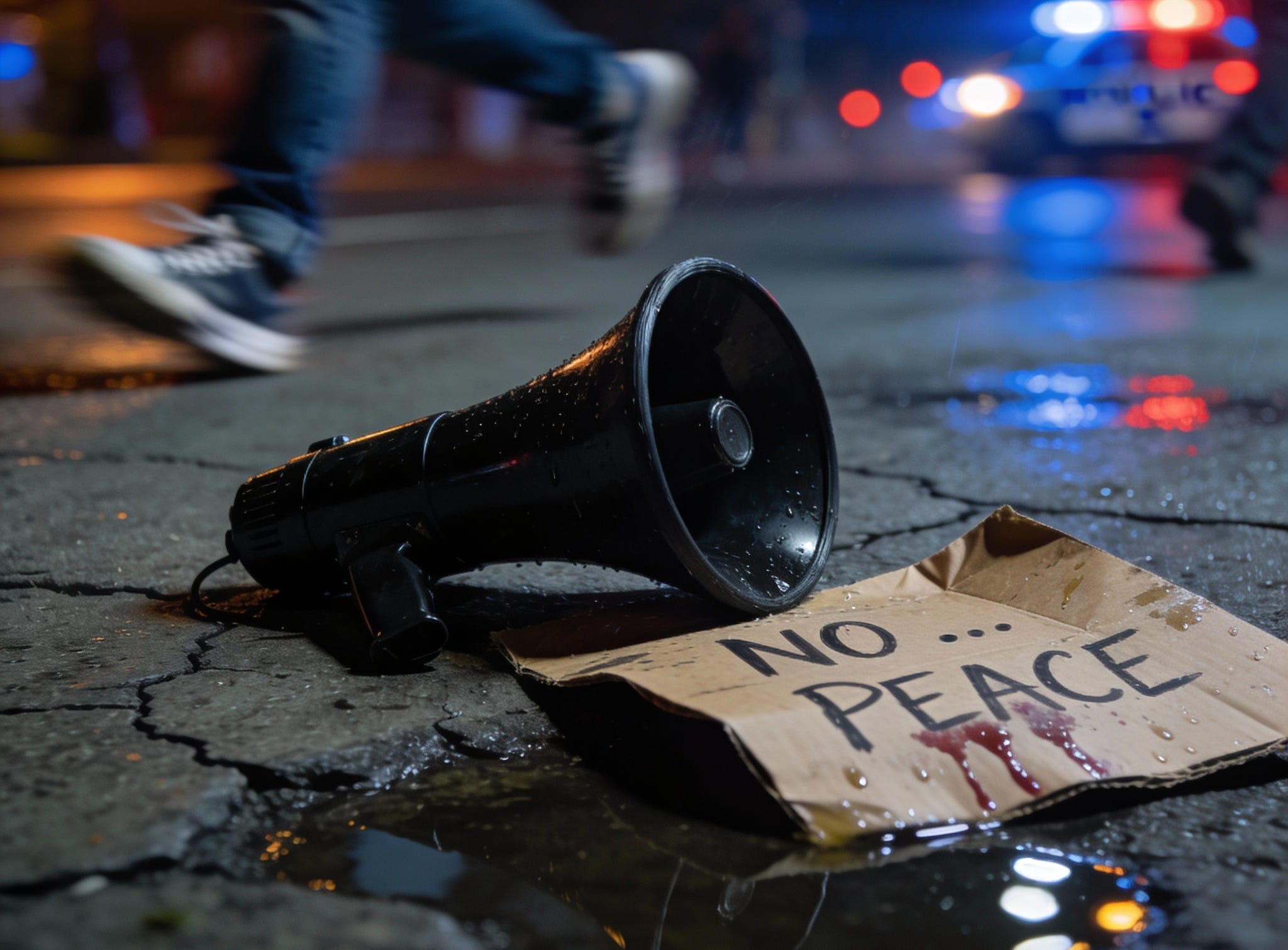
Previously on The Grinning Golly:
Jackson found Sadie’s killer turning his sights on the living, racing to Estelle’s apartment just in time to find her brutalized but barely alive after a vicious attack that echoed Dolly and Sadie’s murders. Reeling from guilt but fueled by Estelle and his father’s pep talk, he became the hunter instead of a victim.
New Orleans East Hospital, Neuro Floor
Monday, 8:30 a.m.
Hospitals always smelled like bleach and disease. This one added a hint of cheap coffee and despair.
Estelle lay in the bed, sleeping against the white sheets, a thin bandage near her hairline and a tangle of wires running from her chest to a monitor that beeped a slow, marching rhythm. One eye was swollen and red.
The dark marks around her neck made it look like invisible hands were still trying to strangle her.
But she was alive.
A neurologist had given me the rundown an hour earlier in the hallway, speaking the way people do when they’ve already repeated the same speech three times in the same day.
“Ms. Mason has a moderate traumatic brain injury,” he’d said. “Concussion with a brief loss of consciousness and a small, non-displaced skull fracture. The CT shows some bruising on the brain, but no large bleed. That’s a good sign.”
He’d held up a hand before I could ask a question.
“But the first 24–48 hours are critical. We have to watch for swelling, delayed bleeding, changes in her neurological status. Headaches, vomiting, confusion, seizures—any of those, and things can get serious fast.”
Translation: she was out of immediate danger, but still had a Mt. Everest to climb.
I sat in the chair by her bed, elbows on my knees, watching the monitor like it was a Marvel flick.
Estelle’s eyes fluttered, then opened halfway.
“Hey,” I said softly. “Welcome back.”
She blinked, trying to focus. “Jackson?” Her voice was rough, like someone had taken a cheese grater to her vocal cords.
“It’s me. You’re in the hospital.”
She winced, lifting a hand halfway to her head before thinking better of it. “Feels like I lost a fight.”
“But you’re alive.
“You should see the other guy,” She said. “I carved him up and set his eyes on fire with my pepper spray.”
A phantom of a smile tugged at one corner of her mouth. “Good.”
She was awake, oriented, knew who I was, and where she was. That was something. The doctor had called it “promising.” I called it a miracle.
“How bad is it?” she asked.
“Concussion. Crack in your skull. Bruised brain, bruised neck.” I kept my tone light, like we were talking about a sportsball game. “They’re keeping you here to watch for swelling. Couple of days at least.”
She nodded slowly, then winced again. “Hurts to move.”
“That’s your body telling you to sit your ass down,” I said. “You should listen to it.”
She closed her eyes for a second, then opened them again. “Did they get him?”
“Not yet,” I said. “But he didn’t walk away clean. You scratched him. Hard. Got DNA under your nails and pepper spray in his eyes. Anyone walking around New Orleans today with a burned face and cat scratches is going to have a tough time pretending he’s innocent.”
“Good,” she whispered. “I wanted… I wanted to make him hurt.”
“You did,” I said.
She looked past me toward the ceiling. “He said I was part of the problem. That I helped Dolly even though I’m a black woman. Like that made it okay.”
Her eyes flashed with rage, communicating what the rest of her body couldn’t. She looked like she wanted another shot at him.
“He’s wrong,” I said. “About you. About Dolly. About everything. And I’m going to prove it.”
Her gaze found mine again. “You sure?”
“Yes,” I said. “It’s time for him to find out what it feels like to be the prey.”
She studied my face for a long moment, like she was doing her own neurological exam.
“Promise me something,” she said.
“Name it.”
“Make it worth it.” Her voice was fading. “All of this.”
I wanted to tell her it already was. That her fighting back, her surviving this far, had changed the story.
Instead, I just nodded. “I will.”
Her eyelids drooped. The doctor had said fatigue, nausea, and light sensitivity were all expected—her brain was basically throwing a tantrum and needed dark and quiet to calm down.
“Get some sleep,” I said. “I’ve got work to do.”
“Jackson?” she murmured.
“Yeah?”
“Don’t do anything stupid.”
“I’m a journalist. Stupid is in my job description.”
She let out a small, painful-sounding laugh and drifted back under, the monitor still marking time.
I sat there another minute, watching her chest rise and fall.
Dolly was dead. Sadie was dead. Estelle was hanging on because she’d fought like hell and because paramedics had gotten there fast enough. That was it. That was the line, and this asshole had crossed it.
And he was going to regret it.
The killer had taken his shot at someone who believed in me. Now I had three names on my list—Floyd, Reddick, Weston—and one promise in my chest.
Make it worth it.
I stood up, took one last look at Estelle, and walked out of the room.
The hunt was on. And the killer was going to find out what it’s like to be the prey.
Harrison Floyd’s Shop
Monday: 10:11 a.m.
The bell above Harrison Floyd’s door chimed as I stepped back into the smell of tobacco and old wood.
Floyd was behind the counter, flipping through a dog-eared catalog. He looked up when the bell chimed.
“Again? What brings you back this time?” he asked, setting down the catalog.
“Morning to you too,” I said. “Got something you’re going to want to see.”
“That a fact?”
I unfolded a printout and set it on the counter between us.
“Item: Confederate officer’s pistol, circa 1862,” I read. “Purported provenance: Floyd family estate, St. Bernard Parish. Sale price: eighty-five thousand. Buyer: D. Mercier, Memory House Antiques.”
His eyes tracked the line. His jaw tightened.
“Dolly bought that pistol from Colin Reddick,” I said. “Not from you. Not from your family. From him. He used your story to jack up the price.”
“What do you mean?”
“I mean, this pistol is worth less than a water gun. And Colin Reddick used your family name to make some extra bucks.”
Floyd’s nostrils flared. “She told me it was fake,” he said slowly. “Said the metal was wrong. The weight. I told her she was full of it. Called her a liar.”
“She wasn’t,” I said. “After that, she started digging into Reddick. Cross-checking his sales, talking to other buyers. She had receipts, photos, notes. You were one line in a long line of poor saps Reddick grifted.”
He stared at the page as if he were looking at his own death certificate.
“All that time,” he said, “I’m blowing up her phone, showing up at her shop, calling her every name I can think of… and she was trying to help me.”
“Looks that way,” I said.
He let out a sharp breath, somewhere between a laugh and a choke. His phone rang, but he didn’t answer.
“You come here to tell me I’m a damn fool?” he asked.
“I came to tell you three things,” I said. “One: Colin Reddick played both of you. Two: the guy who killed Dolly and Sadie likes to get his own hands bloody. He doesn’t strike me as the type to obsess over provenance and Civil War price guides.”
“And the third thing?”
“You’re a damn fool.”
Floyd’s eyes burned like a furnace, but I had a feeling his rage wasn’t directed at me this time — at least not entirely.
He looked back down at the page. His right hand curled slowly into a fist.
“That son of a bitch,” he muttered.
“I’m guessing he’s not on your Christmas card list anymore,” I said.
“I can’t believe I fell for it,” Floyd said.
I nodded toward the paper. “What you do with that is your business,” I said. “But Dolly wasn’t your enemy, Harrison. And if you didn’t commit these murders, neither am I.”
He swallowed hard, then gave me a short nod without looking up.
I left him marinating on that and drove to see Reddick.
Floyd was looking less and less like the culprit. But I still hadn’t crossed him off my list. Part of me pitied him. I wondered what it was like to live in the past, chasing after old glory that wasn’t all that glorious.
Reddick & Company Antiques
Monday, 11:13 a.m.
Colin Reddick’s shop looked the same as it had when I last visited, like a well-lit Ponzi scheme. Glass cases. Velvet-lined displays. Little printed cards telling big stories that were probably about as true as Grimm’s Fairy Tales.
Reddick hovered behind the counter, straightening a row of pistols that didn’t need straightening. He pasted on a smile when I strolled in.
“Mr. Harlow,” he said. “Back again. I do hope this isn’t another attempt to slander my good name.”
“Relax,” I said. “Your name was never that good.”
The smile twitched like a clock hand. “Is there a reason you’re here?”
I laid the same printout on his counter and tapped the line.
“Confederate officer’s pistol,” I said. “Floyd family provenance. Eighty-five grand. Sold to Dolly Mercier.”
He glanced at it. “Yes. One of my more distinguished sales. Completely above board.”
That last line was telling. He was used to having to defend his integrity.
“Dolly didn’t think so,” I said. “She told Harrison Floyd it was fake. Then she started pulling at the threads on everything you’ve ever sold. Receipts. Photos. Names. You became her project, Reddick.”
He bristled. “Are you implying—”
“No, I’m saying,” I said. “You lie. A lot. And Dolly was about to make that public. And you knew it.”
He looked past me at the front window, then back. “She had opinions,” he said carefully. “That doesn’t make me a criminal.”
“It does make you someone with motive,” I said. “Dolly was building a case that could have tanked your business and what’s left of your reputation. Then she ended up bludgeoned to death in her office. That’s the kind of coincidence that keeps me up at night.”
His eyes flashed. “I had nothing to do with that woman’s death.”
I looked at his hands. No bandages. Not that this exonerated him. He still had motive and opportunity.
“Maybe,” I said. “Maybe you’re just the kind of guy who lets other people get their hands dirty while you pretend to sell ‘history.’ Maybe you didn’t pick up a blunt object yourself. Maybe you just made sure people like Dolly and Floyd were too busy fighting each other to look at you.”
“That’s an ugly accusation,” he said.
“If I wanted to accuse you, you’d be speaking with Fontenot instead of me,” I said. “I’m not there yet. But I’m also not crossing you off my list.”
“So what now?” he asked.
“Now I keep looking at everyone who had something to gain from Dolly’s death,” I said. “And at the guy who actually swung the weapon.”
I picked up the printout, folded it, and slid it back into my notebook.
“For what it’s worth,” I added, “Harrison Floyd knows the pistol was fake now. And he knows you’re the one who told the story.”
Reddick’s eyes widened and bulged about an inch out of his face.
“What’d you tell him?” he asked.
“I told him the truth,” I said. “You might want to invest in some bubble wrap. For your nose.”
I headed for the door.
“You’re playing a dangerous game, Harlow,” he called after me.
“Not as dangerous as the one you’ve been playing. Good luck.”
Out on the sidewalk, the air felt a fraction cleaner.
But neither Floyd nor Reddick had pepper spray in their eyes and fresh scratches on their face. Still, it didn’t take them off the list.
But I was going to find out whether that honor belonged to someone else.
Time to start poking the bear.
The Bayou Chronicle
Monday, 1:00 PM
Typing felt different when someone you cared about was in a hospital bed. I stared at the blinking cursor, then at the headline draft at the top of the screen: BREAKING: Golliwog Killer Fails to Claim Another Victim.
Too on the nose? Perhaps. But this wasn’t for the readers.
It was for an audience of one.
The article wasn’t about gore or fear. No breathless play-by-play of the attack. No pornographic crime scene details.
Instead, I painted a picture of a very specific type of man.
I called him “our city’s most fragile wannabe serial killer,” and a “poser who targets women because he’s afraid of a real challenge.”
I wrote about Dolly and Sadie as people first—Dolly, the former nurse who patched up protesters who hated her, and Sadie, the activist who promoted unity instead of animosity.
I wrote about Estelle as the connective tissue between them. The black woman who took flak for keeping Dolly’s shop running. Who knew everyone on the block by name, who fought back with pepper spray and fingernails when most people would have just frozen.
I made Dolly and Sadie the heroes and the killer a feckless coward.
It was bait.
I ended with a line I knew would land like a punch:
“Real courage is sitting across from someone who disagrees with you and staying in the conversation. Weak little boys bludgeon women to death because they aren’t getting their way.”
I filed the draft and walked it into Mavis’s office.
She read in silence, eyes moving fast. She looked at me with that poker face of hers.
“You’re trying to piss him off,” she said when she finished.
“Absolutely,” I said.
“Jackson—”
“I’m not naming him,” I cut in. “No details that compromise the investigation. No speculation. Just… an accurate description of a certain type of man.”
She studied me for a moment and leaned back in her chair.
“You know this could work,” she said. “You also know it could backfire.”
“He’s already trying to kill people around me,” I said. “He’s not going to stop if we’re nice to him.”
She sighed. “You’re sure you’re not just doing this because you feel guilty about Estelle?”
“Of course I am,” I said. “I’m also pissed off.”
She almost smiled at that. Almost.
“I’ll run it,” she said. “But if Fontenot calls me screaming, I’m sending him to you.”
“Wouldn’t have it any other way.”
The article went live at 4:15 PM.
I went home, grabbed a beer, and sat in the dark with my phone face-up on the coffee table, notification chime turned up.
The piece started doing what pieces do—shares, quotes, angry comments, people accusing me of “glorifying” or “downplaying” or “politicizing” depending on which sentence they stopped reading at.
None of that mattered.
I was writing for a special call.
It came at 6:42 PM.
Unknown number. Same as always.
I answered on the fourth ring. “Well hello there,” I answered.
“Mr. Harlow,” the distorted voice said. “You seem… confident.”
“Good evening,” I said. “Enjoy the article?”
“You think you’re clever,” he said. “You think you can create a fake narrative about me.”
“Fake? I was telling the truth.”
“What are you playing at, Harlow?”
“Just doing my job,” I said. “Besides, you’ve already had your say. Walls, floors, people’s faces. I figured it was time for a counterpoint.”
“You called me weak,” he said. There was a slight tremor in the modulated voice. Not sadness. Anger.
“The shoe fits,” I said.
Silence crackled on the line.
“You really believe that?” he asked. “You think what I’ve done is cowardice?”
“I think sneaking into women’s homes and hitting them from behind is what you do when you’re scared to look someone in the eye,” I said. “I think if you had even a modicum of intelligence, you’d argue them instead of turning people’s skulls into chalk. So yes, you are a coward.”
“You don’t understand,” he snapped. “They were part of the machine. Mercier, Broussard, Mason. They helped sell lies. They propped up a system that grinds people down and calls it the American dream.”
“And you fixed that by making sure they couldn’t talk back,” I said. I clapped loud enough for him to hear it. “So bold. So brave.”
His breathing was louder now, a harsh rasp under the artificial filter.
“I gave them meaning,” he said. “Their deaths woke people up. They made people listen.”
“Funny,” I said. “From where I’m sitting, all you did was prove you’re terrified of women who don’t do what you want. Doesn’t sound very ‘woke,’ does it?”
“You’re the coward, Harlow. You sit behind a keyboard and type all day. You’re too afraid to take action. I’m the one who has the whole city talking.”
“And how many of them are on your side?
“It doesn’t matter. People hated Martin Luther King Jr. when he died.”
I laughed — not to get under his skin, but because it was hilarious.
“What’s so funny?” the voice demanded.
“Not only are you a coward, you actually think you’re on par with MLK,” I said between laughs. “Of all the braindead things you’ve said so far, this takes the cake.”
“I’m not a coward, you asshole. You don’t know anything about me,” he said.
“Sure, I do,” I said. “I know you were close enough to Estelle to feel her pepper spray hit your eyes. I know you were close enough to Sadie for the knife to catch your hand when she grabbed it. I know you like watching your work afterward, which means you’ve read that article at least twice by now. And now, I know you have a dream.”
He was silent for a few seconds. When he spoke again, the bravado was back, but thinner.
“You’re trying to provoke me,” he said. “You want me to slip.”
“Honestly?” I said. “You’ve already done that.”
He paused, as if trying to figure out where he’d made a mistake. I knew he was worried.
“By the way,” I said. “How does it feel knowing you failed? Estelle is still alive. She’s gonna recover. You got lucky with the first two. I think it’s time for you to hang it up. You’re no good at this.”
“Shut up,” he hissed.
“Touched a nerve,” I said. “Must be irritating. Like pepper spray.”
He hung up.
I sat there for a moment, listening to the dead line, heart pounding.
I immediately dialed Fontenot.
“Yeah?” he answered.
“He called,” I said. “He read the article. He’s not happy.”
“What did he say?”
“He thinks Estelle should be dead,” I said. “He didn’t like hearing she’s not. He as good as admitted he was at her apartment, and that he got hit with the spray. We’ve got him reacting to specific details only the attacker would know.”
“You record it?” Fontenot asked.
“Yep,” I said.
“Send it over,” he said. “If he’s mad enough to start calling, he’s mad enough to slip. Keep doing whatever you’re doing.”
I looked at the phone in my hand.
Whatever I was doing, it was working.
The bear was awake.
New Orleans East Hospital, Neuro Floor
Monday, 6:15 p.m.
The neuro floor was quieter at night. Machines hummed softly. Shoes squeaked on polished linoleum. Somewhere down the hall, a TV murmured the latest doom and gloom news under its breath.
Estelle’s room light was dimmed when I slipped in. Her monitor still beeped its stubborn, steady rhythm. The bandage at her hairline was a small island of white in a sea of auburn.
Her eyes flickered open when she heard the door.
“You’re supposed to be resting,” I said.
“You’re supposed to be working,” she rasped. Her voice was rough but a little stronger than that morning.
“Good news,” I said. “I can do both at the same time.”
I took the chair by her bed.
“The article’s up,” I added. “About you. About him.”
She managed a half-smile before grabbing her phone and reading the piece. “He’s gonna be pissed.”
“That’s the point.”
Her eyes sharpened, despite the fatigue.
“He call you?” she asked.
“Yeah,” I said. “He read it. He’s no longer a fan of mine. I’m crushed.”
“He’s also not a fan of me being alive,” she whispered.
“He doesn’t know you’re here,” I said. “He doesn’t know how bad it was. As far as he knows, you’re sitting up in bed giving Fontenot chapter and verse.”
The truth was more complicated. The doctors wanted minimal stimulation—short visits, low light, no marathon interviews. Her brain needed quiet to heal.
“Fontenot came by earlier,” she said. “Asked what I remembered. I told him mask, window, hands, spray. Couldn’t give him more.”
“That was enough,” I said. “He knows you fought. That matters.”
She looked at me for a long moment.
“You look different,” she said. “Less… wrecked. More… dangerous.”
“Flattering,” I said. “I call it ‘running on caffeine and rage.’”
She swallowed.
“So you’re going to keep poking him until he comes out?” she asked.
“Something like that,” I said. “I’m going to follow him. Call him. Corner him where cameras can see and microphones can hear. Get him talking until he forgets which parts he’s supposed to keep secret.”
She shut her eyes briefly, then opened them again. “Be careful, Jackson. I don’t want to—” her voice trailed off.
“Want to what?”
“Lose you.”
“You won’t. I’m always careful.”
She gave me a look that said we both knew it was a lie.
A nurse appeared in the doorway, gave me a polite but firm smile.
“Five more minutes,” she said. “Then she needs to rest.”
“Guess that’s my cue,” I said.
Estelle caught my hand.
“Hey,” she said. “Jackson.”
“Yeah?”
“Make him pay,” she said.
“I will,” I said, giving her hand a little squeeze.
I left her with the nurse and walked back out into the night.
In the parking lot, I sat in my car for a minute, forehead against the steering wheel.
Dolly. Sadie. Estelle.
He’d tried to turn them into symbols. Martyrs for a cause they never signed up for. My job now was to drag this story back to where it belonged: one scared man with blood on his hands and a puppet master who thought he’d never get caught.
My phone buzzed with a notification: the article had been picked up by a couple of local TV stations, quoted by the national desk, and turned into content.
Good. Let him read it again. Let him stew.
I started the car.
It was time to look into Kyle Weston.
The Bayou Chronicle
Tuesday, 7:00 a.m.
Kyle Weston wasn’t a theory anymore. He was a target. I was determined to find out whether he was truly the killer.
Fontenot and I met in the Chronicle parking lot early Tuesday, coffee in hand, exhaustion baked into both our faces like a permanent stain.
“We’re running your recording through our audio guy, comparing it against interviews. But Jackson—you need to understand something. If this blows up, if he figures out we know, if he decides to run or escalate...”
“He won’t,” I said. “He’s too invested in the narrative. He thinks he’s winning.”
“If Kyle is the guy, that means he tried to strangle a woman to death two nights ago,” Fontenot said quietly. “That’s not a guy who’s running a careful game.”
He was right. But I wasn’t going to say that out loud.
“Where is he?” I asked.
“Lemaine’s campaign office,” Fontenot said. “Been there all morning. But we can’t touch him without more than a voice match and traffic cams. You know how this works. Politician’s intern, his word against a phone call we can’t legally prove came from him, and boom—we’re the ones getting sued for harassment.”
“So we get more,” I said.
“How?” Fontenot asked.
“I follow him,” I said. “See what he does when he thinks nobody’s looking. See if he goes back to any of the scenes. See if he tries to finish what he started with Estelle.”
Fontenot stared at me.
“You’re not a cop,” he said. “You’re a civilian.”
“Exactly,” I said. “But you need a reason to bring him in. Right now you’ve got traffic and cell towers. That’s not enough. My eyewitness account of his behavior, his movements, his state of mind—that gets you somewhere. Also, I don’t have to get a warrant.”
“Or he might kill you,” Fontenot said flatly.
“He won’t,” I said. “If he’s the guy, helpless women are more his speed. Not someone like me.”
Fontenot finished his coffee in one long swallow, as if it were a drug and he needed the hit.
“You keep your phone on,” he said. “You see escalation of any kind, you call me. You see him heading toward Estelle’s building, toward the hospital, toward anywhere near you—you call me. And if he approaches you, if he even makes eye contact in a way that feels wrong, you get to a public place and call me.”
“Or maybe I could web him up all nice for you and then swing away like Peter Parker,” I said.
“I mean it,” he added. “This isn’t a newspaper game. This is a man who’s beaten two women to death and tried to strangle a third. You’re not interviewing him. You’re not confronting him. You’re observing. That’s it.”
“Observing,” I repeated, putting my hand in the air like I was swearing an oath.
“Yeah. From far enough away that he doesn’t know you’re there.”
I didn’t promise that. We both knew I wouldn’t.
Following Kyle
New Orleans, 8:23 a.m.
Kyle’s schedule was almost military in its precision: Lemaine’s office at 8 AM, greeting volunteers with that practiced earnestness. Every few minutes, his hand would drift toward his face—his eyes, his cheeks. I wasn’t quite sure, but I thought there was some redness there. From pepper spray?
Around 2 PM, he left the office alone.
I was three cars back when he pulled into a pharmacy parking lot. I watched him go in, waited, then followed.
He was in the back aisle, peroxide and bandages in his hands, staring at them like they were evidence. I got a closer look. He no longer had the bandage on his hand. His wound had healed.
I turned away and pretended to read labels on various products. When he checked out, I was far enough back that he wouldn’t notice.
He left. I followed.
By five, he was heading toward Jackson Square. A notification had popped up on my phone an hour earlier: a pop-up protest, organized by the mutual aid group Kyle volunteered with. About police brutality, about community protection, about “the predator walking free while women die.”
It was bait. Or maybe it wasn’t. Maybe the protest was real, and he just needed to be where people were, where chants drowned out his thoughts, where he could feel like he was still in control of the narrative.
I got there minutes after he did.
The crowd was already thick—maybe three hundred people carrying signs and outrage. I hung back under a streetlamp, camera around my neck, mask on, ball cap low. Just another tourist. Just another observer.
Kyle was in the middle of it all, not at the megaphone but one step behind it. Talking to clusters of people. Gesturing hard. His voice carried enough that I could catch fragments:
“…media narrative…” “…system fails to protect…” “…justice means accountability…”
Every few seconds, his hand would touch his face again. Touch, flinch, drop. He picked at his bandage like it was a sore scab.
A woman on the mic started reading from my article. The one about cowards. About men who attack from behind. About the specific kind of weakness it takes to hide behind a mask.
I watched Kyle’s reaction.
His neck flushed first. Then his jaw clenched so hard I could see the muscle working from twenty feet away. His shoulders went rigid. He stopped mid-gesture, stopped mid-word, and just stood there while his brain processed the fact that someone had described him—specifically, precisely him—as weak.
As afraid.
As a coward.
His eyes swept the crowd.
For a second, I thought he’d look at me. For a second, the geometry of the moment suggested his gaze would land exactly where I was standing under the streetlamp.
It didn’t. But it came close.
I sent Fontenot a text: He’s here. Reacting badly to my article. Keep your phone charged.
Fontenot replied: Don’t do anything stupid.
I put my phone away and kept watching.
Kyle left the main crowd and drifted toward the edge of the protest, where things were quieter. Where he could breathe. Where he could stand alone and let his face show what he was actually feeling under the performance.
Anger. Fear. A desperate, fracturing need to prove he wasn’t what people were calling him.
That’s when I had a choice.
Stay here. Keep observing. Let Fontenot do his job.
Or close the distance. Put myself in his sightline. Make it clear that I was the one hunting him now, not the other way around.
I took a step toward him.
Then another.
Then my phone buzzed. Fontenot. Not a text. A call.
I answered quietly.
“Where are you?” he asked.
“Still at the protest.”
“Do you have anything yet?”
“Nothing conclusive. But he does have some redness on his face. From pepper spray?
Kyle was about to speak. He stood next to a hippy-looking woman who was currently shrieking into a bullhorn like a banshee.
“That’s not good enough, Harlow. The brass wants me to lay off Weston. Without any hard evidence, we’re risking a lawsuit. We might be barking up the wrong tree.”
“I don’t think so, Leo. There’s something going on here.”
“Well, I can’t stop you from looking into him. But you’re on your own unless you can dig something up.”
“I’ve got an idea. I’ll call you back.”
“Wait, what’s your idea?”
I hung up.
Jackson Square
Tuesday, 1:15 p.m.
Kyle took the bullhorn and shouted, “No justice, no peace!”
The crowd shouted back, “No justice no peace!”
He did this three more times before getting into his speech.
“Some think we’re just a bunch of rabble rousers. They say we’re just loudmouths!” he yelled.
“But the truth is that they hate us because we make them uncomfortable. We’re making them afraid,” he said. “We’re not cowards. We are warriors. And we won’t stop until the oppression stops.”
The crowd roared, cheering him on.
“It’s time for a new era. Corrupt politicians are no longer welcome in this city. Crooked police are no longer welcome in this city. The one percenters are no longer welcome in this city. Change is coming whether they like it or not.”
Kyle raised his fist. “They think they can scare us. But we’re not weak. We’re not cowards. But they are. The powerful never listen until their comfort turns to terror.”
There it was. The phrase. I was sure Kyle was the culprit even if I couldn’t prove it.
Or could I?
I did it. I sent him a text message from one of the Google Voice numbers I sometimes use: Man, did that article upset you so much that you’re low-key trying to refute it at this protest? Bitch move, Kyle.”
As the crowd cheered, he checked his phone. Then he looked up and stiffened. His head turned in every direction before putting the bullhorn to his lips again.
“We’re going to take back this city by any means necessary. Some people think this is a joke. It’s not. The time for talking is over.”
I sent another text message: I know it was you. You killed Dolly. You killed Sadie. You tried to kill Estelle.
Kyle checked his phone again as the crowd waited for his next words. His eyes widened. He looked around again, but I was hidden well enough. He put the bullhorn to his mouth again.
I called him using Google Voice, so I would be anonymous. He needed to see how it felt.
I watched as his phone lit up. He glanced at the screen, frowned—unknown number—and answered.
“Who’s this?” he said, loud enough to be heard over the chants.
“Don’t you ever get tired of just watching?” I said quietly into my phone. He froze. The bullhorn slid from his hands and hit the ground.
His head whipped around, scanning the crowd.
“Who is this?” he repeated, sharper now.
“How’s that bandage healing up?” I asked. “Do your eyes still feel like someone set them on fire?”
He stopped moving. His free hand drifted toward his face, touched near his eyes reflexively, then jerked away like he’d been caught. Now he knew who it was. The rallygoers wore confused expressions on their faces.
He walked quickly away from the crowd to a quiet area so nobody could hear our conversation. Another activist picked up the bullhorn and began speaking. The crowd turned to the new speaker.
“Kyle Weston,” I continued, “You don’t look so good. Did the pharmacy have anything for your face?”
Kyle turned slowly, trying to trace the voice to a location. His eyes swept across the square—over people’s heads, past the signs, searching.
“What do you want, Harlow?” he hissed into the phone.
“I want the truth,” I said. “And you’re going to give it to me, you slimy son of a bitch.”
He kept looking around, trying to find me.
“What are you talking about?” he asked, his voice shaking.
I ended the call and started walking toward him.
By the time Kyle realized someone was behind him, I was already there.
“Hello there, killer,” I said.
He spun around, dropping his phone.
For a second, neither of us moved. The protest continued behind us—chants, drums, the crackle of a megaphone—but all of it seemed to evaporate into background noise as Kyle and I stood facing each other.
“Jackson Harlow,” he said, voice tight.
“Kyle Weston,” I said. “You look nervous. Am I making you nervous?”
He straightened and tried to look nonchalant. “Why would I be nervous?”
“You’ve been lying to everyone. Especially yourself.”
“I don’t know what you’re talking about.”
“Let me lay it out for you,” I said. “Traffic cameras put your car near Dolly’s shop the night she died. Cell towers put your phone near Sadie’s apartment when she was killed. And Estelle?” I stepped closer. “She scratched your face and sprayed your eyes. That’s why they’re still red. That’s why you keep touching them.”
His jaw clenched. “You don’t know anything.”
“I know you used the phrase ‘comfort turns to terror’ on camera,” I said. “Same phrase that was written in Sadie’s blood. I know you had a bandaged hand after her murder. I know witnesses saw a blond guy in his twenties leaving her building that night.”
“That doesn’t prove—”
“It proves you’re not as clever as you think,” I said. “You wanted recognition. That’s why you called me. That’s why you sent me that picture of Sadie. That’s why you can’t stop yourself from being seen.”
His breathing quickened. He took furtive glances at the crowd.
“You want to talk about courage?” I asked. “Let’s hear your reasons. Let’s hear what made you cross that line.”
“Jackson, I don’t know what you’re doing, but you’ve got the wrong guy. I told you, I don’t believe in violence.”
“You told me a lot of things. Especially during our phone calls. Admit it Kyle. The police already know, anyway,” I lied.
“Are you sure you want to go this route? You’re just a reporter. If you keep making these false allegations, Lemaine will sue The Bayou Chronicle into oblivion.”
“How does it feel knowing that you killed two people and nothing has changed? How does it feel knowing that you put everything on the line and all you’re going to get is a prison sentence for your troubles?”
“You don’t know anything about me.”
“Yeah, you told me earlier, during our phone call. By the way, NOPD managed to get through that silly filter you used on your voice. They know it’s you, Kyle. You might make it better on yourself if you turn yourself in.”
Kyle looked around, as if he were thinking about running.
“Of course, you could run. It’s what cowards do when facing someone who isn’t a woman with her back turned.”
“You think you’re better than me?” he snapped. “You talk about change. I take action toward change. Dolly was a racist. Sadie was a traitor. Estelle helped enable it all.”
There it was. Not a full confession, but close.
“So you decided to play executioner,” I said.
Kyle’s face twisted into something that little resembled the reasonable but passionate young activist I had interviewed weeks ago. He looked more like a cornered badger than a meerkat.
“I did what needed to be done,” he said, louder now. “While people like you sat around debating and writing think pieces, I actually—”
He stopped himself, realizing he’d said too much.
“You actually what?” I pressed. “Beat them to death? Strangled Estelle until she stopped moving? Wrote messages in blood to make yourself feel important?”
“She was supposed to—” He cut himself off again, hands curling into fists.
“Supposed to what?” I asked. “Die?”
He paused. His face reddened, and his eyebrows arched.
He lunged at me.
His fist came fast, wild, driven by rage. I blocked it—and my left fist crashed into his jaw. He stumbled back. I threw a right hook that connected with his left eye. He dropped, hitting the pavement like a boulder.
Nearby protesters heard the commotion and turned. A few started moving toward us.
“What the hell?” someone shouted.
Kyle looked around, realizing how exposed he was. His eyes found mine one more time, and I saw it—panic. Pure, animal panic.
“Help! Help! He’s crazy!” Kyle screamed.
More protesters were on us now, holding me back. “What the hell?” one said.
“Aren’t you that thug reporter who attacked Manny and Henry?” another said.
Kyle picked himself up and ran.
He bolted through the crowd, shoving past people, using the mass of bodies as cover. Protesters yelled, thinking he was being chased by police or attacked. Some moved to shield him, others scooted out of his way. The confusion gave him just enough time to disappear into the side streets off Jackson Square.
I moved to follow, but hands grabbed my shoulders—protesters who thought I was the threat. “You leave him alone,” one of the protesters screeched.
“It’s fine,” I said, pulling away. “Let me go. That man is—”
But he was already gone.
I yanked out my phone and hit the voice memo app. Still recording. I’d started it before I even made the call.
The entire conversation. Kyle admitting to the locations. Admitting to Estelle. Saying “she was supposed to—” before catching himself.
Not a full confession. But damn close.
I called Fontenot.
“He ran,” I said. “Kyle Weston. At the protest. I confronted him, got him talking, he came at me, then bolted.”
“Where?” Fontenot’s voice was sharp.
“Into the Quarter, south from Jackson Square.”
“You get anything?” he asked.
“Recorded the whole thing,” I said. “He as good as admitted he was at Estelle’s apartment. Said she ‘was supposed to’ stop moving. Mentioned Dolly and Sadie by name, called them a racist and a traitor.”
“That’s good,” Fontenot said. “That’s enough to bring him in. I’m dispatching units now. Stay where you are.”
I hung up and stood there, heart pounding, adrenaline still singing in my veins.
My phone buzzed. Text from an unknown number:
“This isn’t over.”
I smiled and typed back: “I’ll see you soon, Kyle.”
I emailed the recording to Fontenot.
Then I waited for the sirens.
Read Episode 7: A Killer on the Edge