


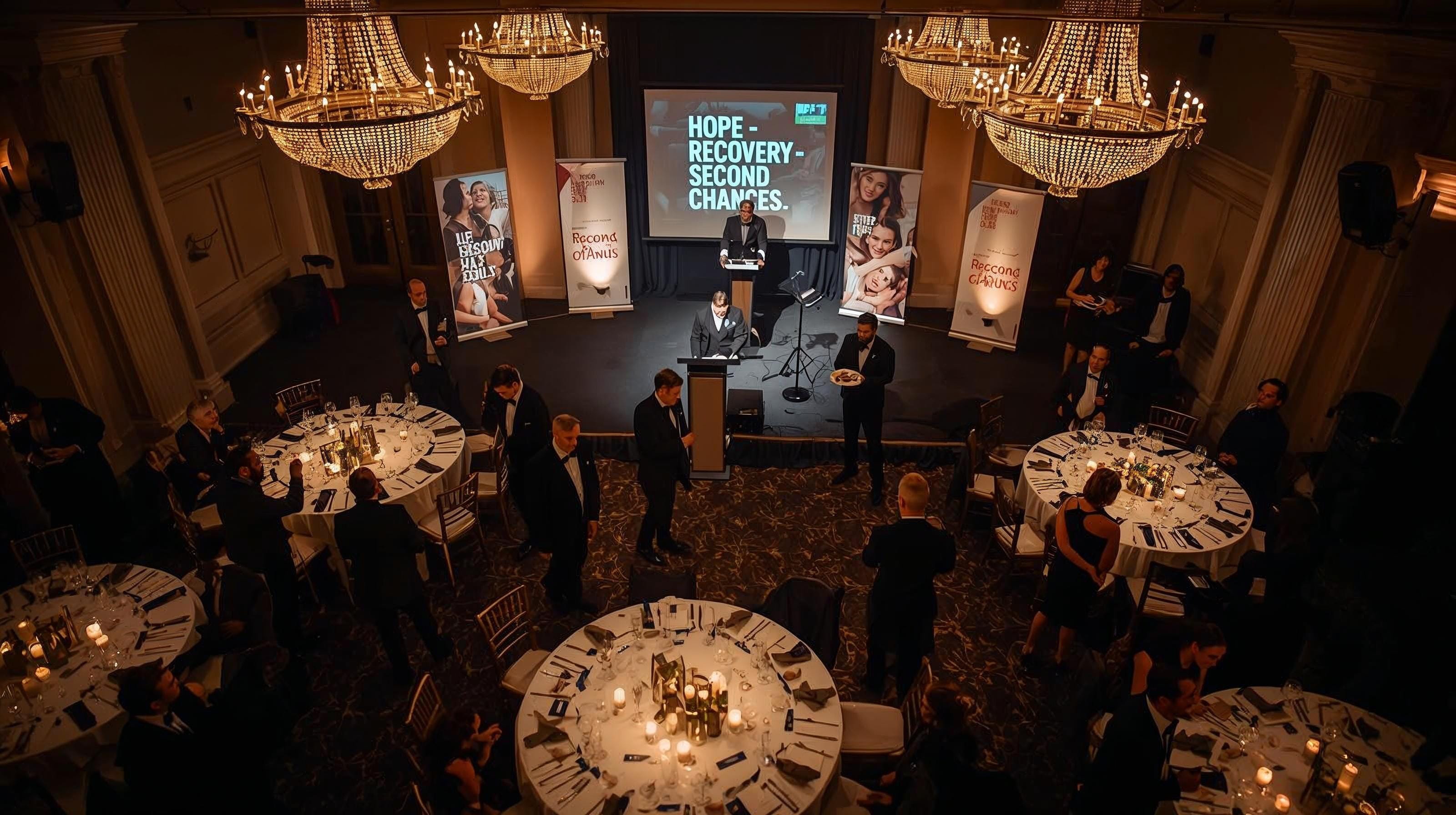
This is a long episode, and it will be shortened by some email servers. If you aren’t reading in the Substack app, please open this in your browser to see the whole episode.
Previously on The Clean Fix, journalist Jackson Harlow answered a desperate call from Imelda Vasquez, whose teenage son Steve was arrested for the murder of wealthy rehab executive Julian Vane, with Steve’s gun and the victim’s property conveniently “found” as evidence against him. Convinced Steve was being framed, Jackson clashed with Steve’s volatile gang‑leader brother Hector “Hex” Vasquez, secured reluctant help from defense attorney Remy Bishop, and confided in antique‑shop owner Estelle Mason as the media rushed to brand Steve a teen kingpin. Jackson discovered that Vane was a star fundraiser for a high‑profile rehab outfit led by his alluring ex, Cassandra Rose, and accepted her invitation to their glitzy “Freedom Gala,” determined to dig past the polished image and find whoever really set Steve up.
I headed to The Bayou Chronicle after a few hours of restless sleep. I entered Mavis Carroll’s office and sat down in front of her desk.
She looked up from her computer. “Look what the cat dragged in. What are you doing here on this fine Saturday morning?”
“I was bored, so I figured I’d find a reason to bother my favorite editor-in-chief.”
“Ah. Sticking to what you’re good at, I see.”
I’d worked at The Bayou Chronicle my whole career. It was the only outlet I could find that wouldn’t force me to parrot government propaganda.
Mavis and I went way back. Yes, she was my boss. But we were also good friends. She had a tough exterior, but was soft as a feather deep down inside.
She opened a drawer and took out a Jolly Rancher. If there was one thing Mavis couldn’t resist, it was candy.
“You hear about the Julian Vane murder?” I asked.
“I have. It’s been all over the news. I’m surprised you didn’t jump on that story.”
“Well, about that—”
Mavis’ expression morphed into an “uh oh” expression.
“At least hear me out before you give me that look, boss lady,” I said, pasting on my winning smile.
She pointed at me and said, “See, when you get that smile on your face, I know I’m about to need gallons of Pepto Bismol. What’s going on with this case?”
“Imelda, Steve Vasquez’s mother, wants me to see if I can help her son. She knows he didn’t kill Julian Vane. I know it too.”
“You’ve seen the evidence the police have on him, haven’t you?”
“I’m well aware. I spoke to him yesterday. I also wasted a few minutes with his useless public defender.”
“And you still think he didn’t do it?”
“No. It has to be a frame job.”
Mavis rubbed the back of her neck and sighed. She knew where I was going with this.
“What holes have you found in the police’s story?”
“None yet.”
“What’s Steve’s alibi?”
“He was at home. But nobody else was with him.”
“How did his gun end up at the crime scene?”
“I have no idea.”
“Of course, you don’t.”
“I just started investigating yesterday. I’ll find something.”
“‘Something’ isn’t going to cut it, Jackson. You’re making a wild claim here — that this guy was framed. You’re going to need a Mt. Kilamanjaro of evidence.”
“I know it doesn’t look good, Mavis. But I’ve known Steve since he was little. He’d never do something like this.”
“People change.”
“Not Steve. Not like this. He doesn’t have it in him. He didn’t even know the guy.”
Mavis popped another Jolly Rancher in her mouth, probably wishing it was laced with arsenic. I couldn’t blame her for being skeptical. One, she’s a news lady. Two, the evidence did look damning.
“Are you sure you’re not letting your connection to the family cloud your thinking?”
“I won’t pretend it isn’t affecting me,” I said, leaning forward. “Like I said, I’ve known that family for years. They’re good people. But I can stay objective. If it turns out he actually did the murder, then I’ll have to deal with it.”
“And what happens if you find out he was framed?”
“How long have you known me, Mavis?”
“Long enough to know you’re going to place yourself in all kinds of danger to find out who really did it.”
I gave her a thumbs up. “Give the lady a cigar.”
“Jackson, I don’t want you getting hurt. I haven’t forgotten what happened with the Dolly Mercier case. If you’re right — and that’s a HUGE if — this could be more dangerous than that Weston kid.”
“I’ll be careful.”
“You better. I’m keeping you on a short leash on this one. Go ahead and investigate. But the moment it gets too sticky, I’m taking you off the story and giving it to another reporter that won’t give me heartburn.”
“I’m not THAT bad, am I?”
“You don’t want me to answer that. If you’re going to look into this, you might consider talking to your former ‘acquaintance.’ Have you gotten in touch with her yet?”
“Yes. The Sanctuary Network is having a gala tonight. Cassandra invited me. I’m going to interview her there.”
“And that’s ALL you’re going to be doing, right?”
“Scout’s honor, boss lady.”
“I’m going to give you a word of advice. I found out through a series of little birds that the DA has taken quite an interest in this case.”
“That tracks. This is the perfect case to boost his political career.”
Lena Thorne’s boss would be leaning on her hard to get a conviction in Steve’s case. Julian was well-loved and high-profile. They needed to send someone up the river for his death –– even if it wasn’t the right person. I couldn’t even count the number of articles I’d written about overzealous prosecutors putting people behind bars even in the face of evidence showing they didn’t commit the crime.
“He wants Steve to go down, and he’s pulling out all the stops to make sure that happens,” Mavis said. “That’s why Thorne is on this case.”
“Anything to score some cheap political points. Even if it means throwing a kid behind bars for the rest of his life.”
“You know how he operates. He’s ruthless. Once he finds out you’re digging into this case, he’s going to be gunning for you.”
“He’d better hope his office is doing everything above board. Because if it’s not, it’s going to be on our website for all to see.”
“I can almost guarantee he’s not. One of those little birds suggested that he’s gearing up for a run against Mayor Lemaine in the next election.”
“Really? Lemaine’s only been mayor for a few months. Sounds like Bagwell’s starting early.”
“He’s targeted journalists before. He doesn’t like it when we get a little to close to finding finding their dirty laundry.”
“Yeah, I’m sure he’s got that Don Henley song on repeat in his car.”
“I’ll work some of my sources to see if I can find any information about the case and let you know what I find,” Mavis said.
“I’d appreciate that.”
Orleans Justice Center
Saturday: 10:00 a.m.
I met Remy Bishop at the jail. We stood outside as he finished his cigarette. He was wearing his usual non-court attire, white dress shirt, tan slacks, and a five o’clock shadow that refused to vacate the premises.
I couldn’t calm my beating heart, which felt a Xenomorph trying to burst out of my chest. I reminded myself about all the times I’d covered his cases. He always represented underdogs — and fought hard for them. This made Steve a prime client for Remy. I knew this, but my heart continued doing its jackhammer routine.
“I took a look at the affidavit. Their evidence is damning. But there’s some holes. I’ll wait until after we speak to make sure the police actually messed up.”
“The police actually made a mistake? Perish the thought,” I said. If I examined ten cases, nine of them would feature at least one glaring error on the part of NOPD’s finest. If everyone they arrested had a half-decent lawyer, they could rip the prosecution apart like a lion going after a zebra. It’s why they preferred to target low income targets. Bullies stay away from those who might fight back.
“But don’t get your hopes up. If I’m right, it still ain’t gonna be enough to prove Steve’s not guilty.”
“Every little bit counts.”
Remy dropped his cigarette into the ashtray and we stepped inside.
Steve looked gaunt, as if he had aged ten years since the last time I saw him. His shoulders slumped so low I thought his hands might touch the floor. He looked up at us, looking like he was carrying a whale on his shoulders. But small glint in his eyes told me the fight happened left him yet.
“Steve, this is Remy Bishop, a defense attorney. We go way back. He’d like to speak with you about your case,” I said.
Steve perked up. “Okay,” he said.
“Nice to meet you Steve. Jackson told me about your case.”
“Okay,” Steve said again.
“How are you holding up?” Remy asked.
Steve paused for a beat, as if he didn’t expect the question. “Not good, man. A few nights ago I was at home playing Call of Duty. Now I’m in this place. The food sucks. The people suck. Everything sucks,” he said. He squeezed his eyes shut for a second to dam the river of tears fighting to break through.
“I don’t doubt it, brother,” Remy said. “I’m going to ask you a few questions, but before I do, I need you to know something.”
Steve nodded..
“I need you to tell me the absolute truth. Don’t leave anything out — even if you think it’s irrelevant. Even if you think it makes you look bad. I can’t help you if I don’t know everything.”
Remy almost sounded like he was reciting a script. He must give this warning to all his clients.
“Okay. I can do that,” Steve said, folding his hands.
“Did you kill Julian Vane?”
Steve looked like he’d been slapped. “That’s what you’re asking me? I thought you were hear to help—”
Remy put up a hand. “I have to ask this, Steve. I need to hear it from you.”
“Fuck no, man. I didn’t kill that guy. I never even knew him. This is all bullshit—”
Remy interrupted, “I understand.”
Remy had an internal lie detector that would make the FBI’s machines look like a toy car. If he believed Steve, that made me even more confident.
“Walk me through what you did on the day of the murder,” Remy said.
“Man, it was like, over a week ago—I don’t know,” Steve said.
Remy nodded. “Please try. Tell me as much as you can remember.”
Steve rubbed his chin. “I woke up. Ate breakfast. Then I went to work. I’m training to become an electrician.”
“What time do you usually get off work?” Remy asked.
“We usually finish up about five or six o’clock,” Steve said.
“What did you do after that?” Remy said.
“I already told the police all this, man. Why do I gotta go over it all again?”
Steve wasn’t helping himself, so I chimed in. “Steve, this is serious. You’re facing a life sentence — if you’re lucky. I know it’s frustrating, but living in a cage for the rest of your life is much worse, you know what I mean?”
He opened his eyes wide, as if suddenly remembering he was being accused of murder.
“I know,” he murmured. “After work, I went to Landry’s—it’s a bar—and had a few drinks.”
“Can anyone confirm that you were there?” Remy asked.
“Yeah, I met a few friends there.”
“What time did you leave?
“I can’t remember. But I think it was a little after 10,” Steve said. “I went straight home after that.”
“Can anyone confirm you were at home?”
“No. My mom was at her friend’s house. She had my little sister with her.”
Remy typed some notes on his phone. “Have you ever met Julian Vane in any context? Work? Mutual friends?”
“No I—I never met the guy,” Steve said.
“You sure?” Remy asked.
“Yeah,” Steve said.
“Alright. Let’s talk about the gun. When was the last time you physically touched it?” Remy asked.
“I’ve had that gun for years. Kept it under my passenger seat, but never really used it. It’s been almost a year since I handled it. Kinda forgot it was there,” Steve said.
“Why did you get the gun in the first place?” Remy asked.
“I live in a bad area, man. Had it for protection.”
“Did anyone else know you kept it under the passenger seat?”
“Just my brother. He always said to make sure I have it on me.”
But Hex definitely wouldn’t have told him to keep it under the passenger seat. Even he wasn’t that reckless.
“Has anyone broken into your truck?” Remy asked.
“I don’t think so. I haven’t had anything stolen,” Steve answered.
“Over the past few weeks, have you noticed anything strange in your daily routine? Anything happen that doesn’t normally happen?” Remy asked.
Steve rubbed his chin again and looked at the ceiling.
“Nothing I can remember,” Steve said, finally.
“Do you remember seeing that gold chain in your truck?” Remy asked.
“No—I’ve never seen that thing in my life. I don’t know how it got there. Someone—someone had to have planted it,” Steve said.
Remy paused. The gears were turning in his head. I hid my anxiety. “I did find something Steve. Something that could help.”
Steve sat up straighter. “What did you find?”
“I took a look at the affidavit,” Remy said. “The doorman’s log shows nobody visited Vane on the night of the murder. In fact, nobody even entered the building between 9:30 and 11:30. Remember, the murder happened around 10:30 p.m.”
There was a hint of a smile at the corner of Steve’s mouth. His eyes flew up.
“See? I couldn’t have done it. Ain’t no way a doorman wouldn’t notice someone like me coming into that building,” Steve said.
Steve gestured excitedly, as if he were talking about a cool action scene in a Liam Neeson movie.
“If nobody saw me there, then that means I’m being set up,” Steve said.
Remy waited for Steve to calm down. “Steve, this inconsistency is positive for you. But it’s not enough,” he said.
“Why though?” Steve sounded like a child being told Santa Claus wasn’t coming this year.
“Because I guarantee the prosecution has already figured out how they will play this in court,” Remy explained. “It definitely helps. But we need more to convince a jury you didn’t do it.”
“It’s still better than nothing, Steve. We have to take every win we can get. Remy needs as much evidence as possible. That’s my department,” I said.
“Fuck,” Steve said.
“I do have some better news, though,” Remy said.
“What’s that?” Steve asked, hopeful.
“If they messed this part up, there are probably more mistakes I can use against them in court,” Remy said.
He paused a beat. “For that reason, I’m going to take your case. I think there’s a good chance you’re being railroaded here and I think we can prove it,” Remy said.
Steve let out a long breath, as if he had been holding it for hours. A smidgeon of hope crept onto his face.
“Thanks man. I feel like...nobody’s been in my corner except my family,” Steve said.
“Speaking of family, how’d it go with Hector yesterday?” I asked.
Steve’s eyes darkened. He folded his hands again.
“I ain’t gonna lie. He’s pissed, Jackson. I’m afraid. I told him not to do nothing and he said he wouldn’t. But the longer I’m in here, the more he’s gonna wanna do something, know what I’m saying?”
“Yeah. I was concerned about that too. I had a talk with him at your mother’s house. We’re going to have to keep an eye on him. We don’t need him making anything harder for you, or himself.”
“I don’t know if I ever told you this,” Steve began. “But Hector’s the reason I never got busted for weed. Cops found my stash in my car a few years ago. Hector told them it was his.”
“Really?” I said.
“Yeah, man. I told him not to do it. But he made me promise to stop slinging and find a real career. He knew it would break Mom’s heart to see me serve time,” Steve said.
“How long was he in?” Remy asked.
“Four years. He got out about two years ago,” Steve said.
Remy whistled. “That ain’t good, but it could have been worse. They can pop people for up to 10 years for possession with intent to sell.”
“You know what’s crazy?” Steve said. “He never even got mad at me. Even when he was locked up. He seemed like he was pissed at himself.”
That made sense. If there was one thing Hector valued above everything else, it was his family — especially his brother. Hector had told me ages ago that he never wanted his brother to follow in his footsteps. I made my choices, man. But I want my brother to make better ones. I’ll kick his ass if I see him becoming like me.
The door behind Steve opened and the guard came into the room.
“Looks like our time is up,” I said. “We’ll be back when we have more information.”
Steve’s shoulders slumped again as he slowly rose from the chair. Whoever did this to him was going to pay.
We were back outside the building. Remy lit a cigarette.
“Seems like a good kid,” Remy said.
“Yeah, perfect target for the government, if you ask me.”
“Their absolute favorite. So, what’s the next step?”
“I’m gonna dig into the court documents and police reports and see if I can’t find more mistakes,” Remy said. “But that ain’t gonna be enough. I need something definitive. Otherwise, Thorne’s gonna rip me to shreds.”
“I’ll get what you need, Remy.”
“Good. Because if I lose to that woman again, I’m holding you personally responsible.”
Lagniappe Coffee Shop
Saturday: 3 p.m.
I usually work alone. It’s simpler that way. But if Steve was being framed, there was probably something big. Probably bigger than I could handle on my own.
I sat alone at the Lagniappe Coffee Shop, staring at my laptop screen like a rubbernecker at a train wreck.
Julian Vane lived a lifestyle far above his pay grade. I needed to know how. But the problem is that the person best suited for what I needed was on my shit list.
I could have enlisted one of The Bayou Chronicle’s tech guys. But I had a feeling I would need the best on this, and the best I knew was a guy named Charlie Liu.
I held my phone in my hand for what felt like hours. The last person I wanted to speak with was Charlie. We had some history.
When I worked the Dolly Mercier murder, he was paid to astroturf a social media campaign against me. But it wasn’t the usual “this reporter is biased” claptrap. I had pulled up social media and saw the history of my dead ex-wife and daughter staring back at me. That was Charlie Liu, someone who could rip your life apart with the click of a mouse.
It turned out that he was paid anonymously by Theo Guidry, fixer for Mayor Pierce Lemaine. Guidry manipulated Charlie into thinking he was functioning as a sort of watchdog exposing media bias.
But we were friends — at least casually. He should have known better.
To be fair, he was devastated when he realized he’d been duped. But I wasn’t ready to let it go — and I thought I’d never be.
I stared at my phone screen. Charlie’s contact information stared back.
I thought about Julian Vane. He lived a lifestyle far beyond his pay grade. I needed to know how.
I could have enlisted one of The Bayou Chronicle’s tech guys. They were competent enough for public records requests or scraping a few emails.
But I had a feeling I would need a virtuoso, and unfortunately, the best virtuoso in New Orleans was the guy whose phone number my thumb hovered over.
I took a deep breath. Then dialed Charlie’s number.
He picked up on the first ring. “Jackson?” His voice shot up an octave. “Hey, man. Hey. How are you?”
“I’m fine, Charlie. Listen, I’m looking into the Julian Vane murder.”
“Yeah, I saw. The Sanctuary thing. That’s all over the news. They found the gun, the prints, everything. Looks pretty cut and dry, honestly.”
Charlie was usually pretty amped up. When he had a few energy drinks in him, he would talk faster than a coked-up auctioneer.
“It’s not. The kid they arrested, Steve Vasquez? He didn’t do it,” I said.
“Oh.” There was a pause.
Then, quickly, “Okay. Okay, so what do you need? I mean...if you need something. I’m not saying you need something, but if you do, I’m... I’m totally available. I mean, I’m not busy. I’m available if you needed help. With the case. Or whatever.”
I cursed my mouth as it cracked a little smile. Charlie was a genius hacker with the interpersonal skills of a nervous jackrabbit.
“I need you to trace Julian Vane’s finances,” I said. “He was a counselor at Sanctuary, but he was living like a king. Expensive apartment, clothes, the works. I need to know where the money came from.”
“Okay, yeah. Yeah, I can do that. I can definitely do that.” He was talking faster now, the anxiety bleeding into excitement. “Bank accounts, credit cards, cash flow, everything. I’ll dig into his digital footprint. If he found a penny on the sidewalk, I’ll find it.”
“That’s exactly what I need.”
“This is... Jackson, this is really cool that you’re asking me. I know things have been weird between us, and I get it. I totally get it,” he said, without taking a breath. “What I did during the Mercier case was inexcusable. I’ve thought about that a lot, actually. Like, way too much. Therapy-level too much. Mental institution too much. But if this is a chance to—I mean, if you need help, I want to help. For Steve. For justice. For whatever.”
“Charlie.”
“Yeah?”
“Just focus on the money. Can you do that for me?”
“Oh, absolutely. One hundred percent. I’m on it.” I could hear the clicking of a keyboard already starting in the background. “Vane probably had a secondary account if he was trying to hide things. People always do. Credit union, maybe. Or peer-to-peer transfer apps. Let me poke around the dark web versions of his usual platforms.”
“How long will this take?”
“A few hours? Maybe less if he wasn’t careful. And honestly, Jackson, most people aren’t that careful. They think they’re clever because they use two different banks—”
I cut him off before he could settle into his rant. “Just call me the second you find something concrete.”
“I will. I’m already in. This is going to be good, Jackson. I can feel it. We’re gonna crack this thing.” He paused, and when he spoke again, his voice was softer. “Thanks for calling me. For trusting me with this. I know I haven’t exactly earned it, but... thanks.”
“We’ll talk later.”
“On it. I’ll call you soon.”
I hung up and sat back in my chair, nursing cold coffee. I had no doubt Charlie Liu was going to find the answer I needed. That’s all that mattered.
The rest would sort itself out.
The Shotgun Bar & Grill
Saturday: 2:30 p.m.
I hadn’t planned on involving Blaise Moriarty in this, but the truth was I needed someone who could move between the street world and my world without raising eyebrows. Blaise was that person.
I called him from my Jeep.
“What’s up?” he answered on the second ring, his Irish accent faint but present.
“I need a favor. I need you to come with me to meet someone. Street level.”
There was a pause. Blaise didn’t ask questions unless they mattered. “When?”
“Now. Pick you up in twenty minutes?”
“I’ll be outside,” he said, and hung up.
Blaise was already waiting when I pulled up to his apartment in the Seventh Ward—a modest shotgun house that he’d somehow made feel like a fortress. He was wearing jeans and a dark t-shirt, and even in casual clothes, he carried himself with the kind of quiet menace that made people instinctively not want to get on his bad side.
He was 6’4”, built lean and hard, with wavy dark red hair and pale blue eyes that could go from friendly to lethal quicker than lightning.
He got in the car without preamble.
“So what’s this about?” he asked.
I drove, and I talked. I told him about Steve Vasquez sitting in Orleans Justice Center, about the frame-up that was too easy, about how Imelda had come to me asking for help.
I told him about Remy taking the case, about the preliminary hearing that was coming, about the prosecution’s evidence that looked airtight but somehow felt wrong.
“And you’re investigating solo?” Blaise asked.
“For now. I’ve got Charlie Liu looking into Julian Vane’s finances. But I need to make sure Hector doesn’t do anything rash.”
“That won’t be easy,” Blaise said.
“If it were easy, we wouldn’t be having so much fun.”
Blaise was quiet a moment, staring out the window at the city passing by. When he spoke, his accent had thickened slightly. “Hector’s usually pretty level-headed. But when it comes to his family, all bets are off.”
“That’s why I need you to help me rein him in,” I said.
Blaise’s expression didn’t change, but I saw something flicker across his face—something like approval mixed with resignation. “Alright then. You know where he operates?”
“Lower Ninth Ward. There’s a bar called Shotgun.”
“I know it,” Blaise said. “Pull up here.”
We parked a block away and walked. The neighborhood was the kind of place where people learned not to ask questions about their neighbors’ business.
The buildings were weathered, the streets were quiet, and the eyes that watched us from windows were the eyes of people who’d learned to mind their own.
Shadows was a squat concrete building with a red neon sign that flickered intermittently. Blaise pushed open the door like he owned the place, and I followed him inside. Hip-hop beats hit us the moment we entered the building.
The bar was dim, lit by beer signs and the glow of a muted television showing a Saints game. The smell of sweat, booze, and despair dominated the room like an occupying force.
There were maybe six people inside, and every single one of them knew exactly who Blaise was. They nodded slightly but didn’t acknowledge us directly.
Hex was in the back, in a booth that gave him a view of the entire room. A few of his soldiers stood like statues behind the booth, glaring at us.
“Jackson, Blaise,” Hex said, nodding at the two of us. His voice was smooth and controlled, far different from when we last saw each other. “You find out who framed my brother yet?”
“Still working on it. Remember, I just started investigating,” I said, sitting across from him. Blaise slid into the booth beside me. “But I do have some information that leads me to believe he was framed. This isn’t just a misunderstanding.”
“No shit,” Hex said flatly. “We both know Steve ain’t capable of something like this. Tell me what you found.”
I laid it out. The gun with Steve’s prints. The GPS data showing his phone at the crime scene. The gold chain in his truck. The weak alibi. The doorman’s log that said nobody entered the building.
“That inconsistency,” Hex said, catching it immediately. “The doorman log. That’s real?”
“According to Remy Bishop—he’s Steve’s lawyer now—yes. Nobody entered between 9:30 and 11:30. The murder happened around 10:30.”
Hex sat back, processing. “So either the doorman’s lying, or Steve couldn’t have done it.”
“Also, he didn’t even know his handgun was gone. We’re going to have to find out how it went missing.”
Hector picked up his beer, sat back, and nodded.
“Someone wanted Steve to take the fall. Which means whoever actually killed Julian Vane had the resources to set this up. Frame him, plant evidence, make it stick.”
“What about the victim?” Hex asked. “Who was Julian Vane?”
“That’s what I’m working on. He was a counselor at the Sanctuary Network—an addiction treatment facility. Supposedly a recovery success story. Remy thinks if I can understand Julian’s actual life, understand who he was connected to and what he was involved in, I can find the real killer.”
“And what does your gut tell you?” Hex asked.
I thought about it. Something about reeked. The stack of evidence against Steve — it was too clean. Too easy.”My gut tells me it’s not random. The frame-up is too sophisticated. Too many layers. That takes resources, planning, institutional knowledge.”
Hex nodded slowly. He looked at Blaise, “You’re quiet.”
“I’m just taking it all in. Jackson updated me on the case on the way over,” Blaise said.
“Well, what do you think so far?” Hex asked.
“I don’t know your brother. But if Jackson says he’s innocent, he’s innocent. The question is: Who would be capable of such a sophisticated frame job?” Blaise said.
I jumped in, “Hector, who in the streets would be able to pull off something like this?”
Hector looked at the ceiling and scratched the back of his neck. “Nobody I know of,” he answered. “But I’ll start putting some feelers out on the street.”
“That would help,” I said. It would also keep his crew occupied with something productive instead of painting the streets with blood, but I didn’t mention this part.
As if reading my thoughts, Hector said, “I don’t have a problem looking into things for you. But I wasn’t playing about what I told you before.”
“I know you weren’t. I just need some time.”
“You don’t have much time. At some point, my boys are gonna expect action. You know how it is. I can’t look like no punk,” Hecter said.
“Steve’s preliminary hearing is in two weeks,” I said. “If I can find real evidence before then—”
“Then Steve walks,” Hex finished. “And nobody else has to get hurt—except the people who set up my brother.”
Blaise shifted slightly beside me, but he didn’t interrupt.
“Hector, when we find out who did this, we have to let the authorities handle it.” I said. “I hate the system as much as you do, but if you do something stupid, it’ll only be worse for you and Steve.”
“There’s gonna be consequences Jackson. We ain’t just gonna let this ride.” Hector’s eyes narrowed. “And I really hope you don’t get in our way.”
“And what happens if we do?” Blaise asked as if he were asking about the weather. He leaned forward, his face blank. I resisted the temptation to give him the “what the hell are you doing” look.
Hector raised an eyebrow. “You really wanna go there Blaise?”
“I’m just sayin’,” Blaise responded, his Irish accent making more of an appearance. “We all go back a long way. Be a shame to find ourselves at odds, mate.”
Hector looked at the two soldiers, who hadn’t moved an inch since we arrived. He gestured for them to go away. When they were out of earshot, he leaned forward. “Look man, you think I want this shit? I just want my brother free. But you both know how this game works,” he said.
“I understand,” I said. “But like I said, you don’t want the kind of attention that comes with what you’re saying.”
Hex didn’t argue. He took another sip of his beer.
“Let me put it this way. When you find out who did this, you better make sure you get to them before we do.”
I got the message. He knew I was right. But he couldn’t appear weak. If the authorities took care of the culprit, then it would mean he’s off the hook.
The last thing I needed was for his gang to complicate things while getting Hector in trouble. I would have to make sure I keep giving him something to do — a way to contribute.
“It looks like we’re on the same page,” I replied.
“Then we’re done here,” Hex said. “I’ll keep holding my guys back. Keep them busy. You find something concrete we stay in touch, but we stay distant.”
We fist bumped and stood.
Outside, walking back to the car, Blaise was quiet. When we reached the Jeep, he looked at me. “Well, that coulda been worse,” he said.
“It could have been better,” I said.
“Well, ya gotta look on the bright side, mate.”
“What side is that on?” I asked.
The Harlow Residence
Saturday: 3:45 p.m.
My phone buzzed. A text from Estelle: You alive?
I was working at home, checking emails, catching up on other articles I was working on. I remembered that tonight was the Sanctuary Network’s gala and I was supposed to ask Estelle to accompany me.
I called her.
“Hey,” she answered. “I was starting to think you’d gone full hermit.”
“I wish I could,” I said. “But this case is keeping me busy. Speaking of which, you free tonight?”
“Depends. Are you about to ask me to do something ridiculous?”
“Maybe,” I said. “There’s a fundraiser gala tonight. The Sanctuary Network. I got an invitation from Cassandra Rose.”
There was a pause. “Well look at you Mr. High Society,” she said.
“Keep messing with me and I’ll go out and buy myself a monocle and start calling people ‘dear boy,’” I said. Estelle laughed.
“She invited me to their big fundraising event,” I said. “I need to learn more about where Julian Vane worked, the people he knew, what his world looked like. I was thinking maybe you’d want to come with me.”
“Ah, so this is a work thing,” Estelle said, a hint of amusement in her voice.
“My dear Estelle,” I said, affecting a horrible British accent. “Part of being a world-class journalist is hobnobbing with the aristocracy.”
“Uh-huh,” Estelle said. “Well, I’d love to see Patricia again. Maybe I can meet Cassandra too? She’s kinda a hero of mine.”
“Oh lord,” I said. “Are you gonna be fangirling the whole time?”
“I’ll try to keep it to a minimum, but I’m not making any promises.”
“That’s all I ask.”
“And you’re definitely not awkward about seeing your ex in a social setting,” Estelle said, dripping with smugness.
“I’m completely fine,” I said.
“You’re terrible at lying,” Estelle said. “But okay. What time do we need to be there?”
“It starts at eight o’lock, but Cassandra knows I run on CPT, so there’s no rush.”
“You told her about colored people time?” Estelle laughed.
“Well, I had to have an excuse for why I’m always late, didn’t I?”
“I’ll start getting ready. You wanna pick me up at seven?” Estelle said. “We should eat before we go. And Jackson?”
“Yeah?”
“Wear the blue suit.”
“Your wish is my command, ma’am.”
After I hung up, I stood at my closet and found the blue suit. It was the one I’d bought three years ago for a wedding I never made it to. It still fit, which was something.
Cousin Boudreaux’s Restaurant
Saturday: 6:30 p.m.
Estelle sat across from me, picking at a chicken salad. She wore a sleek black cocktail dress that fit her like she was born in it. Her locs was tied back into a simple ponytail.
I updated Estelle on what I had learned so far and my conversation with Hector.
“So you have to figure out who framed Steve and have them arrested before Hector gets to them?”
I nodded, taking a bite of my catfish po’ boy sandwich. The flavor made me feel at home.
“But this is only if you can hold him and his gang back long enough to catch the bad guys?”
I nodded again.
“And you also have to prove Steve’s innocence, even with all the evidence against him?”
“Yep. That about sums it up.”
She sighed. I took another bite.
“Well, if there’s anyone who could do it, it’s you,” she said, picking at her salad.
“I hope you’re right. But I don’t know. The evidence against Steve is so damning, that if I didn’t know him, I’d think he’s guilty.”
“Yes, it’s not looking good.”
“Also, I don’t know how long I can keep Hex and his gang from going all helter skelter.”
“You’re probably right. But one thing I’ve learned about you over the past six months is that you work these types of cases like a pitbull.”
My phone rang. I answered.
“Yo, I found something,” Charlie Liu said. His keyboard was clicking in the background, rapid-fire. “And I mean really found something.”
“Talk to me,” I said, bracing myself for Charlie’s verbal barrage.
“Okay, so Julian’s finances are weird. Not like, normal-weird. Weird-weird. I got into his secondary accounts—the stuff he was hiding—and there’s a pattern. A very specific pattern.” He sped up, the words coming out staccato, like a machine gun. “We’re talking deposits and withdrawals, cyclical, rhythmic. Five grand in Tuesday, seven grand out Thursday. Ten grand in Monday, twelve grand out Wednesday. The amounts are too precise to be living expenses.”
My chest tightened. “Gambling?”
“Gambling,” Charlie confirmed. “And I’m not talking about fantasy football or casual poker nights. I’m talking about serious money, serious losses. I found a digital notepad he kept—just rough notes, nothing official—tracking his debt to someone.”
“To who?”
“That’s where it gets interesting,” Charlie said. “There’s a name. Multiple variations of it. Dom. Sometimes Dice. The notes are fragmented, but they all reference the same person. And the amounts owed are escalating. By the time Julian died, he was carrying almost one hundred twenty thousand in debt.”
I leaned against the wall. That was serious money. The kind of debt that got people hurt.
“There’s more,” Charlie said. “I found a draft text message that he never sent. Two weeks before he died. It just says: ‘Please, I just need more time.’“
That sounded like the plea of a man who desperately wanted to keep his kneecaps intact.
“This is helpful,” I said. It was actually brilliant, but I couldn’t bring myself to tell him that.
“Wait until you hear the rest,” Charlie said. “Whoever this ‘Dice’ character is, he’s not some small-time operator. The way he’s tracking the debt, the way he’s collecting—this is organized. This is the kind of person who doesn’t lose money.”
“Can you find a last name? A location? Anything I can actually work with?”
“I’m digging,” Charlie said. “If Julian owed this much money to someone this organized, and if Julian ended up dead, those two facts are probably connected. We’re talking bigger than street-level crime.”
“I know,” I said.
“There’s a lot here. But I’m still working on it.”
“Just keep digging,” I said. “I need answers.”
“You’ll get them,” Charlie said. “But be careful, okay? Be actually careful. Not Jackson-Harlow-diving-into-dangerous-situations careful.”
I hung up. Estelle looked at me.
“That was Charlie?” she asked.
“Yes. I needed a tech wizard. He’s the best I know.”
“After what he did to you?” she asked.
“I’m still pissed. But this is about Steve. I’m putting my personal feelings aside.”
Estelle looked at me as if she were trying to figure out a jigsaw puzzle.
“I haven’t forgiven him,” I said. “I don’t think I ever will.”
“Never say never.”
The Sanctuary Network Headquarters
Saturday: 9:00 p.m.
By the time we turned off St. Charles, the streetcar bells were a memory and the city had gone quiet in that particular Uptown way—old an new money insulating itself from noise of the plebes.
I eased my Jeep through the open iron gates of The Sanctuary Network. Live oaks lined the drive on both sides, massive things with trunks like marble cathedral columns and Spanish moss hanging down in gray-green curtains. Uplights at their bases threw the branches into sharp relief against the dark, so it felt like we were driving under the ribs of something ancient and expensive.
“Subtle,” I said.
Estelle sat beside me. Her black dress was devoid of wrinkles and hit the exact line between elegant and dangerous. Heads were going to turn, and not just because of the car that sounded like it needed a nicotine patch.
“You’re making me feel like James Bond with that dress,” I said.
“If only you were Daniel Craig. Or Idris Elba.”
“Is that your way of mocking my British impersonation?”
“I mean, it’s not as bad as Keanu Reeves’ in Dracula.”
“I’ll take it.”
The campus rose ahead of us, framed by a brick perimeter wall. The main building looked like it had been a convent in a previous life—three stories of pale stucco and weathered brick, tall arched windows glowing warm behind old iron balconies, a dark slate roof cutting a clean line against the sky.
Somebody had spent a lot of money making sure the place said legacy and respectability from the street.
Just to the right, a newer wing broke the illusion—a glass-and-steel box grafted onto the historic shell, all sharp angles and floor‑to‑ceiling windows. The lobby inside was lit up like an aquarium, silhouettes moving behind frosted glass.
I pulled up toward the circular drive where valets in Sanctuary-blue jackets were already jogging to intercept cars that cost more than my student loans ever had. My Jeep coughed once as I put it in park, like it, too, knew it didn’t belong between a black Escalade and a silver Mercedes.
One of the valets opened Estelle’s door before I could. She stepped out, and the kid’s professional smile stuttered for half a second. Couldn’t blame him.
I came around and handed over the keys to a young man whose name tag said, “Patrick.” The valet gave my Jeep the kind of look one would give a vegan dish at a BBQ.
“She’s a classic,” I told him. “Talk to her nice, she’ll behave.”
He laughed politely and drove off very carefully.
Estelle and I climbed the front steps together. Up close, the main building was even more deliberate. The brick had been repainted, the stucco refreshed, but not so much that it lost its age.
The iron railings on the double doors were original or very good liars. To the left of the entrance, a stone monument sign sat in a bed of manicured shrubs: THE SANCTUARY NETWORK in brushed metal, and beneath it in smaller letters, Where Recovery Becomes Life.
“That’s not bad,” Estelle said, nodding at the tagline. “A little on the nose, but it works.”
“They probably paid a branding firm six figures to come up with it,” I said. “Somewhere there’s a guy in Brooklyn telling people he saved lives with a font choice.”
She bumped her shoulder lightly against mine. “Try not to be a complete cynic for one night, okay? They do help people, Jackson. Patricia’s not the only one.”
“Ready?” Estelle asked.
“After you,” I said.
She took my arm, and together we stepped through the doors into the light.
Stepping into the building felt like walking through the wardrobe that leads to Narnia.
The lobby of The Sanctuary Network hit you all at once.
The space was soaring—thirty feet of vertical silence with a ceiling of exposed dark wood that made you feel small and powerful at the same time. Crystal chandeliers cast warm light across pale Italian tile.
To the right, a marble reception desk curved like a wave, staffed by women in navy blazers who looked like they’d been trained at some finishing school that taught hospitality as a weapon.
But it was the walls that made the statement. They were covered in photographs—client testimonials in shrine-like fashion. Before and after pictures.
A woman who’d been gaunt and hollowed out smiling with weight back in her face. A man with his arm around a prodigal son he thought he’d lost forever. Names and recovery dates in elegant typography. Marcus—347 days sober. Jennifer—1,005 days clean. DeShawn—recovery and three college credits.
The message was inescapable: We save lives here.
To the left, a corridor opened up toward the ballroom proper, and from that direction came the sound of a string quartet playing Vivaldi, the warm murmur of expensive conversation, the clink of glasses. Waiters in white gloves drifted past like phantoms, carrying champagne and canapés on handcrafted trays.
A young woman in a Sanctuary blazer appeared at my elbow before I’d had time to take it all in. “Mr. Harlow? Ms. Mason? Welcome. The ballroom is this way.” She gave us a programmed smile and led us into the ballroom.
Estelle squeezed my arm—a tiny message that said play nice—and together we let ourselves be guided toward the light.
“Oh, there’s Patricia,” Estelle quipped like an excited schoolgirl. “Come and let me introduce you.”
We walked over to a young woman, mid-20s, slender, and ready to socialize. Her long, dirty blonde hair stretched to the middle of her back. She wore a yellow dress and a hint of mischief in her smile. She reminded me of a a ‘70s “Flower Power” hippie chick. All she needed was a daisy in her hair.
Patricia saw Estelle as we approached, and her face morphed into a smile that reached the blue of her eyes.
“Stellie!” Patricia squealed.
“Trishie!” Estelle squealed back.
I didn’t squeal at all.
They embraced like they were sisters who hadn’t seen each other in years. Patricia looked at me and asked, “Is this Jackson Harlow, the illustrious journalist?”
It was then that I knew Patricia and I were going to get along just fine.
Estelle gave Patricia a playful slap on her hand. “Please. His head is big enough. If you go on like that, he’ll look like a hot-air balloon.”
“I’ll have you know my head is exactly the right size, ma’am,” I said, shaking Patricia’s hand.
“Stellie has told me a lot about you,” Patricia said, winking.
“And it’s all true — except the bad stuff,” I said.
She laughed.
“That Mercier murder. That was just awful. I’m so glad that guy is in prison,” Patricia said.
“Me too,” I said. “I’m going to let y’all catch up. I have some journalisming to do.”
“Okay,” Estelle said. “Good luck with Cassandra.”
I tipped the hat I wasn’t wearing and explored the ballroom. A lady in a blue blazer approached me, holding a tray of pigs in a blanket, and asked if I cared to indulge.
I did.
“Jackson!” I knew who it was before I even saw her. I turned around to see Cassandra Rose, wearing a bright crimson dress that gripped her curves like a latex glove.
“There you are. I’ve been looking all over for you,” I said.
She scoffed. “You’re a bad liar, Jackson Harlow. I know you just got here. CPT, right?”
I held out my fists as if she were about to handcuff me. “Take me in, officer.”
Cassandra laughed and we hugged. Her jet black hair smelled like a mix of jasmine and citrus. We broke the hug, but she didn’t move back. She stood close and looked up at me, her brown eyes glimmering.
“It’s so good to see you again,” Cassandra whispered. “You look good Jackson.”
“Not as good as you, Cass,” I said, using weapons-grade willpower to focus on her face instead of her plunging neckline.
“We need to talk, yes?” she said.
“If you have time.”
“For you? Always. Follow me.”
Cassandra Rose’s Office
Saturday Evening
She led me down a hall and into an elevator that went to the second floor. I followed her down another hall into an office that was probably bigger than my house.
Fancy paintings adorned the walls, leading us further into the room. A large oak desk stood toward the back of the office, in front of columns of floor-to-ceiling windows. A clear vase perched on the desk, holding a bouquet of red roses, Cassandra’s namesake.
She took my hand and led me to a large couch placed between the door and desk. “I’ll make us some drinks,” she said.
As she fixed our drinks, I texted Estelle, “I’m in Cassandra’s office. Will be back down soon.”
“K try not to fall in love. I think Patricia has a crush on you.”
I laughed.
“What’s so funny?” Cassandra asked as she set down my drink. She sat down next to me, close enough that I could smell the jasmine again.
“Just an inside joke,” I said.
“And who’s that beautiful young lady I saw on your arm?”
Her smile remained on her face, but looked forced.
“A friend. We met during the Dolly Mercier case. She worked for the victim,” I said.
I thought I saw a hint of relief pass over Cassandra’s face. Or maybe I was imagining things. I picked up the glass and took a sip.
“Kamikaze on the rocks,” I said. “You remembered.”
“Of course I did.”
I took another sip and took in the room and its owner. It had been years since I’d had drinks with Cassandra. But it felt like it had only been a few days. I yearned for this more than I even realized.
“Believe it or not, I’ve missed you, Jackson.”
“I missed you too, Cass. It’s been way too long. Judging from the look of this place, y’all are doing pretty well here.”
She took a sip of blood red wine that was probably bottled while Napoleon Bonaparte walked the Earth.
Cassandra sighed. “Yes, it hasn’t been easy. But I like to think we’ve saved lives.”
“I’ve heard nothing but good things about The Sanctuary Network.”
She gave a weary smile and took another sip.
“I’m glad. Seems like every time I turn around, there’s another talking head or politician talking about how our program is a waste of time.”
“Ah, the ‘tough on crime’ crowd?”
“The very same. They complain about us all the time. They say we’re making things easier for criminals, soft on crime, all that nonsense.”
Her face turned about as red as her dress, and I knew it wasn’t just the wine.
“These people—they don’t care about suffering,” she said, her voice rising. “They just want to lock people up.”
“Locking people up makes people feel safer—even if they aren’t. It also doesn’t help when politicians constantly make addicts out to be criminals.”
Cassandra nodded. “They complain about judges sending people to The Sanctuary instead of just throwing them behind bars.”
I took a sip. The drink was excellent. Cassandra hadn’t lost her touch. Her shoulders relaxed, and she gave a sigh that seemed to last five minutes.
“I’m sorry for getting so amped up,” she said. “Sometimes it gets to me.”
We used to talk about this often. How the system preys on those who have a hard time defending themselves. How the government used drug prohibition to expand its reach. Cassandra started The Sanctuary Network after she lost her brother to an overdose. His death devastated her family, but she managed to use it to build something beautiful in his honor.
“Cassandra, you know you don’t have to apologize. I remember how passionate you are about this. I’ve always admired you for it.”
She smiled as our eyes met. “I remember you being pretty passionate too, Jackson Harlow.”
Cassandra had a certain charm. She could make any statement sound intimate, like you were the most important thing to her at the moment. It’s why her employees and supporters were so loyal to her. Many of those who worked at the Sanctuary had been with her from the beginning. Some were former clients who Cassandra saved when they were at their lowest point.
It was also why my heart was beating so hard, I thought it would explode.
“So, about Julian Vane,” I managed to say.
Her eyebrows perked up, as if she just remembered why we were sitting alone in her office.
“Yes, Julian,” she said, her eyes suddenly downcast. “What do you want to know?”
“If my information is correct, he’d been working for you for almost a decade. What was his role here?”
“He was our chief marketing officer. He handled all our social media, our website, and a bunch of other things that are over my head.”
“Was he good at his job?”
“Very. That man could raise funds at the drop of a hat. He more than tripled our following online. Almost like he was born for the job.”
“He used to be a client, right?”
“Yes. He was addicted to fentanyl. Almost overdosed twice before the judge sent him to the Sanctuary.”
“Wow, twice?”
“It’s more common than you think. He was lucky to survive—” her voice trailed off. Her eyes glistened as she fought back tears.
I took her hand. “I know this is hard on you. You already have a lot on your shoulders, and you just lost someone you care about.”
She sniffed, but managed to maintain her composure. She gave my hand a squeeze, then took another sip.
“It’s a lot. But you know me. I manage,” she said.
“I have some more questions, is that okay?”
She straightened her dress and crossed her legs.
“Yes, of course.”
“From what I know about Julian, he seemed to live pretty well for someone who works for a nonprofit — even as an executive. Do I need to switch careers or did he have another source of income?”
She giggled, which is exactly what I wanted.
“Well, if we ever have an opening for our public relations department, I’ll keep you in mind,” she laughed again before answering my question.
“I don’t know where Julian got his money from.” She shrugged and took another sip. “I think someone told me he came from money. I’m not sure how true that is. I never asked him.”
“What about his relationships? Was he close to any of his co-workers?”
She leaned forward and placed her chin in her hand. “He would go out for drinks with some of the other employees sometimes. He got along pretty well with Shelley LeBlanc. She’s one of our counselors.”
“Were they dating?” I asked.
“I don’t think so. I doubt she was his type.”
“What’s his type?”
“Flashy. Wealthy. He liked women of a certain…pedigree,” she said, rolling her eyes. “Said he had an image to maintain.”
“I guess Julian and I have something in common,” I said with a sly grin.
She chuckled. “Oh really? Is that your way of flirting, Jackson Harlow?”
“Not at all. You’ve ruined me for other flashy and wealthy women.”
She paused, staring at me with a look that told me she knew I was full of it.
“Okay, maybe I’m flirting a little,” I said.
There was that smile again. Her cheeks flushed slightly.
“Maybe you should flirt a lot,” she said. “Should we have another drink?”
“We’d be fools not to.”
She stood up and floated over to the bar. My phone buzzed. It was Estelle.
“You still alive?” she wrote.
“Yes.”
“You still clothed?”
“You jealous?”
“🤮🤮🤮,” she replied.
“I’ll be back down soon. Just a few more questions.”
“K. I need to talk to you about Patricia.”
“Sounds good.”
“You talking to your girlfriend?” Cassandra was coming back toward the couch, two drinks in her hands. A flash of annoyance swept quickly over her face.
“She’s just a friend. And yes.”
That made her smile again, which was contagious.
“Good.” She sat back down and handed me my drink. We clinked glasses and took a sip.
“Where were we?” she asked.
“I was about to ask if Julian might have had a gambling problem.”
She was about to take another sip, but paused. She put her glass down and crossed her legs.
“That was a long time ago,” she said.
Cassandra played with one of the gaudy rings on her finger and ran a hand through her hair.
“Do you think it might have something to do with the murder?” She asked.
“I don’t know. But I’m trying to get a better picture of who he was.”
“I really don’t want to make him look bad, Jackson.”
“I don’t either. We all have our vices. Nobody will think he deserved to die for being human.”
She sighed. “Well, I suppose it’ll come out eventually if it’s true. He did have a gambling problem, along with his other addictions.”
I didn’t respond.
“Some of the other employees were talking about it. Said he’d been gambling again. I thought it was just gossip. But he swore he wasn’t hooked again.”
“Did you believe him?”
“No.”
“Did he spend a lot of time at the casino?”
Cassandra looked away, as if me being out of her sight would make the questions go away.
“No. He wasn’t that type of gambler.”
“What does that mean?”
She turned back to me, her eyes downcast. “He was more of the underground type, if you know what I mean.”
“I think I do.”
“But I don’t know where or who he was gambling with.”
“I see. I only have a few more questions, Cass. I know you need to get back to the party.”
“It’s fine. I need a break from it anyway and you’re the perfect distraction.” She smiled.
“How was he acting before his death? Did you notice anything strange?”
She thought for a moment.
“I don’t know if this is relevant. But about two months ago, I noticed he was taking notes in a little notebook,” she said. “He had it with him everywhere — always scribbling. About meetings, patient stories, all kinds of stuff.”
I nodded.
“I asked him about it. He said he was taking notes on our operations to hone his marketing strategy. Gathering stories he could tell on social media.”
“I see. Were you concerned?”
“About what?”
“Well, that he might accidentally — or deliberately — publish sensitive information?”
“N-no, of course not,” she said a little too quickly. “He would...he would never do anything that would hurt The Sanctuary. He believed in our work.”
“You sure?”
Her grip tightened on her glass. I was afraid she would break it. “I’m sure,” she said, her eyebrows arching.
“Cass, I’m not trying to upset you. I just want to make sure I get the facts right.”
Her face relaxed. “I know Jackson. I’m sorry. I’m just under a lot of pressure right now, you know?”
“I know,” I said. “Is there anything else you remember?”
She stopped to think for a moment. “Not really. But there was one thing—” her voice trailed off.
“What was that?” I leaned forward.
“I don’t know. It’s probably not even related.”
I smiled. “Let me be the judge of that.”
“One of my employees mentioned seeing Julian meeting with someone at Café Du Monde about a month ago.”
“Man? Woman?”
“Woman. But Jace, my employee, said he didn’t get a good look at her. It loooked like they were trying to be discreet, sitting in the corner, that kind of thing.”
“One of his wealthy, fancy girlfriends?”
“Could be. But like I said, I doubt it’s even relevant.”
“Okay. Can you let me know if you learn anything else?”
“Of course, Jackson. It’ll give me an excuse to see you again.”
Against my better judgment I said, “Maybe we could get together sometime soon, when I don’t have to interrogate you like a cop.”
Cassandra laughed as we stood up, preparing to go back downstairs. We faced each other, standing close enough that I could smell her hair again. Her eyes hypnotized me, drawing me in like a siren at sea.
This wasn’t the time. “We’d better get back to the party.”
She took my hand, still looking up at me. “Yes, we probably should…or….” She let the question hang in the air.
My phone buzzed. A text message. From Remy. He had great timing. Or crappy timing. I hadn’t made up my mind yet.
“Yo. Call me tomorrow. Something I want to run by you,” he wrote.
I responded with a thumbs up.
Cassandra didn’t let go of my hand. We walked back into the hallway toward the elevator.
She pressed the button with a well-manicured finger and turned toward me. “You better not be lying to me, Jackson,” she said like a schoolmarm disciplining a student.
“About what?”
“About us getting together again soon.”
“Scout’s honor, ma’am.”
“And if you ever call me ‘ma’am’ again, I’ll put arsenic in your kamikaze next time.”
“Fair enough.”
The Sanctuary Network Lobby
Saturday Evening
I splashed cold water on my face. I could still smell the jasmine and citrus lingering like a spurned lover.
I stared at my reflection in the restroom mirror. I’d just spent an hour with one of the most powerful people in New Orleans and left with more questions than answers. And a knot in my chest that had nothing to do with the investigation.
Cassandra and I had parted ways years ago, but being with her just then, it felt like it had only been a day.
And I wanted more.
But I couldn’t focus on that. I had a murder to solve and a prisoner to free. I wondered whether Julian’s gambling problem was related to his death. From what Charlie told me, he owed quite a bit of cash — but to whom?
There was also Julian’s notebook. It could be exactly what Cassandra believed it was, but something nagged at the back of my mind. I couldn’t quite put my finger on it. I dried my face with a paper towel and reminded myself to take a long, cold shower when I got home.
I made my way back to the lobby where the party was. There was a short hallway leading to a door, which piqued my curiosity. Normal people would have kept going. But my journalist brain wouldn’t allow me. I opened the door to what appeared to be an office area. Desks spread out across the wide room holding up laptops and other items.
This was clearly not a guest area. There was no reason to be snooping around there. But that never stopped me before.
I was about to go deeper into the room when voices reached my ears from a smaller office across the room. One voice was low and measured clearly male. The other was young, female, and nervous.
I didn’t want to get caught in a restricted area. I turned to leave when the office door opened.
A man the size of an elephant walked through, followed by a wide-eyed blonde who looked as if she would rather be anywhere else.
I locked eyes with the sasquatch. He was about six-foot five, two inches taller than me, and as wide as a silverback gorilla. He wore a white dress shirt with a black vest. He’d rolled up his sleeves, revealing forearms as large as tree trunks. A dragon tattoo emblazoned the side of his neck.
“Mr. Harlow,” the sasquatch said, his voice flat. He strode leisurely across the room — faster than he looked. I looked up at him as he shook my hand, which felt like a vise grip threatening to crush my fingers.
I’m not used to having to look up to see someone’s face. But here I was.
“Hey there Mr…?”
“Vargas.”
“Just Vargas?”
“Just Vargas.”
“Like Madonna.”
His eyebrows lifted, confused.
“You know, just one name?” I said. “Like Cher?”
He didn’t laugh, but a thin smile appeared on his face. Why didn’t anyone appreciate my sense of humor?
“The main ballroom is back that way,” he said.
“Yeah? Sorry, haven’t been here in awhile. Got lost.”
He looked at me as if I’d just told him I have some prime oceanfront property in Wyoming to sell him on the cheap.
He wasn’t threatening, but there was something in his eyes. Or maybe the lack of something. I couldn’t put my finger on it, but I could tell this was not a man I wanted to piss off.
The blonde gave me a concerned look before she skittered out of the room in the opposite direction.
“So what do you do here, Vargas?”
“Head of security. I make sure everyone is safe. And I make sure people don’t accidentally wind up in places they don’t belong.”
There was that thin smile again.
“Right. Well, sorry about that.”
“It happens,” he said. “Don’t worry about it.”
“I’ll head back to the party. Nice meeting you.”
“Likewise.”
***
I wandered through the ballroom looking for Estelle amidst a sea of designer suits, fancy dresses, and expensive champagne.
“Jackson Harlow!” a deep booming voice sounded behind me. A ball of rage grew in the pit of my chest.
I turned around to see Mayor Pierce Lemaine’s smiling face heading my way. My shoulders tensed, as if ready for a fight.
But this was not a man you fought with fists.
“Long time no see,” he said as if we were childhood friends. “You don’t call, you don’t write.”
“I knew I smelled something sleazy. Should have known it’d be you, mayor.”
Lemaine affected a wounded expression. “Oh come on. You’re not happy to see me?”
“I’d be happier if I were talking to you behind bars.”
Lemaine laughed, and meant it. “Don’t be like that Jackson. You still mad about that woman? What was her name…Delia?”
He must have seen the rage flashing across my eyes because he took a step back and put up his hands in mock surrender.
“It was Dolly,” I said.
“Whoa there, tiger,” he said, with that grin. “We’re in public, remember?”
“You don’t have to worry about that, Pierce.” He flinched when I used his first name instead of his title. “I’ve got something worse planned for you.”
I met Lemaine when he was still a councilmember and mayoral candidate about seven months ago, when I was investigating the murder of Dolly Mercier, owner of Memory House Antique shop.
After a weeks long investigation and another murder, I discovered that the killer was Kyle Weston, who worked as Lemaine’s intern. He also killed a young activist named Sadie Broussard. It turned out that Lemaine had subtly used his influence over the young man to manipulate him into killing Dolly because she was selling historical racist relics at her shop.
Then he tried to have Kyle killed before he could talk. A corrupt police officer shot him three times after I found him out, but he’d survived.
Still, Lemaine was slick as an oil leak. He never actually ordered Kyle to kill anyone, so he was insulated from consequences — for now.
“I get you’re still mad about,” he said. “But one day, you will understand why it had to happen.”
“What are you doing here, anyway?”
He straightened his tie. “Me? I’m a firm supporter of The Sanctuary Network. Cassandra was very kind — and generous — to me during my campaign,” he said.
“That’s because she doesn’t know what you are,” he said. “Maybe I’ll change that.”
Lemaine’s face drooped into a scowl. Now he was the one who looked like he wanted violence — a wish I would gladly grant..
To my disappointment, he restrained himself.
“It doesn’t matter. I’m already mayor, right?” he laughed again.
I longed for the moment when I would wipe that fucking smile off his face. But I remained calm.
Lemaine looked confident. Powerful. Untouchable. “Are you covering the gala for The Bayou Chronicle?”
“Something like that.”
“You’re forgetting who I am, Jackson. I already know you’re looking into the Julian Vane murder. You’re here trying to gather information, aren’t you?”
I didn’t answer.
“I admire your dedication to justice,” Lemaine said, like a father giving advice to his son. “But I have to say, I’m a little concerned.”
“A kid’s in jail for a crime he didn’t commit,” I said. “I’m not gonna let that stand. You don’t plan on trying to stop me, do you?”
He looked at me like I was a child who just fell off his bike. “Jackson, of course not. But you’ve seen the evidence against him, right? It is what it is.”
I didn’t respond.
“But I’m more worried about you stirring up trouble for no good reason,” he said.
“Oh really? Are you afraid I’m going to find something...inconvenient?”
“Not at all. Believe it or not, I want justice just as much as you do.”
“Like you did for Dolly and Sadie?”
“Look, Cassandra does fine work here. One of her employees was viciously murdered in his own home,” he said as if going into a campaign speech. “Whatever your problems are with me, you poking around here might cause some to get the wrong idea. That’s the last thing I would want”
“That sounds like a threat,” Jackson said.
“It’s friendly advice,” Lemaine said. His voice remained smooth, almost sympathetic. Like a doctor explaining a terminal diagnosis. “I know you mean well. But sometimes good intentions can lead us into dangerous places. Places where we don’t belong.”
“In my experience, places I don’t belong are just places people like you would rather leave hidden,” I said.
“Well, I need to get back to it. It was nice seeing you again, Jackson,” Lemaine said, shrugging. “Keep up the good work. I’m still a fan.”
I smiled like a shark. “I appreciate it. Maybe one day I’ll write something that changes your life — permanently.”
The smile remained on his face, but his quickly blinking eyes gave him away. Was that a hint a fear?
Good.
***
As Lemaine walked away, I felt an arm loop itself through mine.
“I’m impressed,” Estelle said.
“Yeah?”
“I was watching you two across the room. I was surprised you managed not to break his jaw.”
“It was tempting. But I resisted,” I said. “How did it go with Patricia?”
Estelle’s face fell. More than troubled—concerned. She guided me away from the crowd to a quiet nook at one of the corners of the room.
“She was perfect. Too perfect. Like she was performing recovery instead of living it.”
“What do you mean?”
“She kept saying things like, ‘I owe Cassandra everything’ and ‘Sanctuary saved my life.’”
“Sounds about right. Didn’t you tell me this place saved her life?”
“Yes...but there was...something about how she said it. It was like a script. A word-for-word script,” Estelle said. “And when I asked her about how she spends her days—like, what does she actually do—she got real vague. Said she does ‘community work’ but wouldn’t give details.”
I studied Estelle’s face. She wasn’t the type to imagine things or misread social interactions.
“Maybe she’s just nervous?” I said.
“Maybe,” Estelle said. “But I remember Patricia from before all this. She was funny, messy, real. Tonight, she felt...curated. Like she’d memorized a part in a play and she was performing it perfectly. Every emotion in the right place. Every word exactly right. It’s hard to explain...I guess you’d have to see for yourself.”
“She might be going through something that she didn’t feel comfortable telling you with all these people around. One of her co-workers was just murdered. She might have been close to him.”
“You might be right. Maybe I’ll give her a call later, see if she wants to grab some coffee.”
We stood together in silence, watching the minglers mingle. Guests moved between conversations like a game of musical chairs. Waiters drifted around the room with plates full of champagne, canapés, and just the proper level of deference.
The string quartet was playing “Por Una Cabeza.”
“Isn’t this the song from True Lies?” Estelle giggled.
“Yes, it is the song from True Lies,” I said, affecting my best Arnold Schwarzenegger accent.
“Good thing Cassandra isn’t here. You’d probably reenact that ballroom dance seen. Or maybe that part when Jamie Lee Curtis does the strip tease?”
“You hush your mouth, woman,” I said, trying my best to pretend I wasn’t thinking that exact thing.
Estelle made a zipping motion across her mouth.
***
Estelle and I continued our rich people watching. A tall, freshly polished man with a reddish beard locked eyes with me. He almost sprinted over to us.
As he got closer, a smile jumped onto his face. “Excuse me, sorry to interrupt, but are you Jackson Harlow? The journalist?”
“Depends. Are you from the IRS or Amway?”
Estelle rolled her eyes, but I knew she thought it was funny. Everyone thinks I’m funny. The man gave a hearty laugh.
I put on the most smug expression I could muster and looked at Estelle as if to say, “See?”
He was delicately gripping a champagne flute, looking immaculate in his tailored blue suit. His shoulder-length hair was about as red as his beard.
“Fortunately, I’m not here to rob or scam you. But I read your work all the time. I never thought I’d get to meet you.”
“I appreciate that Mr…?”
The man flinched, as if he just remembered he left his pants at home. “I’m so sorry about that. My name is Simon Ash.”
“Simon Ash?” Estelle said, her voice rising. “Aren’t you on that podcast? I knew your voice sounded familiar.”
“Podcast?” I said.
“Yes. The Loose Ends podcast,” Simon said.
“I think I’ve heard of that,” I said. “True crime? That kind of deal?”
“You got it,” Simon smiled. “I loved your work on the Dolly Mercier case. That was some wild shit, man.”
“Yeah, it was.”
“You know what I found fascinating about that case?” Ash continued, his eyes shifting between Estelle and I. “How predators work. Not the obvious kind—not the ones who hunt in the open. But the subtle ones. The ones who hide in plain sight. The intelligent ones. Like Kyle Weston.”
Something cold slide down my spine.
“The best predators,” Ash continued, sounding like we were recording a podcast episode, “are the ones who understand human psychology. They understand that people want to believe the performance. They want to believe that the beautiful facade is real. The hero narrative. So predators give people what they want. They perform so convincingly that everyone—and I mean everyone—starts to believe their own story.”
He took a sip of champagne, letting the words hang in the air, making me wonder how many glasses he had consumed. Estelle looked at me, her expression bemused.
I didn’t respond. I just waited, aware that Ash wasn’t finished.
“Just like Kyle,” Simon continued before stopping abruptly. “Oh man, I’m sorry. I just get excited about this kind of thing.”
“Well, you wouldn’t be a successful podcaster if you didn’t,” Estelle said.
His face reddened, embarrased, but also flattered.
“So what brings you to this party?” Estelle asked.
“Oh, Cassandra invited me.” He leaned closer, as if telling us a secret. “Apparently, she’s a fan of the podcast.”
“Yeah, now that you mention it, I think that’s how I heard your podcast,” I said. “She wouldn’t stop playing it.”
Simon nodded. “She mentioned you would be here.”
He paused, and then lit up as if he just thought of an idea. “Hey, would you be interested in coming on the podcast to talk about the Mercier case?” You’d be a perfect guest,” he said.
I knew he didn’t just think of the idea. But I played along. “That might be cool,” I said.
“Let’s exchange numbers.”
We did.
Simon flashed another smile. Something behind me grabbed his gaze.
“Hey, there’s Beverly Hayes with her husband,” he said. “They’re major donors to The Sanctuary. Let me introduce you.”
Before I could decline he led us over to the couple.
***
I watched the couple as we made our way across the ballroom. They stood there, like statues.
Beverly stood beside her husband, the perfect accessory. Beautiful. Composed. Present but not present. Her hand rested lightly on his arm, the gesture of a dutiful wife. Her smile was professional. Her eyes were somewhere else entirely.
Then something happened across the room.
Cassandra laughed at something someone said. It was a genuine laugh, warm and unguarded.
Beverly’s entire body went rigid.
For a fraction of a second—her face did something. Pain flickered across her features like lightning. Longing. Grief. Raw emotion. The unguarded moment of someone who’s just realized they can’t have something they want more than anything.
Simon guided us toward the Hayes couple with the ease of a tour guide.
The man was standing with his wife Beverly, looking at the wall of client testimonials. Before and after photographs. Recovery stories. The visual proof of Sanctuary’s work.
“Judge Hayes, Mrs. Hayes,” Simon said warmly. “I’d like you to meet Jackson Harlow and Estelle Mason. Jackson is a journalist with The Bayou Chronicle. Estelle works in antiques.”
The judge extended his hand with a smile that coverd his whole face. “Always happy to meet people interested in the Sanctuary’s work. Call me Robert.”
Beverly smiled politely, but Jackson noticed her grip on the Judge’s arm tightened slightly. Almost imperceptibly.
“Your work here is impressive,” I said, shaking the Judge’s hand.
“Thank you,” the judge said. “Cassandra has built something really special. Really transformative. There’s no telling how many people she has saved.”
Simon excused himself almost immediately. “I’m going to grab something to eat. They have some exceptional vegan options tonight. Please, enjoy the rest of the evening.”
He wandered away, leaving us with the Hayes couple.
***
“How long have you been involved with Sanctuary?” I asked the judge.
“Cassandra and I go back several years,” he said. “I’ve been fortunate to see the work firsthand. It’s remarkable what she’s accomplished,” he said.
Beverly remained silent, her eyes still on the photographs. Her gaze lingered on a picture of a beaming Julian posing with some famous actor.
I stepped toward the wall of testimonials. “The success rate seems exceptional,” I said, nodding at the before-and-afters. “Are these real transformations?”
“Absolutely,” the judge said, moving to stand beside me. “These are our success stories. People who came in broken and left rebuilt. It’s one of the most rewarding things I’ve ever been part of.”
“What about the ones who don’t make it?” I asked. “The people who come and don’t get better?”
The judge’s expression shifted slightly. A flicker of something—discomfort? Defensiveness? It was there and then gone in an instant.
“Everyone’s journey is different, I suppose” he said carefully. “Some people need more time. Some people aren’t ready for the work it takes to change.”
Beverly’s grip tightened on his arm again.
“Julian Vane was one of Sanctuary’s success stories, wasn’t he?” I asked, watching Beverly’s face carefully.
“Yes,” the judge said. “A remarkable young man. His passing was a tragedy.”
Beverly’s jaw clenched. She looked away from the photographs toward the ballroom, toward where Cassandra was standing near the orchestra.
“Did you know him well?” Estelle asked.
“Professionally,” the judge said. “Through Sanctuary business.”
“Mrs. Hayes?” I turned to Beverly. “Did you know Julian?”
Beverly’s hesitation was barely perceptible, but it was there. A moment where she had to decide what to say.
“I...I knew of him,” she stammered. Her voice was steady, but there was something underneath it. A tremor. “He was a kind person. Very kind.”
“It must have been difficult,” Estelle said, sensing the shift in Beverly’s energy. “To lose someone connected to The Sanctuary. Someone who mattered.”
Beverly’s eyes shifted to Estelle for just a moment. There was something like gratitude in that look.
“It was,” Beverly said. Her eyes were still fixed on the ballroom, on Cassandra. “It’s difficult to lose anyone. But especially someone who...who helped you. Who understood you.”
Cassandra was standing near the orchestra, accepting compliments from a city councilman. She looked radiant. Powerful. Completely in control of every person in this room.
“We should probably let you get back to your guests,” I said.
“Of course,” the Judge said, already preparing to move back into the social morass of the gala. “It was wonderful meeting you both.”
***
Estelle and I were both exhausted from all the social interaction. We headed toward the exit when Cassandra intercepted us.
She was smiling, but I could see she was also tired. Running a gala must be tough, especially when you were orchestrating every conversation, every relationship, every moment. The Sanctuary’s cash flow depended on many of the people in the room.
“You’re leaving?” she asked, a note of disappointment in her voice.
“Early morning tomorrow,” I said. “Work calls.”
“I’m glad you came,” Cassandra said. She hugged Estelle briefly, professional but warm. “It was so lovely meeting you Estelle. I might swing by your shop one day.”
Then she turned to me.
The hug lasted just slightly longer than it should have, but not as long as I would have liked. I smelled the jasmine again. Felt her warmth and the pull of history and chemistry and everything that had passed between us.
When we broke apart, she held my arms for a moment, looking up at me.
“Call me,” she said quietly.
“Will do” Jackson said.
“And be careful, Jackson.” She turned to Estelle. “Make sure he’s careful. I’m sure you know how he is.”
Estelle flashed a knowing grin. “Oh, I’m aware.”
“I mean it,” Cassandra said, turning back to me. Her expression had shifted. Something more worried. “There are a lot of people in this city who don’t appreciate questions being asked about things that matter to them.”
I understood.
“I’ll be careful,” I said. “I promise.”
She released his arms and stepped back, and the public persona slid back into place like armor.
In the car, Estelle was quiet for a moment as I pulled out into the night.
“Just say it,” I said.
“Caaaall me,” Estelle said, imitating Cassandra’s breathy alto.
“What?” I said, though I knew exactly what she meant.
“The way she looked at you,” Estelle said. “The way you looked at her. Even Stevie Wonder could see there is history there.”
“Ancient history,” I said, navigating the streets with practiced ease.
“Didn’t look so ancient to me.”
I didn’t respond. Just drove in silence, replaying the entire evening in his head. Vargas’ tattoo and empty eyes. Lemaine’s smile and his threat. Patricia’s performance. Beverly’s grief. Simon’s bizarre observations about predators.
And Cassandra. Always Cassandra. At the center of everything. A twinge of longing grew in my chest.
My phone buzzed. I checked it at a red light. A text from Blaise: “Call me. Got something on Jernigan. Street sources confirmed. It’s solid.”
Jackson looked at Estelle, then back at the road ahead.
“Change of plans,” he said. “We need to make a stop before heading home.”
“Where are we going?”
“To find out what Blaise knows about Julian’s gambling problem,” I said. “The game is afoot, Mason,” I added in the worst British accent I could muster.
“Nerd,” Estelle said.